
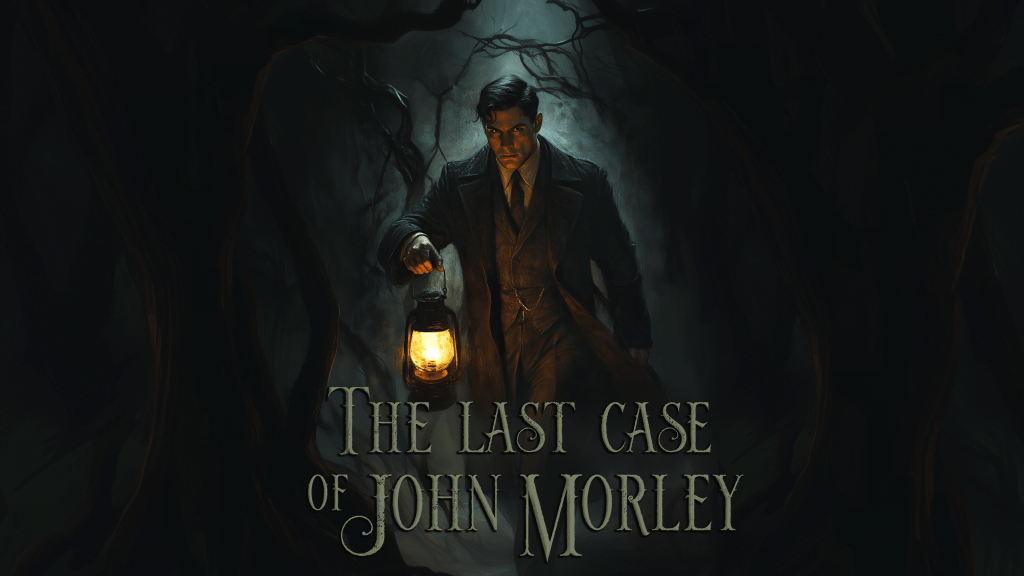
I love a good mystery. Give me a battered detective, a forgotten manor, the echo of old sins and a promise of ghosts, and I’m already halfway sold. That’s why The Last Case of John Morley caught my attention: it looked like the sort of spooky noir that would have me scribbling notes, chasing clues and muttering “just one more room” at three in the morning. What I actually got was far closer to a walking sim with some well-meaning twists, a few decent ideas and a whole lot of rough edges.
Available On: Xbox, PlayStation, PC
Reviewed On: PlayStation 5
Developed By: Indigo Studios – Interactive Stories
Published By: JanduSoft
Review key provided by the publisher
There’s no getting around the low-budget nature of the game. A good chunk of its visuals are cobbled together from premade assets found on the Unity store, for example. It has more rough edges than a pumice stone. But overlaid on all that is an attempt to tell an interesting story that packs a couple of big twists that aim to dazzle, boggle, confuse and delight. It doesn’t succeed, for the most part, but I appreciate the effort nonetheless.
Our down-on-his-luck detective awakens to find himself in a hospital, put there by his last case. Things go from bad to worse as he discovers a note from his secretary Penny, informing him that she’s had to quit due to a lack of cash. After all, it’s hard to do any detecting when you are unconscious in a hospital bed. But Penny does leave one last bone to chew: an old lady was asking after John. She wants to dig up the past and find out who murdered her daughter two decades ago, and she’s offering a big payday for the information. She points John toward her old manor, now abandoned, as the best place to begin his investigation.
Given the 1940s setting, Morley’s job as a detective and the game’s very own blurb, I admit I had two expectations, neither of which ended up being true: that there would be some actual detective work, and that it would be a noir style thriller. Instead, this is almost exclusively a walking-sim style experience where you amble around, interact with all the objects and gradually have the mystery solved for you. It’s far closer to a gothic mystery, only the detective’s narration giving it the slightest of noire feels. A couple of puzzles are thrown in for good measure, although the term “puzzle” is perhaps a bit generous. Provided you can rub your braincells together a little bit, you won’t have any trouble solving them.
Most of the time you’re simply walking from room to room, examining objects and triggering little scenes, with the game narrating the meaning for you.
There’s a thematic contrast at work here: the game wants you to think yourself a detective piecing together the clues, yet the story is spoon-fed to you, the conclusions drawn for you. The game wants you to uncover the truth, but it has already grabbed a shovel, dug it up and is now shining a spotlight on it. Given some of the things that happen later, I’m almost tempted to believe this might be intentional, as though the game is toying with ideas of perception, identity and the very nature of solving a mystery. But it never quite feels deliberate or insightful. Instead, it comes across as the accidental by-product of blunt storytelling, where you’re constantly guided from point A to point B while being congratulated for work you never actually performed.

Interactions with NPCs is kept to a bare minimum, which makes sense when you witness the first one up close and note the horribly stiff mouth animations and the lack of blinking, both giving the impression that you’re talking to a corpse that’s being held up by a bunch of sticks. Nah, the rest of the smartly decides to keep you alone, stuck inside of a creepy old manor and a creepy old asylum where the only other people are in static flashbacks or seen from a distance.
There’s a vague horror vibe going on, mostly because the game pulls all the standard audio tricks: weird noises, distant clanking suggest things are moving about, things going bump in the night – you know the drill. You’ve heard it all before. But it’s all a ruse because aside from one or two jump scares there are no threats, nothing that can hamper your progression aside from your own lack of braincells. Although even the world’s worst detective will have no issue following along as the game’s protagonist will always make it very clear what you’re doing and where you should be going next.

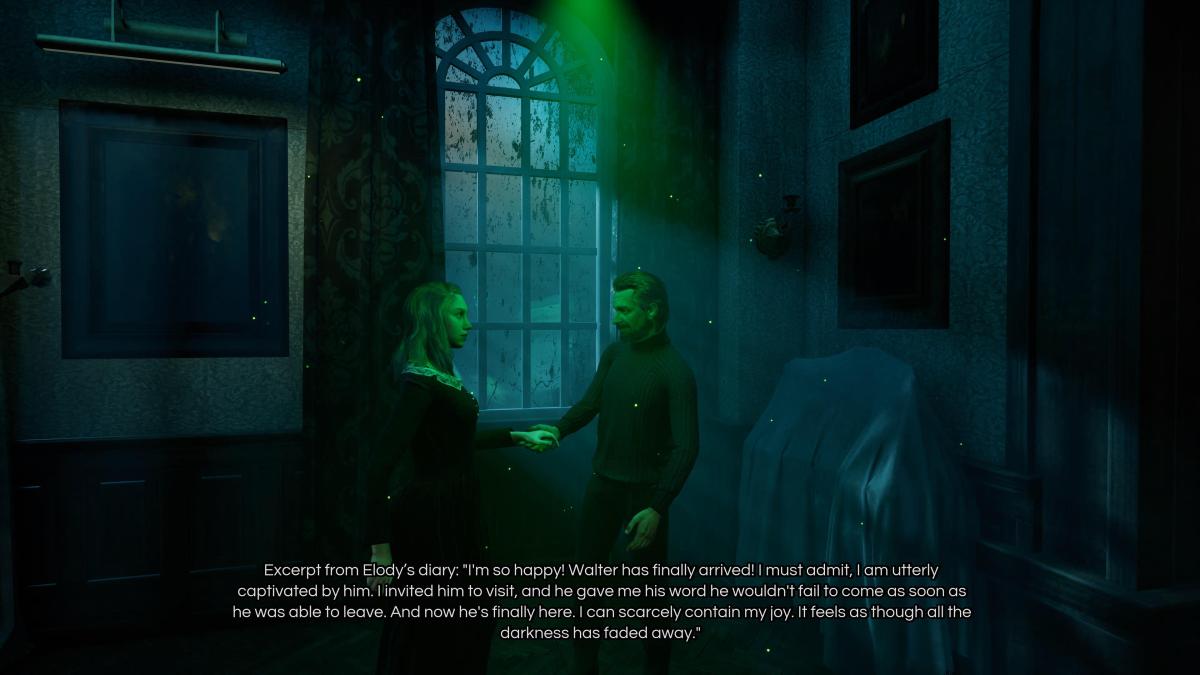
Certain areas will have glowing green sections to interact with, activating a ghostly tour of events where scenes from the past are reenacted by static spectres. This, of course, is all on John’s noggin, a way to visualise his Sherlock Holmes level detective skills. Or maybe more like his Velma level skills? Nah. Shaggy. It’s probably Shaggy level skills. Regardless, these are the moments intended to deliver the biggest story beats.
So let’s get back to that: the story. I’m saddened to say that The Last Case of John Morley didn’t weave a narrative that grabbed my attention. It gives it a fair shot, attempting to give Morley the brooding tones of a classic detective and telling an intriguing mystery. I like some of its ideas, especially how it delves into identity, perception, and the way reality can be bent to fit the story someone wants to believe. But it could have hit harder if the characters were people you could actually care about; separated by a decade and only experienced through text entries or static ghostly images, you never really get a chance to connect with them. Even so, I don’t want to be too harsh. You can feel the developers reaching for something, trying to tell a story that matters. There’s heart here, even if the execution often feels like a prototype for a better game.

The ending delivers a fun shock at the moment it occurs, the kind of twist that makes you do a double-take. But it’s also the kind of twist that doesn’t hold up to scrutiny. A few seconds of thoughts breaks it apart like a hastily constructed raft being smashed upon the rocks of logic. And it doesn’t help that an earlier reveal holds a very strong chance of nudging your mind toward figuring out the ending, too.
In Conclusion…
The Last Case of John Morley has ambition, but not the craft to realise it. What should be a smoky mystery of ghosts, guilt and unreliable narration becomes a guided walking tour through dusty corridors, where the answers arrive long before the questions. There’s a sincerity to the effort, and a couple of fun surprises, but they’re held together with the enthusiasm of beginners and the glue of Unity asset packs.
I wouldn’t recommend it as a mystery or a noir, but I’ll happily keep an eye on the team behind it. There’s heart here. Now they just need the skills and budget to build something worthy on top of it.




 WGB
WGB 