
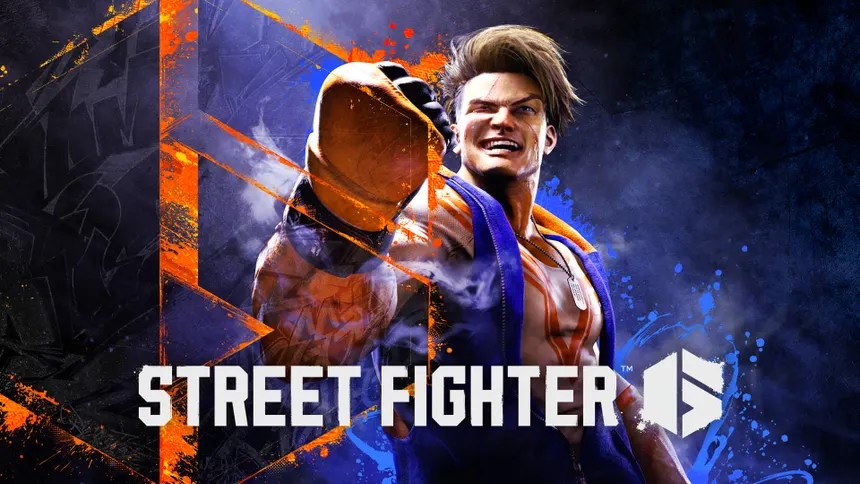
UPDATE: Director Takayuki Nakayama has taken to social media, saying the team“apologize for any confusion,” claim they “have not changed the characters’ backstories,” and say they will “revise certain text passages that may have been misleading in the near future.” They intend on revising some text, and will provide a supplementary episode on ‘Buckler’s Boot Camp to help clarify everything.
The new piece of story lore appears to be this short story, which does help clarify somethings. Notably, it does keep the fact that Tom And Alex are 2nd cousins, which isn’t a huge issue, regardless, but did leave some people feeling a little off about the whole thing. However, it softens things by implying less of a brother/sister relationship between Alex and Patricia, including a period of time where Alex left. The story leans more toward Alex keeping an eye on Patricia from afar in their early days, but otherwise not being overly close with her. There’s also hints that Tom didnt’t always have full custody of Patricia, so she and Alex may not have spent much of their formative years around each other. And finally, it pushes more on the mentor/trainee relationship of Tom And Alex as opposed to an adoptive father-type scenario,
ORIGINAL STORY: There are bad decisions in video games, there are weird decisions, and then there are decisions so baffling, so wildly out of left field, that the entire community collectively stops mid-combo and goes: “…wait, what?” The recent Street Fighter 6 controversy falls very firmly into that last category, because instead of people arguing about Alex’s frame data or whether he’s viable at high level, the conversation has been hijacked by something far more baffling: his love life.
Or, more specifically, who that love life involves: Patricia.
If you’ve somehow missed it—and honestly, I envy you—Alex’s return as DLC in Street Fighter 6 came bundled with a chunk of new story content that reworks his backstory. On paper, that’s normal enough. Fighting games love a bit of retroactive lore tinkering. The problem is that this particular tweak doesn’t just add detail; it completely rewires one of the more wholesome character dynamics in the series and replaces it with something straight out of Game of Thrones. Except less dragons.
The short version is simple enough, even if it sounds like the setup to a joke that nobody asked for. Alex was raised by Tom after his parents died. Tom has always been portrayed as a mentor and father figure, the kind of grizzled gym owner who takes in a kid, teaches him how to fight, and probably yells at him for leaving weights lying around. Tom also has a daughter, Patricia, who in previous games was very clearly framed as a much younger, almost little-sister figure to Alex. That dynamic wasn’t subtle, either. It was reinforced through character interactions, developer comments, and the general way the two were presented across multiple games.
Street Fighter 6 takes that setup and quietly slides in a new detail: Tom isn’t just a family friend. He’s actually related to Alex—specifically, he’s a cousin on Alex’s mother’s side. That one change is doing a lot of heavy lifting, because it means Patricia isn’t just the mentor’s daughter anymore. She’s Alex’s second cousin.
Still with me? Good, because this is where it goes from “Ok, that’s a bit fucked up” to “oh no, they didn’t.”
Alex’s Arcade Mode ending in Street Fighter 6 shows him and Patricia together, very much as a couple, with Patricia visibly pregnant. It doesn’t dance around the implication. They’re together, they’re starting a family, and the game treats it as a natural continuation of their relationship.
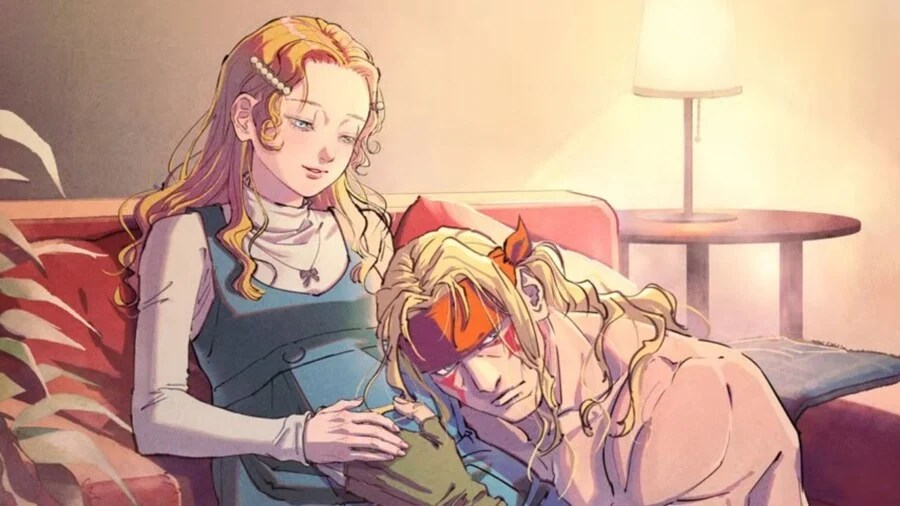
Which, if you’ve been following along, now means the series has taken two characters who were previously framed as growing up in a sibling-like dynamic under the same roof, added a blood relation on top, and then decided to make them a romantic pairing anyway. It’s the sort of narrative decision that feels less like a bold creative choice and more like someone accidentally clicking the wrong option in a dialogue tree and then committing to it out of spite.
To boil it down into something you can send to a confused friend without needing a whiteboard:
- Alex was raised by Tom, who functioned as his father figure
- Patricia is Tom’s daughter and was long presented as a “little sister” type character to Alex
- Street Fighter 6 reveals Tom is also Alex’s relative, making Patricia his second cousin
- The same game then presents Alex and Patricia as a couple expecting a child
That’s the situation. That’s the whole thing. No, it doesn’t get less weird the more you read it.
Now, to be fair, there are a few technicalities that people have pointed out in an attempt to make this feel less like Capcom wandered into cursed territory. The term used in the Japanese script for Tom’s role can be translated more loosely as “the one who raised him,” which doesn’t necessarily imply formal adoption. There’s also the point that second cousin relationships aren’t illegal in many parts of the world, and from a purely genealogical standpoint, this doesn’t hit the strictest definitions of incest.
All of that is true, in the same way that it’s technically true you could play as Eddie in Tekken 3 and still be a good person. It doesn’t make it a good idea, and it doesn’t stop people from looking at you a bit funny when you do it.
Because the real issue here isn’t legality or terminology, it’s context. For years, Alex’s story had a simple, effective emotional core: he lost his parents, was taken in by someone close to the family, and found a new home. Tom was the tough but caring father figure, Patricia was the kid sister tagging along at the edges, and it all worked because it was grounded in a found-family dynamic that didn’t need to be complicated.
By retroactively inserting a blood relationship and then pivoting the sibling-coded dynamic into a romantic one, Street Fighter 6 doesn’t just add a twist; it fundamentally changes how that entire relationship reads in hindsight. Moments that once felt protective or familial now get dragged into a much murkier light, and that’s where a lot of the discomfort is coming from. It’s not just what the story is now, it’s what it does to everything that came before.
There’s also the small matter of the timeline. Earlier portrayals made it clear that Patricia was significantly younger than Alex, to the point where she was literally a child while he was already an active fighter. And we need to be very clear here: the series has never suggested anything inappropriate during that period, but the shift into a romantic relationship later in life inevitably makes people look back at that dynamic with a raised eyebrow. Even if everything is technically above board by the time they’re both adults, it’s the kind of progression that feels, at best, awkward and, at worst, like a line that didn’t need to be crossed.
Some have suggested this might be a cultural disconnect, pointing out that family structures and attitudes toward cousin relationships can vary, and that making Tom a blood relative could have been an attempt to make Alex’s upbringing feel more grounded or realistic in a Japanese context. That explanation might account for the initial change, but it doesn’t really justify where the story ultimately goes. Even setting the blood relation aside, the decision to turn a long-established sibling-like relationship into a romantic one is what’s really driving the backlash, and that’s something that translates across cultures pretty cleanly.
What makes the whole situation more baffling is that it doesn’t really add anything of value. It doesn’t deepen Alex as a character in any meaningful way, it doesn’t open up interesting narrative possibilities, and it doesn’t enhance the wider Street Fighter world. If anything, it does the opposite, taking a straightforward, likeable dynamic and complicating it in a way that feels unnecessary at best and actively off-putting at worst.
And that’s why the reaction has been so strong. Fighting game fans are used to weird lore. This is a series where people throw fireballs with their bare hands, dictators come back from the dead on a regular basis, and nobody questions why Blanka exists. The bar for suspension of disbelief is already somewhere in the stratosphere. But there’s a difference between “weird” and “uncomfortable,” and Street Fighter 6 has managed to stumble squarely into the latter.
Whether Capcom addresses it or quietly pretends this never happened remains to be seen. Fighting game lore has a long and proud tradition of selective memory, so it wouldn’t be the first time something awkward gets smoothed over in a future entry. For now, though, this is the version of events we’re stuck with, and it’s the reason why Alex’s return—something that should have been a straightforward crowd-pleaser—has instead turned into one of the strangest controversies the series has seen in years.
Out of all the hits Street Fighter 6 has landed, this is the one that’s left people dazed. Not because it was powerful, but because nobody saw it coming, and everyone’s still trying to figure out why it happened in the first place. It’s not like this isn’t ground stories can’t cover, because plenty of other media has covered stuff like this, but it’s not really something you expect to turn up in a fighting game series that includes stuff like a green-skinned ginger bloke. But overall, this is largely a case of things getting overblown
Thankfully, Mortal Kombat just deals in time travel, Gods, four-armed blokes and ninjas. You know, normal stuff.


 WGB
WGB 