
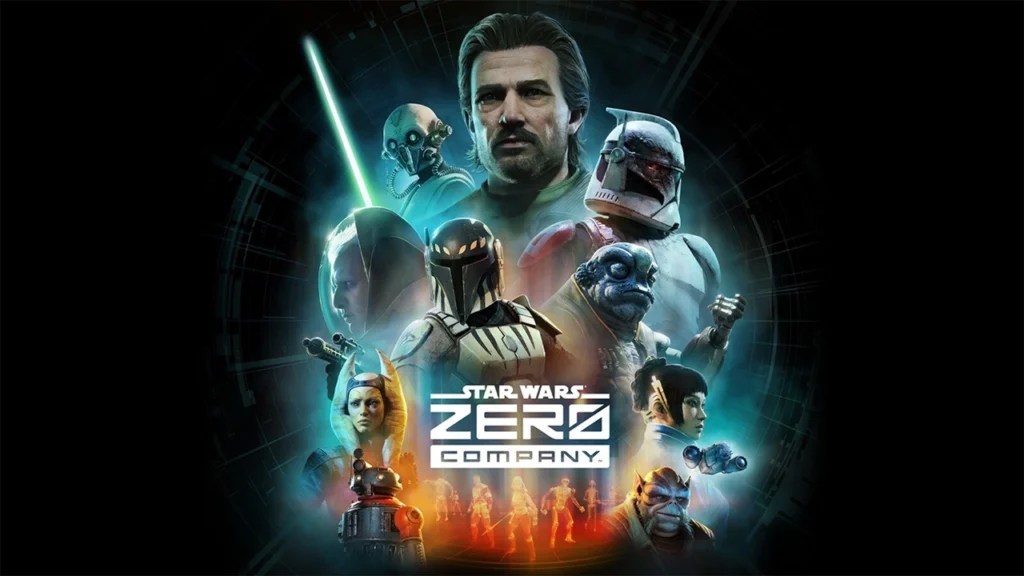
Underneath the excellent Star Wars paint job, you’d be forgiven for thinking you’re actually playing XCOM 3. Because you are. Well, pretty much. A lot of the people at Bit Reactor worked on the XCOM series, and their excellence at crafting turn-based tactical mayhem shines through every crack. Star Wars: Zero Company (or, hilariously, ZCOM) doesn’t break the turn-based tactical formula or even massively improve it. Instead, it refines it in a few areas, throws in some lightsabers and blasters, and slaps a pretty awesome Star Wars story on top. And yet, I don’t want you feeling like this is somehow a lazy reskin. I haven’t enjoyed spending time with a bunch of heavily armed idiots this much in ages.

REVIEW AT A GLANCE

Developer Bit Reactor

Publisher EA

Reviewed On PC

Available On PC, Xbox, PlayStation

Release Date

Price (UK) £49.99

Genre Turn-based Tactics

Review Code provided by EA
Quick Take:
XCOM + Star Wars = A bloody good turn-based tactics game that’s a bit more forgiving and tells a compelling story. There’s quite a few bugs, though, and I’m not just talking about some of the weird looking characters. Score: 4/5
Perhaps the biggest difference is how forgiving it is. While XCOM revelled in having you lose soldiers you had emotionally invested it, make hard decisions and discover that your base-building choices didn’t pan out 15 hours later, Zero Company wants you to have a good time, the tension present but never kicking your teeth down your throat. There are things here that need work, particularly on the technical side, but I found myself far more interested in getting back to my crew than worrying about whether Bit Reactor was doing enough to push the genre forward.
Set towards the end of the Clone Wars, before the Republic gives way to the Empire, Zero Company puts you in charge of Hawks, a former Republic officer now running a small mercenary outfit. A bit of character customisation later and we have our leading man, who in my case was a red-skinned, demon-looking bloke. Hilariously, the voice actor gives him something like a slight Southern drawl, which turned out to be absolutely perfect. Joining him are a medically discharged clone trooper called Trick and the older, mildly grumpy Kabb, with more questionable company arriving as the adventure continues. A mission later and our rag-tag group of morally dubious characters winds up working with Republic Intelligence on an off-the-books operation.
The main story revolves around the Infinite Coil, led by Kundri Fathom. This strange cult aims to spread what it calls the Shadow Plague across the galaxy, which is a polite way of saying potential members must be bitten by a creepy alien insect. If they survive, they join the cult, complete with weird powers. If they fail, they’re leaving in a body bag.
These days, so much Star Wars being fired out of the Disney content cannon feels worthy of being ignored, so it’s nice that Zero Company actually tells an extremely enjoyable story that respects the lore. The pacing is good, the dialogue flows naturally, and the characters can be funny without every conversation turning into a competition to deliver the next quip. Occasionally it ventures into millennial writing territory, but it isn’t overly annoying.
My reservations are mostly with Kundri, who remains a fairly weak villain, and an ending that isn’t terrific, a criticism I seem to make about a lot of stories these days. Neither becomes a huge drag, though, because by then the characters had become the reason I was playing.
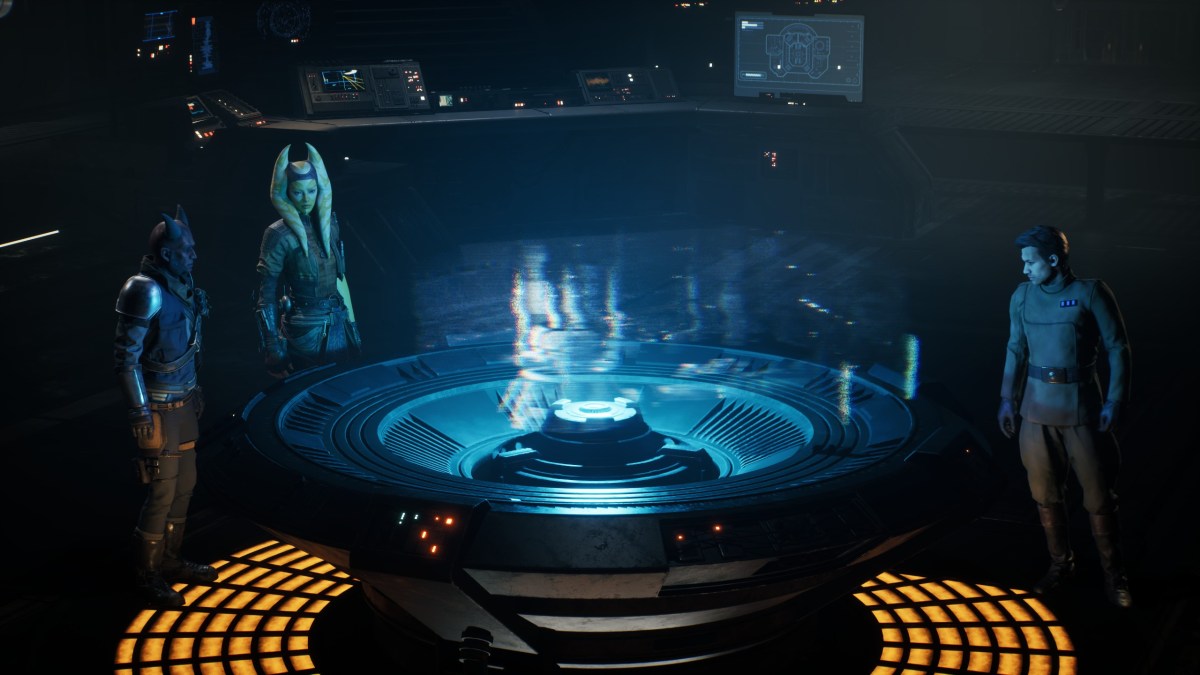
For me, it’s the dynamic between Hawks, Kabb and Trick that really sells it. They feel like a team who’ve been together a while, like each other, annoy each other, and know they’re good together. Kabb is a standout, partly because of his distinctive style of speech, which is difficult to describe without doing it a disservice, and partly because he’s an older grump with a love of opera. His personal mission involves recovering advanced listening technology, which turns out to be so he can get more opera. Fair enough, mate. A lot of the best character work is in the smaller, inconsequential conversations back at the Den, your headquarters. There’s a surprising amount of recorded back-and-forth that you can simply miss if you don’t bother listening.
Even the more generic operators you recruit have more personality than I expected. They aren’t going to rival the main crew for depth, but they have voiced dialogue, interactions and a presence around the Den that helps it feel like somewhere people actually live. The game gives you plenty of reasons to grow attached to this lot, which makes its approach to permanent death an interesting choice. Established squadmates such as Trick and Kabb can die just like somebody you hired five minutes ago. The narrative is built to accommodate those losses, with several characters staying safely back at base to keep the central story moving. I can’t tell you how extensively it changes across every possible death, but I wouldn’t go in expecting an entirely different campaign every time somebody gets killed.
Actually killing them takes some doing, mind you, which is one area where Zero Company is far more forgiving than XCOM. If a team member is downed, they pick up an Injury, but they won’t simply bleed out while you panic and they can’t be executed. You can rally them or leave them crawling around until the mission ends, then get them treated back at the Den. Rallying doesn’t remove the Injury, and untreated Injuries carry between missions with a combat penalty. Accumulate three untreated Injuries and that character is gone permanently. Hawks is the exception: him going down means mission failure. For everyone else, the medbay and a little care give you plenty of opportunity to avoid the third strike unless you’ve decided someone is more hassle than they’re worth.
It’s also easier to get yourself out of a jam or change plans on the fly. There were times in XCOM 2 when a decision made hours ago could pretty much bring you to your knees, but I didn’t feel that here. Higher difficulties are available, and some players will miss the constant fear of losing a veteran. I don’t have the right mindset for that version of XCOM anymore, the kind that can revel in getting beaten into the ground. Zero Company lets me be a little more aggressive and enjoy the people I’ve spent time developing with just a minor sense of risk.
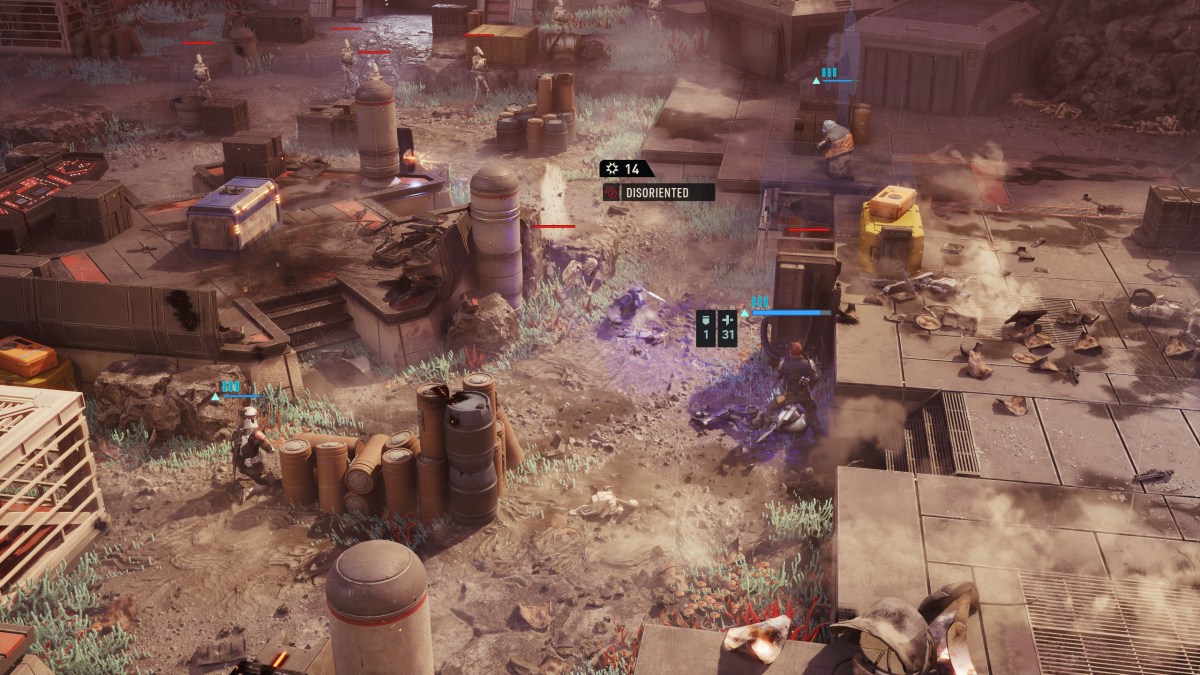
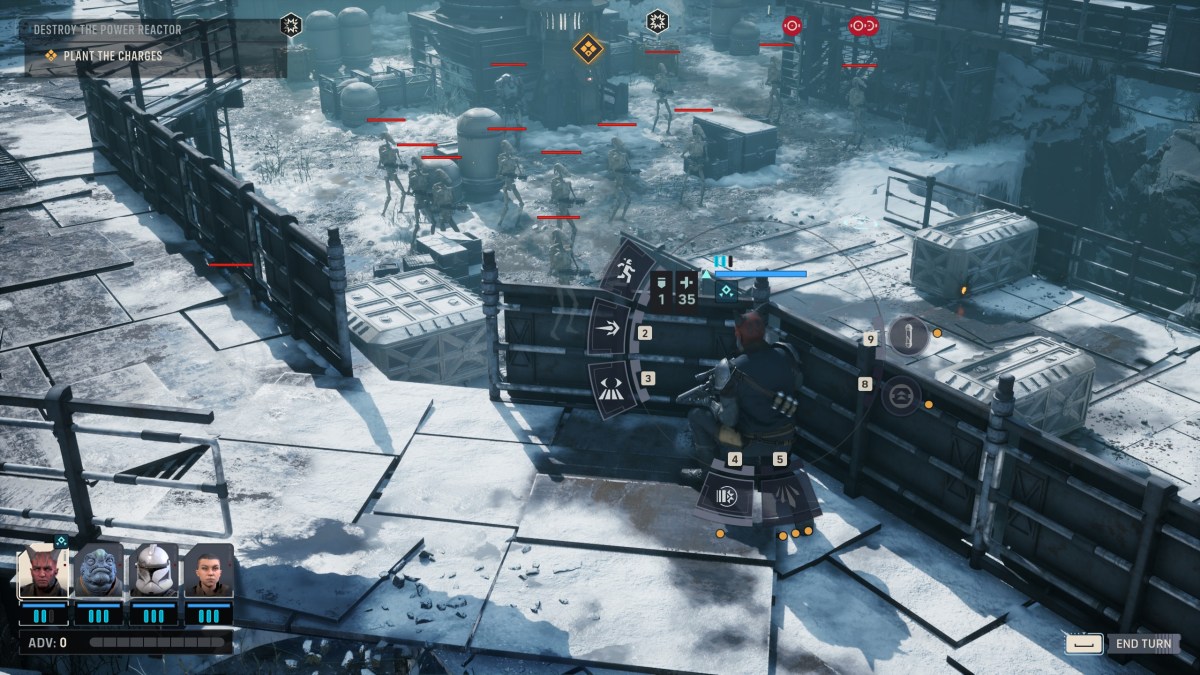
The core loop is XCOM through and through: characters generally have three action points to spend on moving, shooting and performing special actions. You spend your turn manoeuvring your team like action figures on the floor of your childhood bedroom, and then the enemy does the same thing. Cover and firing angles matter, as does the order in which you use your abilities. Between missions you recruit new characters, spend money on weapons and gear, and decide how to upgrade your base. Anyone familiar with the genre will settle in quickly, although there’s plenty to fiddle with once the character builds start taking shape.
Shooting uses the same chance-based system that has become the hallmark of XCOM and just about every other game in this genre. Depending on cover, the angle, the weapon and a bazillion other factors, you’ll see how likely a shot is to land. That means sometimes you’ll nail a 10% chance from across the map like a boss, or fail a near-certain shot from two feet away with a laser shotgun. The Force is with you, right up until you miss a 95% chance to hit and use force to hurl your controller out the window.
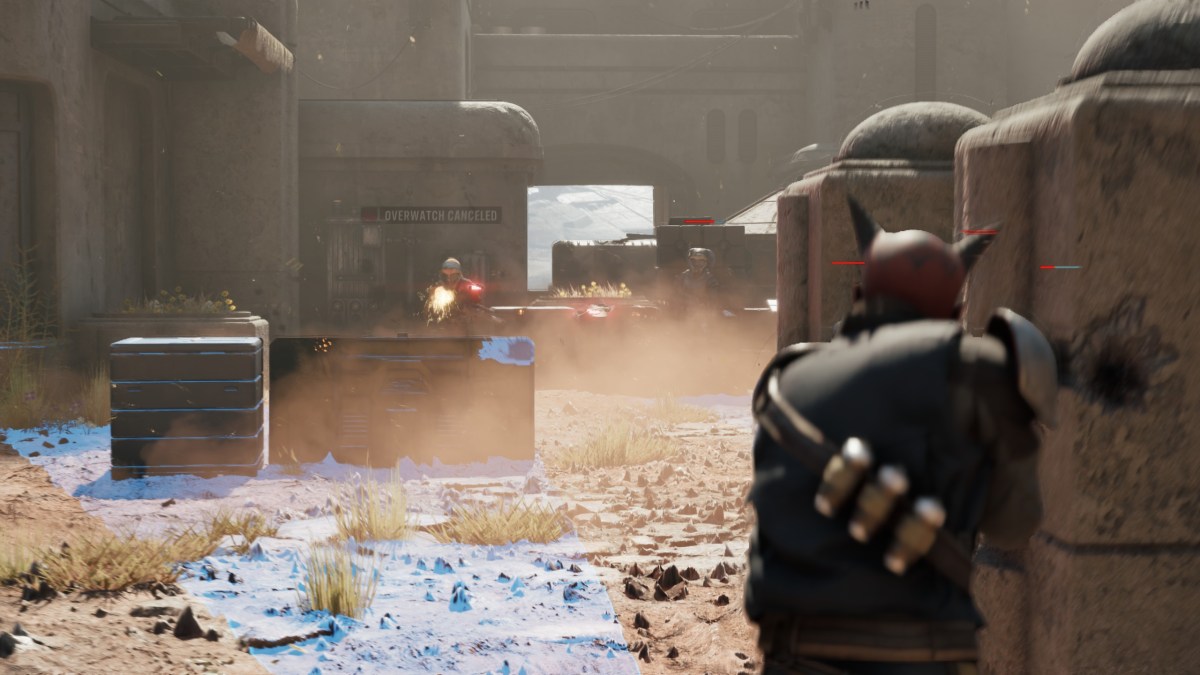
All very standard, then, albeit still bloody good fun. The joy comes from the various characters and abilities they bring with them. Zero Company is a game where you can team up a Mandalorian with an astromech and a Jedi, and the satisfaction comes from working out how to make them useful to each other. Kabb’s uppercut, for example, refunds its action-point cost if he kills the target with it. I also loved discovering that I could use it to throw an enemy into my squad’s Overwatch and trigger their fire. These aren’t necessarily enormous moments of spectacle. Often it’s just the quiet satisfaction of seeing a few decisions come together and do exactly what you hoped they would.
The Backup ability is another key part of that teamwork, letting a squadmate contribute a free shot to an attack while developing the Bond between them. Kabb is particularly good at helping his pals: one of his abilities lets him nominate an enemy and then assist when somebody shoots that target. Combine it with regular Backup and you can have three people piling fire into the same unfortunate bastard.
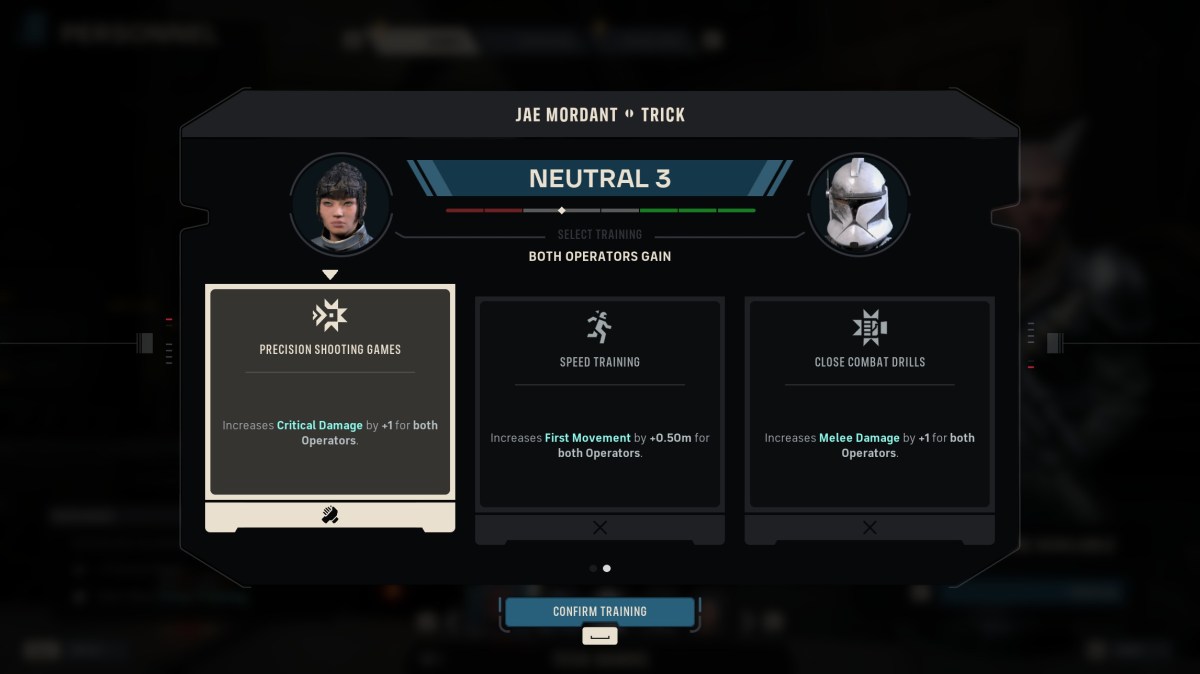
Building those Bonds goes beyond shooting together, too. Taking people on missions, healing them and using support items all help, and when a pair’s Bond levels up you can choose permanent stat improvements for both characters. It’s one of my favourite systems because it makes it feel like the relationships developing through the dialogue have a useful life on the battlefield as well.
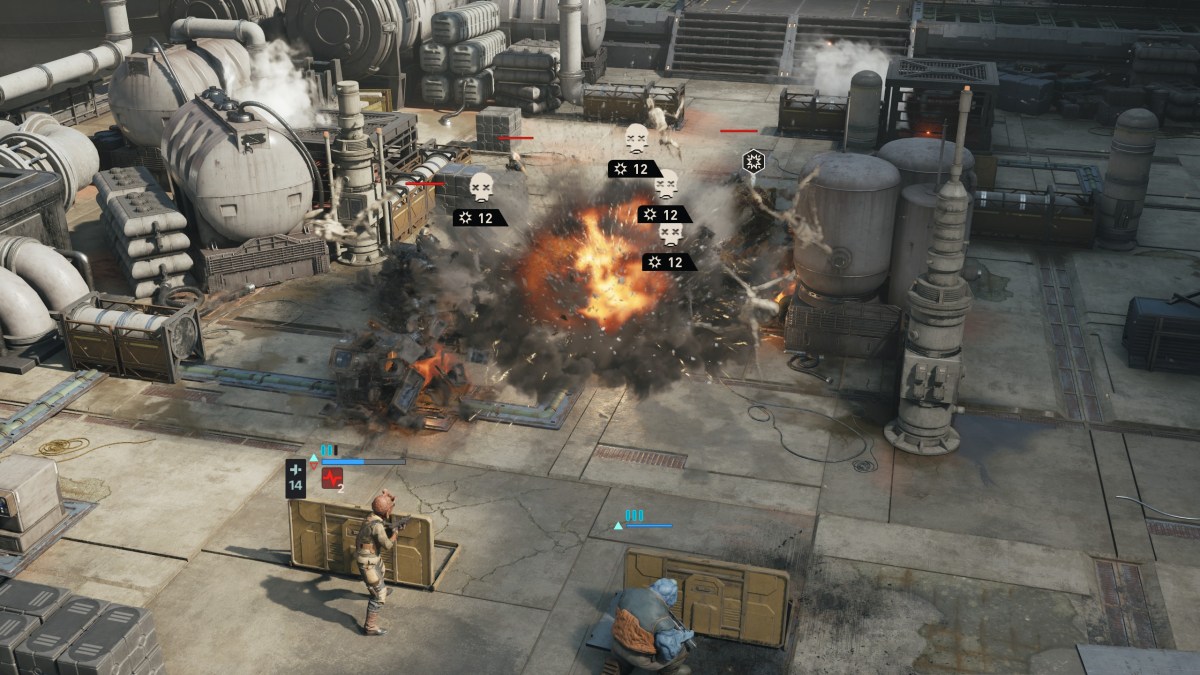
Balancing can be an issue, although I’m conflicted about how much I want some of it fixed. The Mandalorian, Cly, can use Electroweb Darts to mark multiple enemies before triggering Electroweb Surge, dealing area damage that ignores their defence. Cluster enough enemies together and the overlapping damage can wipe out a whole group. These abilities spend Advantage rather than action points, so she can still move or shoot afterwards, and the Scout specialisation’s Combat Recon ability provides more Advantage to keep the nonsense going. A properly built Jedi can also rip through enemies. Do these combinations arguably break the balance of the game? Yes. But are they fun as shit? Also yes. Discovering something excessive is part of the pleasure, and I hope Bit Reactor considers that before toning everything down.
What’s more restrictive is the squad size. Four people feels a little small, especially when Hawks occupies one slot and you’re effectively choosing the other three. I’d have liked at least another space to play with, because the game gives you all these operators and relationships to develop, then makes it very easy to settle on a favourite team while half a dozen recruits hang around the Den. You can send people on other assignments, but it rarely felt as though I needed the depth of roster the game lets me build. Splitting the company across simultaneous tactical deployments might have made those spare people more useful. As it stands, I frequently had more mercenaries than work for them.
The enemy roster could have used a couple more additions by the end, too. There are new types introduced along the way, but I spent a lot of time fighting familiar droids and would have liked a few more threats to change things up. It never became a massive problem, and the Coil’s ability to pass power from a dead member to a surviving one does create interesting decisions about who to kill first. It can also create a tedious damage sponge if you handle it badly. One woman ended up so resistant to damage that she felt more like a laser-reinforced concrete wall, complete with retaliation that sent her charging towards whoever shot her. I may well have helped create that monster through my own choices; focusing her down earlier and using the retaliation to pull her around worked better on a replay. Getting stuck chipping away at her the first time wasn’t much fun, though.
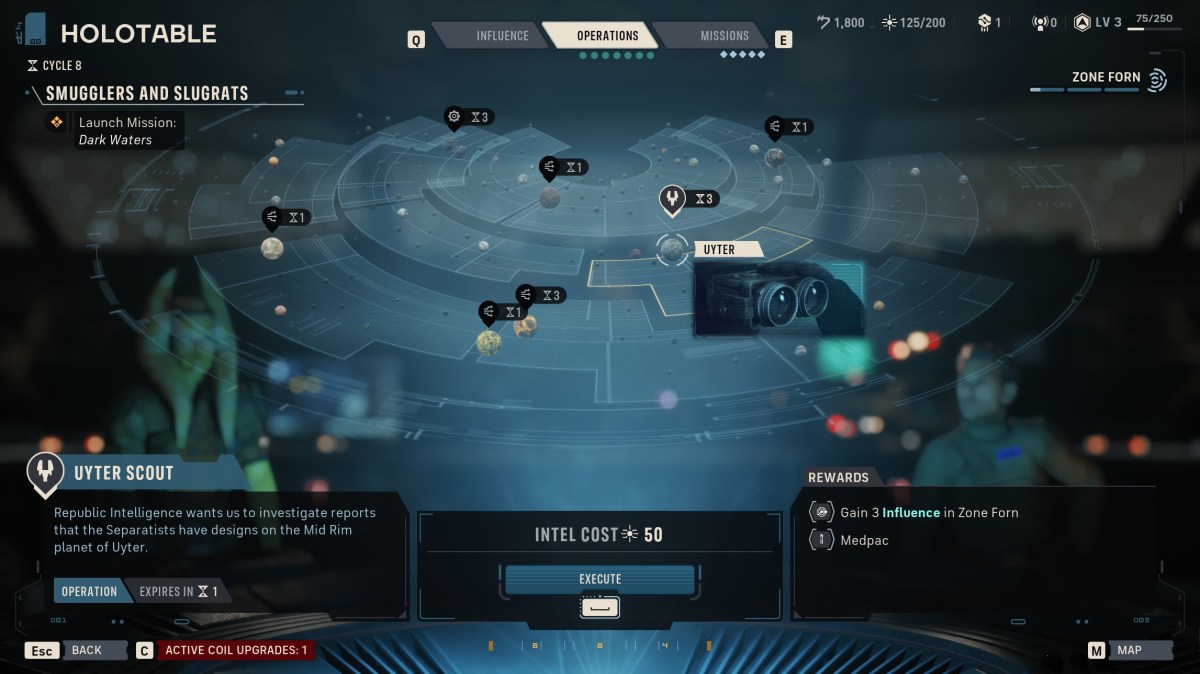
Back at the map table, the campaign gives you two main types of activity. Operations are mostly text-based, choose-your-own-adventure sequences that cost Intel points. You might decide whether to help somebody or demand payment, with the choices affecting rewards and sometimes your Bonds with teammates. Occasionally you’ll send operators and risk injury for a better return. These don’t advance time, so you can do as many as your Intel allows before committing to a Tactical Mission, which is where you pick a squad and go looking for an actual turn-based fight.
Completing a Tactical Mission advances the campaign by one Cycle. Both types of activity have countdowns, and optional ones disappear if you leave them too long. That includes companion missions, so you can’t assume you’ll come back and mop everything up later. Required story missions eventually become obligatory. Most of the pressure comes from losing the opportunity and its rewards rather than some horrible consequence that comes back to bite you ten hours later, although there are moments when you choose which of two enemy upgrades to stop. Whichever you leave alone goes ahead, so you pick the one that sounds worse for you and your mates and prepare to deal with the other.
It’s a compelling system, which is surprising because I’m usually someone who doesn’t like the idea of being unable to do everything. I work with enough deadlines in real life without wanting them in a game, but Zero Company makes it work. The decisions give the campaign some urgency without making every missed job feel like the start of an irreversible disaster. I’d expect the story to take around 25–30 hours, depending on how much optional stuff you choose to do along the way.
One odd omission is that the game doesn’t tell you which enemies will be in a Tactical Mission before you choose your squad and equipment. Taking anti-droid kit feels a bit stupid when you arrive somewhere with no droids, so I tended towards more general equipment. The forgiving difficulty means you’ll usually be fine anyway, but it’s irritating to know you have people and gear designed for a particular job and aren’t given enough information to deliberately bring them along.
There’s some friction in the economy as well. Credits and capacitors go towards equipment, hiring new walking corpses operators and building expansions for the Den, and the game is surprisingly stingy with them. Even hoarding resources, I could build around half the base upgrades. Maybe that’s the intent, and it does mean you have to make real decisions about what you want, but it felt a little too limiting. Some upgrades are big enough to feel almost mandatory while others barely seem worth the effort, particularly expensive squad-damage improvements when the Bond system can offer better benefits. Weapon and mod bonuses sometimes suffer from the same comparison.
There are a few other small elements that probably didn’t need to be here. Occasionally you’ll start a mission in third person and jog down a few alleys or through part of the level. There might be interactables that give you bonus Intel and a character or two offering dialogue, but it doesn’t add much to the overall experience.
On PC, the radial action menu also feels awkward with a mouse, and I found myself choosing the wrong option quite a few times. Selecting characters is fine; it’s the menu itself that feels built around a controller. Neither is a huge complaint, but a PC interface tailored to mouse controls would have been welcome.
The overall presentation is very strong. Locations are nicely detailed, the image is clear and sharp when you turn the effects up, and the blasters sound exactly as they should. The voice acting is terrific across the cast, doing a lot of work to make those conversations at the Den worth listening to. Musically, the familiar Star Wars themes make more of an impression than the rest of the score, which is solidly good without being particularly memorable. Even the classic screen wipes are here. Arguably Star Wars should have stopped using them by now, but they’re so firmly part of its identity that I’m not sure it’s allowed to.
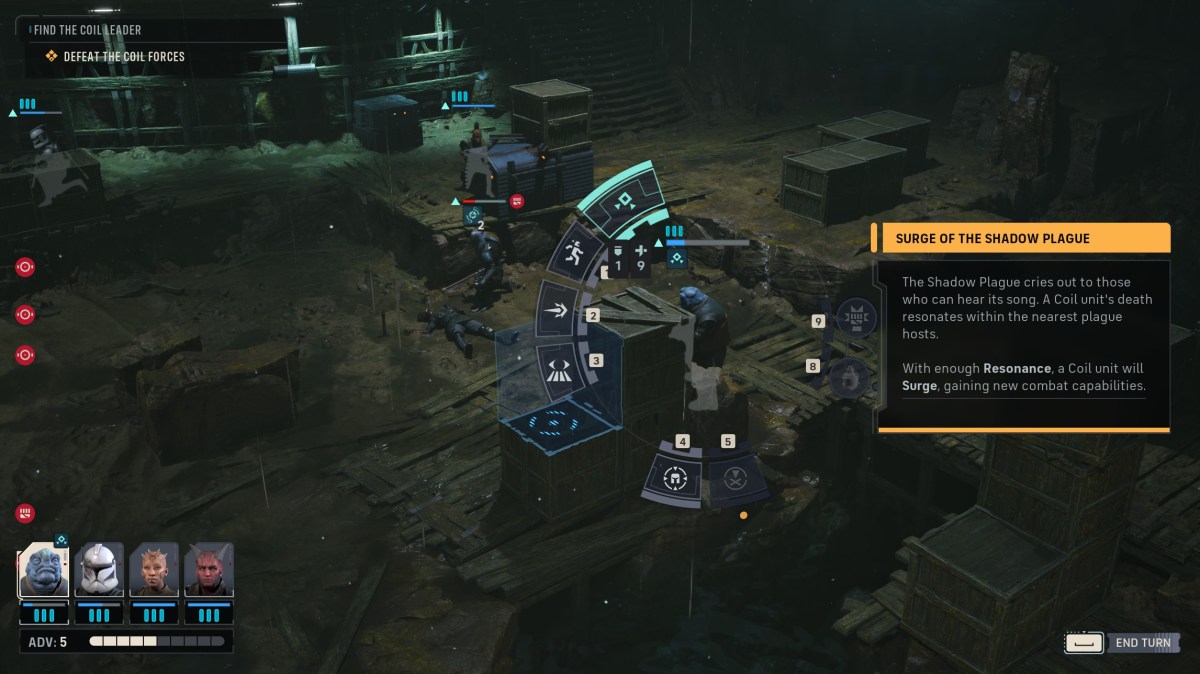
Unfortunately, the technical side is where Zero Company most consistently lets itself down. Overall PC performance was fine, but camera issues and pauses during enemy turns were persistent annoyances. Sometimes everybody just stops for several seconds, occasionally five to ten, like the entire battle has decided to take a tea break. The camera can frame enemy actions badly, leaving you to work out what happened when your own turn starts. Sadly, you can’t beat the camera down in turn-based combat. A way to speed through slower turns would help, as would being able to issue another character’s movement while the first is still jogging into position, but the unexplained delays are the more immediate problem.
Overwatch is particularly troublesome because it’s such a powerful ability when it works. If you aren’t aware of what it is, Overwatch basically lets you set a character to take a shot at any enemy entering their cone of vision. On many enemy types, a successful shot stops their movement, leaving them exposed or preventing a melee attacker from charging into your face. But I had repeated cases where enemies crossed a cone without triggering fire, and others where the shot arrived a second or two after they had already left it. At first I thought I was overlooking an enemy ability, but checking those cases didn’t explain away the problem. These failures never cost me a whole mission, yet they did get characters downed . That’s a fairly serious thing for a tactics game to get wrong.
The worst incident was an enemy turn that simply never finished. I had to shut down the game and reload, only to discover the autosave hadn’t updated since the mission began. In fairness, I could have made manual saves and hadn’t, but replaying the whole thing was still annoying, particularly because it happened shortly after I’d finally dealt with that damage-sponge enemy.
In Conclusion…
The unreliable Overwatch and repeated interruptions deserve fixing, and there are campaign systems I’d like Bit Reactor to give another pass. Some of these issues will likely get patched. And none of them stopped fme from having a good time. I’ve finished Zero Company feeling attached to its crew and thoroughly entertained by the time I spent moving them around battlefields. Its more forgiving approach suits me, there’s real depth to the action, the character abilities give familiar combat plenty of room for experimentation; and the writing made me want to hang around the Den for another conversation instead of immediately rushing to the next fight. It doesn’t need to be a revolution in turn-based tactics to earn that affection. Despite the problems, I fucking love this game.



 WGB
WGB 