Well, I can’t knock the decision to release a spooky tile-laying game just in time for Halloween. That’s some marketing 101 right there. Fangtopia has you building a cutesy, creepy kingdom for friendly monsters, putting down forests and farmland so a werewolf has somewhere nice to live. Think Dracula’s little cousin wearing a cute onesie, not Count Dracula ripping out throats and drinking blood. I’ve enjoyed pottering around in its little world, although there’s not a huge amount going on beneath the Halloween decorations, and whether that’s a problem depends on what you want from it.

REVIEW AT A GLANCE

Developer Absolutely Games

Publisher Secret Mode

Reviewed On PS5

Available On PC, PS5, Switch 2

Release Date 26 October, 2026

Price (UK) £9.99

Genre Tile-Placement Puzzle

Review Code Supplied by the publisher
Quick Take:
A simple cosy game about building a Halloween-themed kingdom. Easy to pick up and play for when all you want is to press some buttons, turn off your brain and relax.
The obvious comparison is Dorfromantik. I’m not hugely familiar with that game, so I’m hardly qualified to pick apart every similarity, but even I can see where Fangtopia gets its basic idea. You have a stack of hexagonal tiles containing mountains, forests, farmland and towns, sometimes sharing space on the same tile, and your job is to put them together into a kingdom. Each new piece needs to connect to the land you’ve already built, with matching terrain earning points. Gradually, little patches of trees become sprawling forests and isolated buildings merge into towns, all of which is rather pleasing to watch.
Objectives give you something to work towards while you’re doing this, usually asking you to expand an area by a certain amount. A patch of farmland might need another six pieces added to it, for example. Calling this puzzle-solving feels a bit generous, because deciding where to put a field when you’ve got a field asking for more fields isn’t exactly going to overheat the old brain, but Fangtopia does describe itself as a puzzle game. There are choices to make about how you arrange things and use the tiles you’re given, but the appeal is mostly in quietly building something and watching it grow, like how a ghost train will ride back and forth once you connect enough train track tiles.
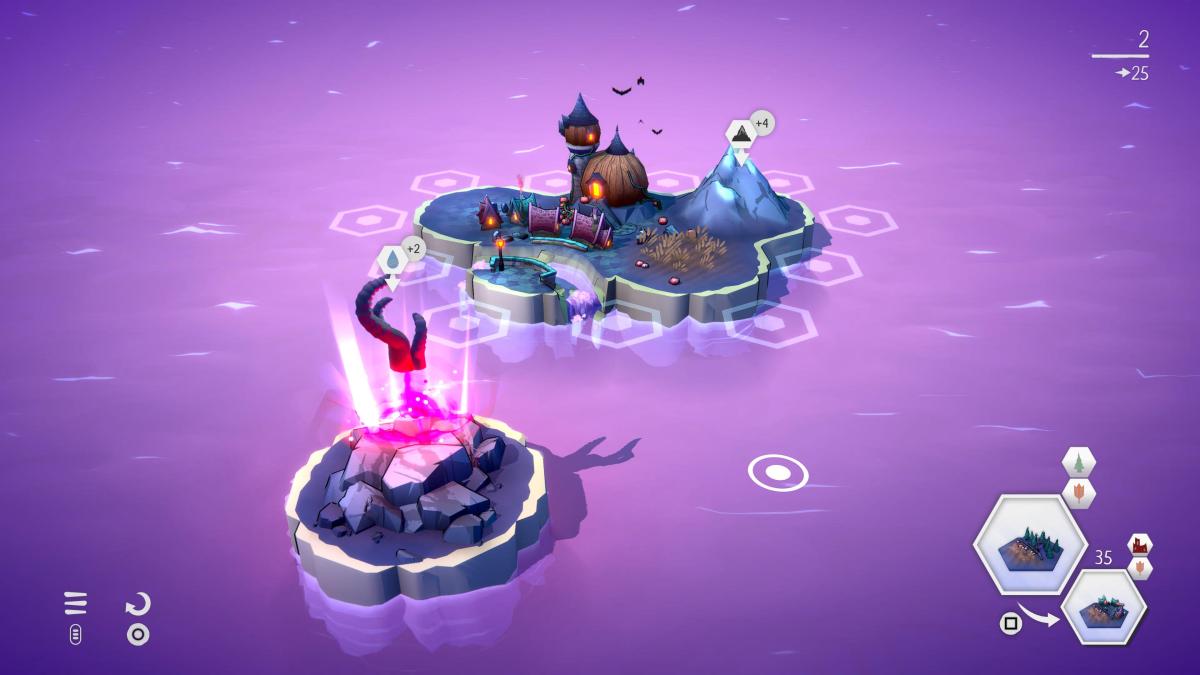
The complication is that your stack will eventually run out, bringing the kingdom to an end. To keep going, you need Landmarks, which become available when you reach scoring milestones. You’re offered a choice of two, each with requirements for the terrain connected to it. One might want some mountains and a town, while another needs fields and forests. Complete those requirements and more tiles get added to your stack, giving you room to keep expanding and hopefully earn your next Landmark. It gives the building a bit of purpose without making the whole thing particularly stressful. And it is satisfying when you can pop a Landmark down and immediately meet its requirements.
Completed Landmarks also leave you a free tile to claim whenever you fancy. These are plain, single-terrain pieces, so you know exactly what you’re getting rather than hoping the next thing in your stack happens to be useful. Having a mountain sitting there waiting to be collected can help when you’re one short of finishing something elsewhere. It’s a small detail, but one I appreciate: there’s a little more thought involved in deciding when to use those spare pieces, and completing one objective can help you get another finished.
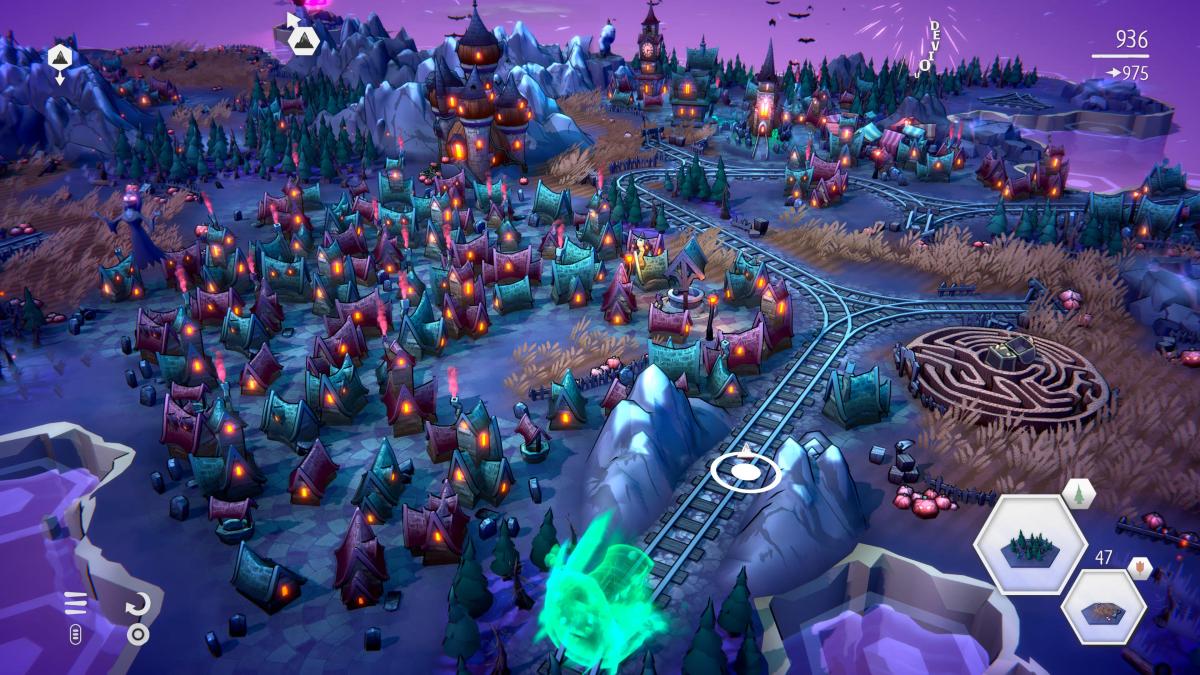
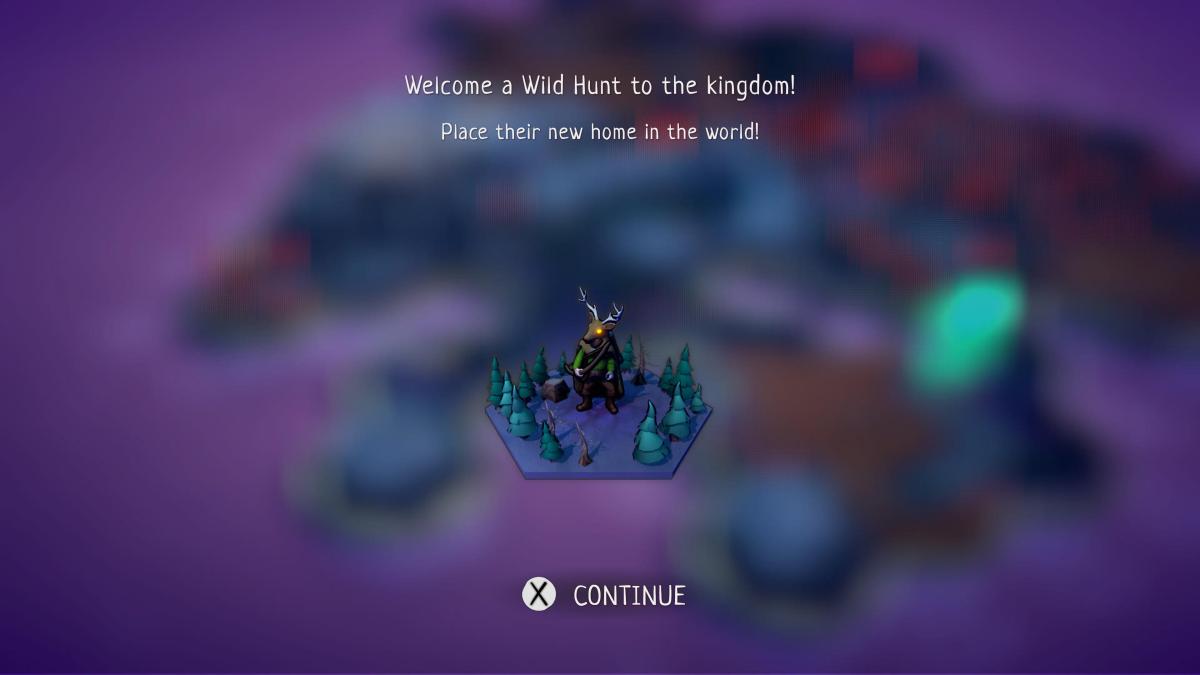
Then there are the monsters, who occasionally appear on little islands a few tiles away from your land. Waking one up means building out towards it and connecting the required terrain, perhaps a stretch of farmland or a collection of forests. Depending on where it appears, this can take some work or barely any at all. If you’ve already got a big patch of the right terrain nearby, a couple of well-placed tiles might do the job. Your reward is a larger monster tile covering several hexes, which you then get to put somewhere in your kingdom.
These can be handy if the terrain they bring helps finish another objective, although sometimes there’s nowhere especially useful for them to go. Once placed, the monster mostly sits there looking cute and doing little idle animations. I’d have liked something more interesting from them mechanically, because they’re an obvious opportunity to give the game a bit more going on. Still, they do look nice. Expecting a werewolf to contribute to the local economy outside of keeping the local dog groomers in business is probably asking a bit much, anyway.
There are three modes, although I think that makes the differences sound bigger than they really are. Classic gives you your current tile and a preview of the next one, while Ghoulish lets you swap between the two. That’s a useful change, giving you more control and generally letting you build larger kingdoms. You can also hang on to a monster tile by using the other slot, saving it until there’s somewhere better to put it. In Classic, once that monster comes up, you’re stuck placing it next.
Ghoulish also adds rivers, which are lovely to carve through the landscape but work much like railways: keep connecting the pieces to extend them. I don’t really understand why that needs its own mode rather than being an option, although I do prefer having the extra flexibility. Islands makes a clearer change by spreading your kingdom across separate landmasses connected by railway. You build out to join them, then more can appear, creating a sprawling network instead of one continuous chunk of land. It changes the layout you work with, but you’re still following the same basic rules.
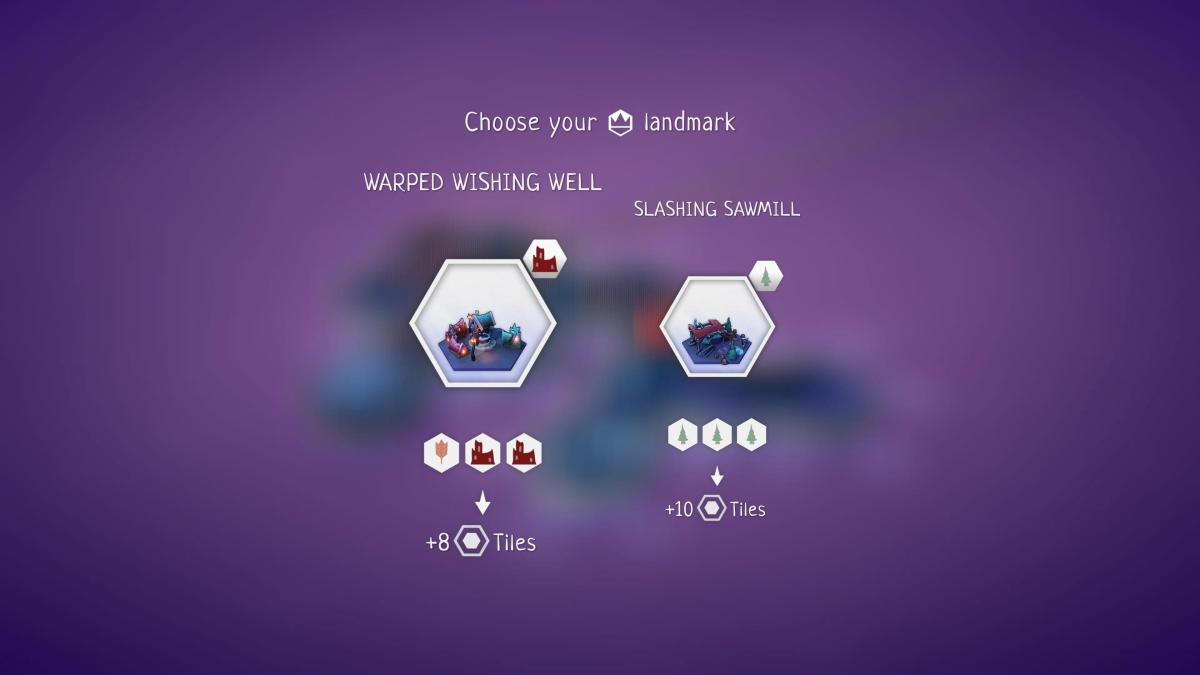
There’s a fair heap of Landmarks to unlock along the way, from creepy old willow trees to carnival carousels and gothic buildings. Some require particular scores in particular modes, while others ask you to place enough tiles of a certain type or build a long railway. Having more things to decorate your kingdom with is welcome, especially when the theme is this cute. I like seeing those individual pieces come together into a little Halloween model village, complete with monsters who seem perfectly happy with the local planning department.
I can’t say unlocking them is especially exciting, though. The game says later Landmarks have higher scoring potential, but I couldn’t tell you exactly how it calculates that. What I can say is that their requirements change without really changing what you do. A building asking for a larger collection of towns still has you placing towns. There’s plenty to collect, but I rarely found myself thinking that a new unlock was going to make the next kingdom much more interesting to build.
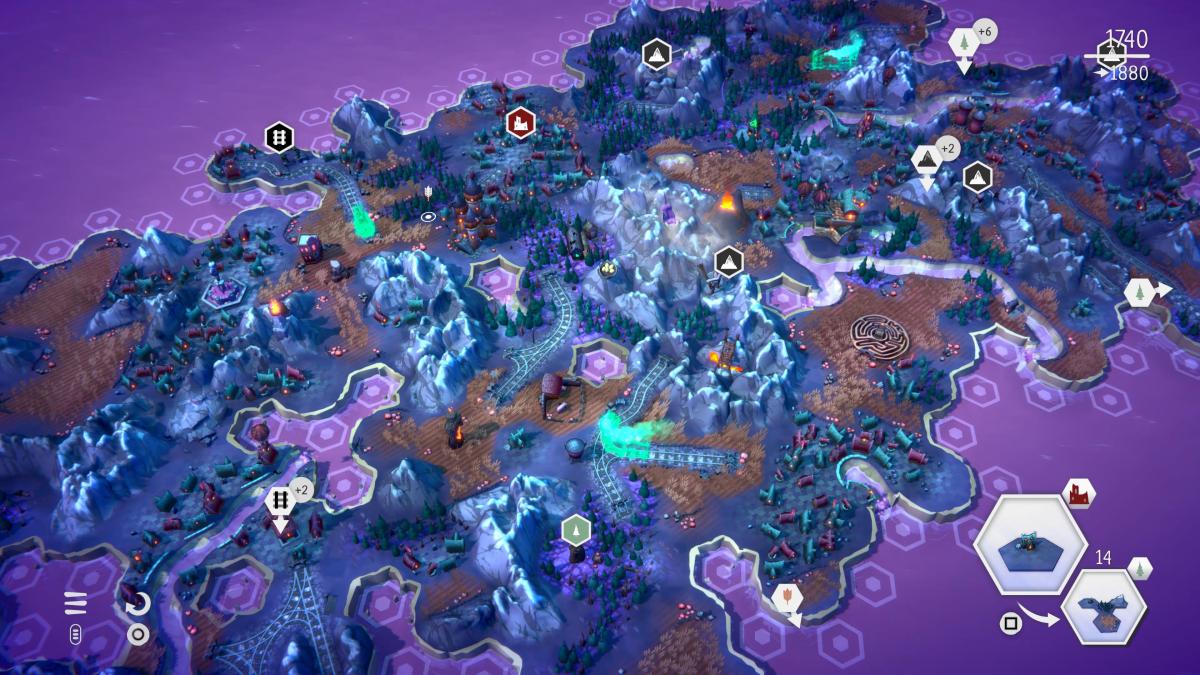
And that gets to my biggest reservation about Fangtopia: after your first kingdom, you’ve already got a pretty good idea of how the rest will go. You’ll see different decorations and try the other modes, but the basic experience settles into repetition very quickly. You’re going to be putting down forests, mountains, fields and towns until the cows come home, presumably to a field you placed earlier. I enjoy the process, but I haven’t felt much urge to immediately start again when a run ends.
In Conclusion…
I’m reluctant to come down too hard on that, because the familiarity is also what makes it relaxing. After the blood and gore of Gears of War: E-Day and the high-speed tension of Star Wars: Galactic Racer, I’ve quite liked having something I can fire up for a bit without much effort. I’m not excited to discover what happens next or desperate for one more go, yet whenever I do sit down with Fangtopia, I have a pleasant time. It suits those little gaps when I want to play something but can’t be bothered with anything demanding.
It’s exactly the sort of game I’d happily have on a PlayStation Portal, lying in bed for half an hour plonking down tiles before calling it a night. I would have liked the monsters and unlocks to give me a few more reasons to keep coming back, and anyone after much strategic depth will probably exhaust what’s here quite quickly. But as a cosy little game to dip into between other things, Fangtopia does its job. I’ve enjoyed building somewhere nice for the werewolves, even if I’m happy to leave them to it for a while afterwards.