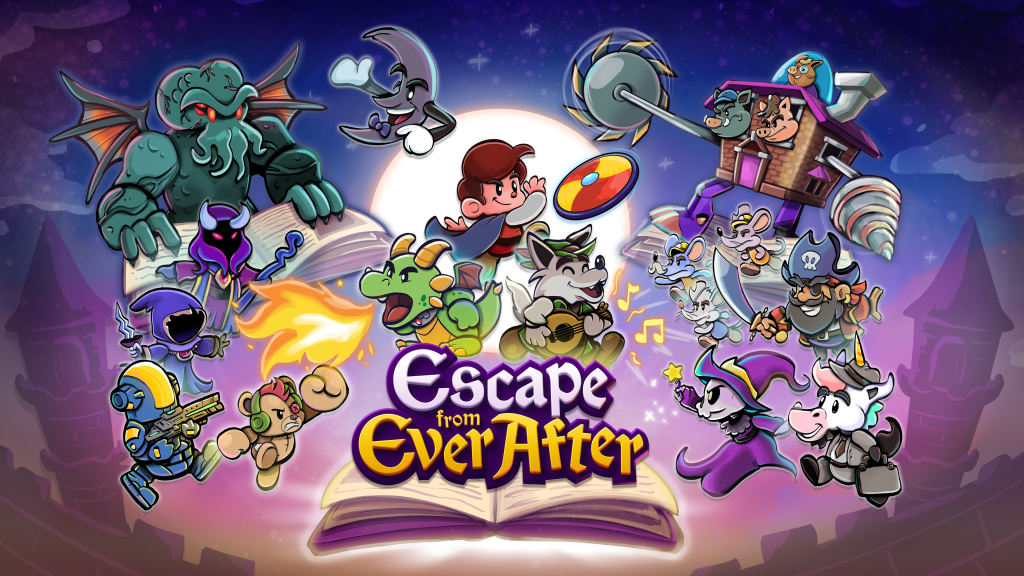
At some point while writing this I sneezed so hard I swear I saw interdimensional beings. Point is, I have a cold and my head is so stuffed up that an explosion is likely. But amidst my endless suffering and torment (feel sorry for me, dammit) there was a game that kept me entertained: Paper Mario: The Thousand-Year Door — I mean, Escape From Ever After.
Available On: Xbox One, Series S/X, PS5, PC, Switch
Reviewed On: PS5
Developed By: Sleepy Castle Studio, Wing It! Creative
Published By: HypeTrain Digital
Obviously, Escape from Ever After owes an awful lot to Paper Mario: The Thousand-Year Door. Hell, even the opening splash screen where the characters are lined up is basically a one-to-one recreation of the famous Nintendo title. It’s like they ambled into Nintendo, stole Paper Mario, realised they couldn’t sell it like that and quickly learned origami so they could toss some new characters in. A bit of paint later, and voila, new Paper Mario game…er, I mean, new game.
This also means there is an argument to be made that almost everything good about Escape From Ever After is really just everything that was good about Paper Mario: The Thousand-Year Door. But let’s be honest if we start venturing down that path then no game is ever going to get credit for doing anything. Bluntly, Escape From Ever After doesn’t massively improve on what came before it — but it doesn’t need to. It’s still a damn good time.
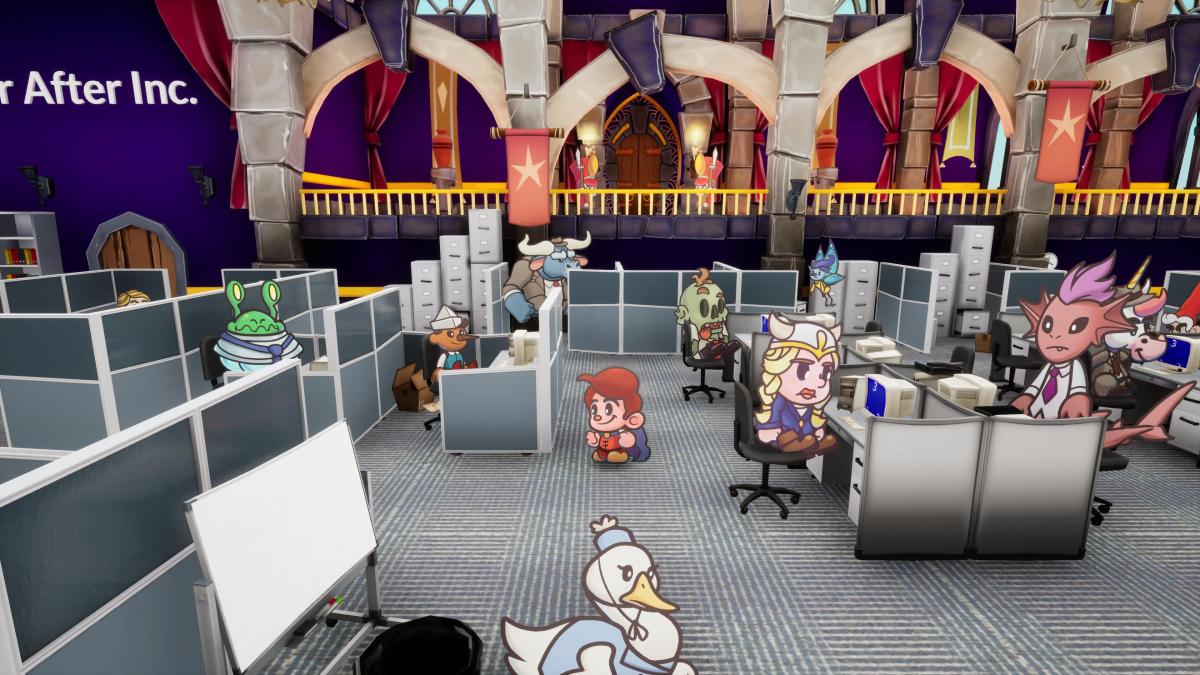
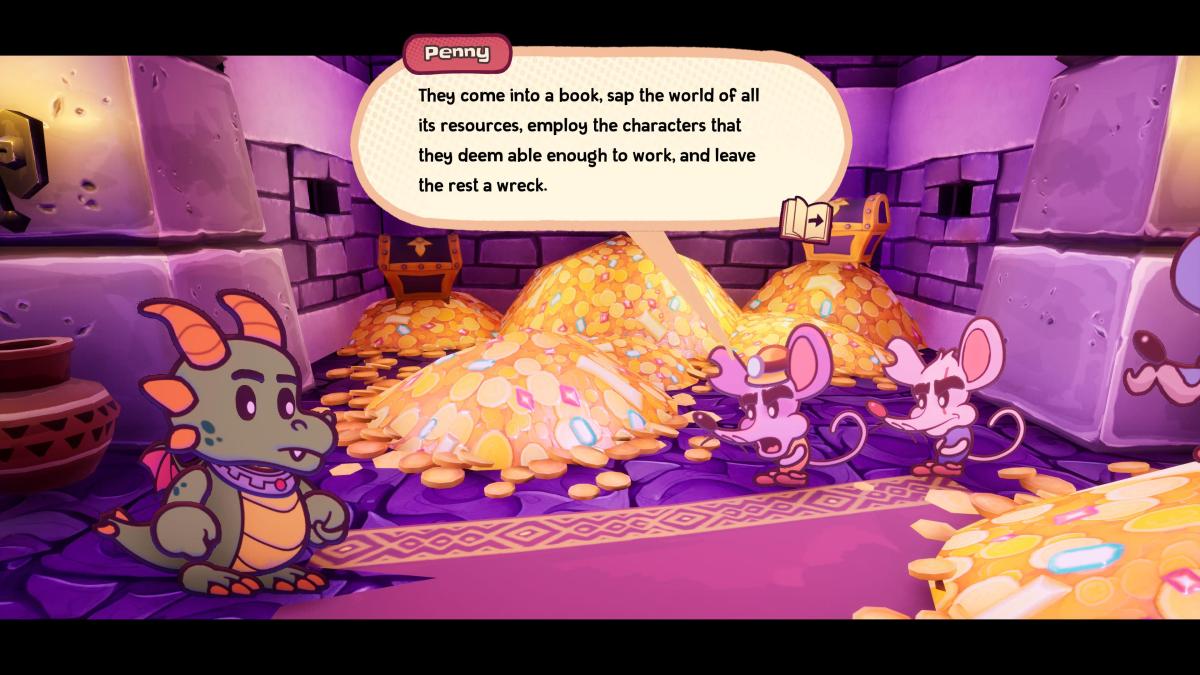
Classic fairy-tale hero Flynt Buckler returns to the castle to once again battle the mighty and massive Tinder the dragon, only to find a slightly miffed receptionist. Turns out, the castle has been taken over by Ever After Inc, a real-life company that buys up books and exploits the resources within, including making classic fairytale characters – like the three blind mice – work for them. As for Tinder, she’s now sporting a control collar, which has reduced her to a tiny and very angry dragon.
Flynt and Tinder must team up, much to the dragon’s annoyance, and devise a plan to infiltrate the company by working for them until they can find a way to bring the whole thing crashing down. In practice, this means Flynt and his slowly growing team of pals must explore different books and solve problems for the company, whether that means a trip to a version of Shadows Over Innsmouth where all the residents are birds, or winding up fighting the three pigs over a construction dispute.
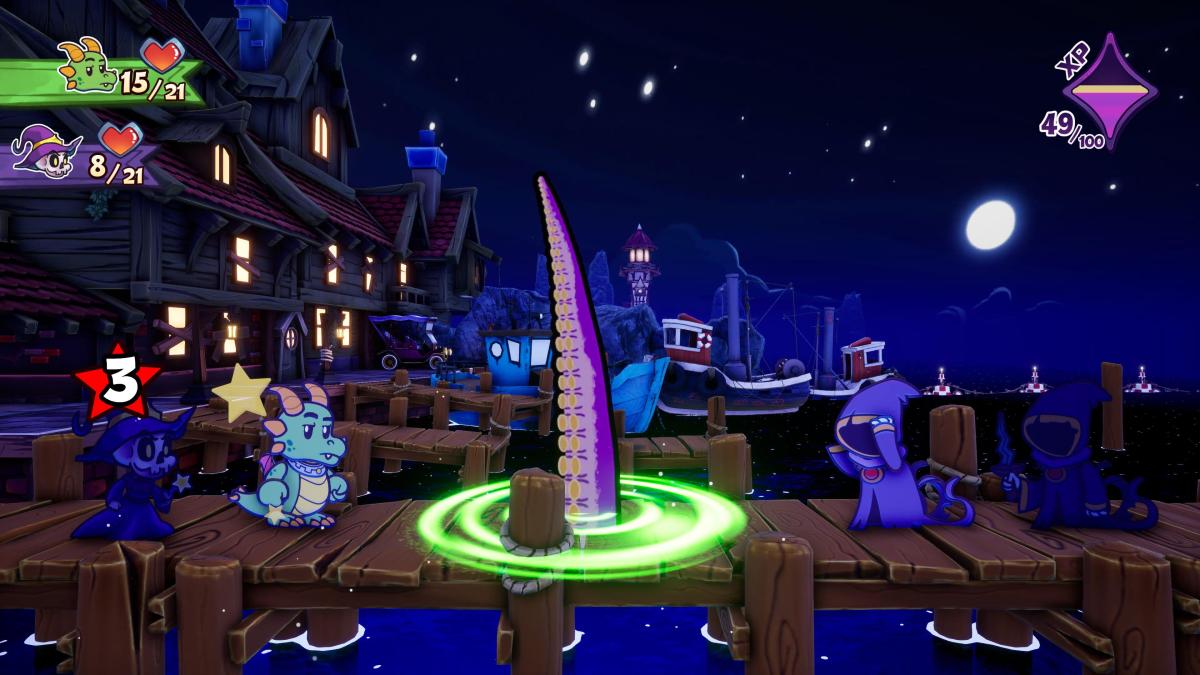
The game’s spin on classic novels and tales is the biggest weakness because it never really takes advantage of the source material in novel or fun ways. The Shadows Over Innsmouth chapter is the prime example, giving us what is essentially just the novel in condensed form and the only gimmick being that the residents are birds. Sherlock Holmes even makes a guest appearance here, surely as a goldmine for the writers, except he’s just sort of a joke character.
Given the game’s central book-hopping premise, I did find myself wishing there were just a few more stories to explore. One short side quest that briefly drops you into a classic fairy tale is a perfect example: it’s over quickly, but it’s a genuinely fun detour, and it highlights how enjoyable it is simply to step into a new book, even for a short while.
There are a few other jabs I could take, like one of the story beats needed to be given a lot more time to breathe rather than the 10 seconds it got.
However, for the most part, there are plenty of fun jokes and your growing team is a likeable bunch of misfits. I appreciate that the game occasionally even delves a tiny bit deeper by having a character freaked out about whether they have true self-will or only make choices based on what the author made them. Hell, the game even briefly addresses the idea that Flynt is the least developed character out of the bunch, a small collection of heroic tropes on legs. Admittedly, making fun of the lack of character development doesn’t make up for the actual lack of character development on your team. Mind you, on the other hand, given the fairy-tale book vibes, the characters are kind of meant to be paper-thin. Pun fully intended.
The oceanic chapter is the game’s only weak section because there’s far too long spent stuck on a ship where you have to tediously advance from one fight to another. This drags on and on, and it’s made even worse by the fact that you get a free health and SP top-up after every fight, so it’s not even like a battle of endurance or something. While every other part of the game feels like it was made out of love, this one feels like it was made to be filler. It’s that section that makes you yell, “Oh my god, are they still in a fucking tent?”. Sorry. I’ve been re-reading Harry Potter.
That probably sounds harsher than I mean it to. Simply said, I actually did enjoy the story quite a bit. The simplistic characters are easy to like, from the overly cheerful Big Bad Wolf to the constant bickering between Flynt and Tinder. There’s a lot to enjoy, and like any good fairy-tale it doesn’t get too bogged down in details and intricacies, putting the emphasis on simple themes and enjoyable characters.
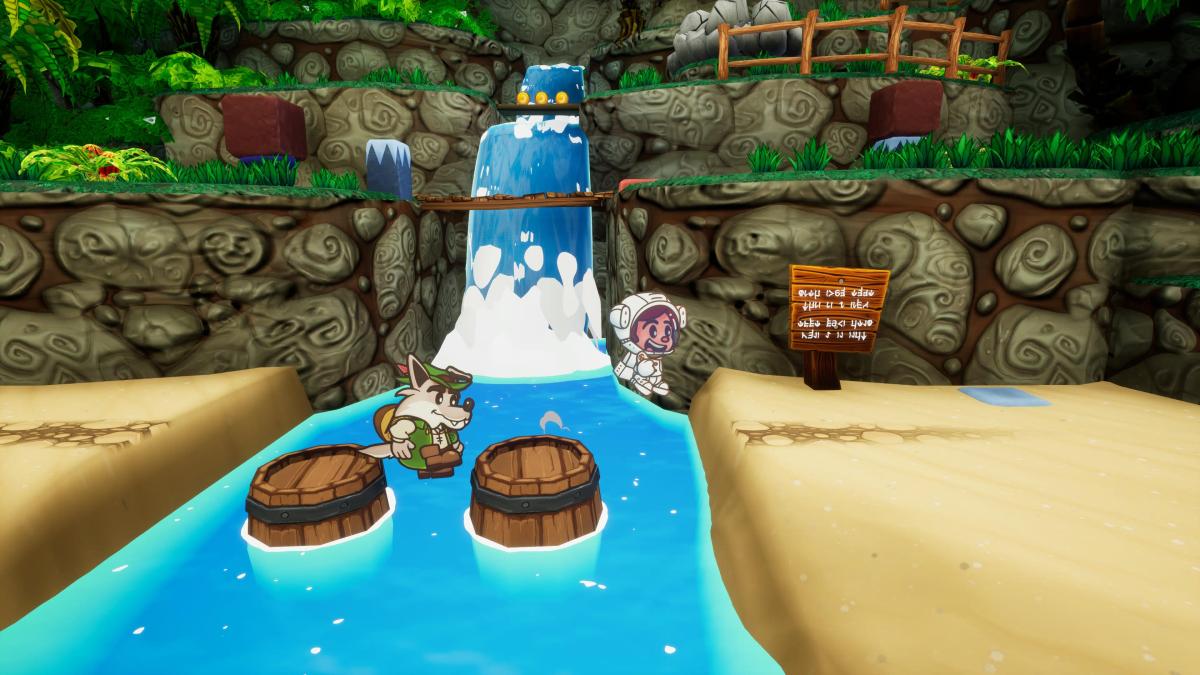
Exploring the different books and the Ever After Inc headquarters that you come back to is a lot of fun thanks to the puzzles and enemies you encounter. As more companions join Flynt, they can employ their skills outside of combat to help solve puzzles, like being able to turn Flynt into a seal so he can swim or make plants grow instantly. The puzzles aren’t overly taxing on the ‘ol grey matter, yet offer just enough bite to make them satisfying.
Visually, Escape From Ever After looks the part. The character models are especially strong, leaning hard into that paper-cutout aesthetic and further reinforcing the inevitable Paper Mario comparison. Environments are deliberately chunky and simple; some backgrounds err on the bland side, but others are far more striking, with enough visual charm to sell the idea that you’re hopping between different storybooks rather than just another dungeon or overworld.
The soundtrack is a standout, too. It’s bouncy, jazzy, and full of big-band energy, occasionally tipping over into outright chaos — but that slightly unhinged quality ends up working in its favour. It keeps the mood light, playful, and just a little manic, which suits a game about fairy tales being strip-mined by a corporate nightmare remarkably well.
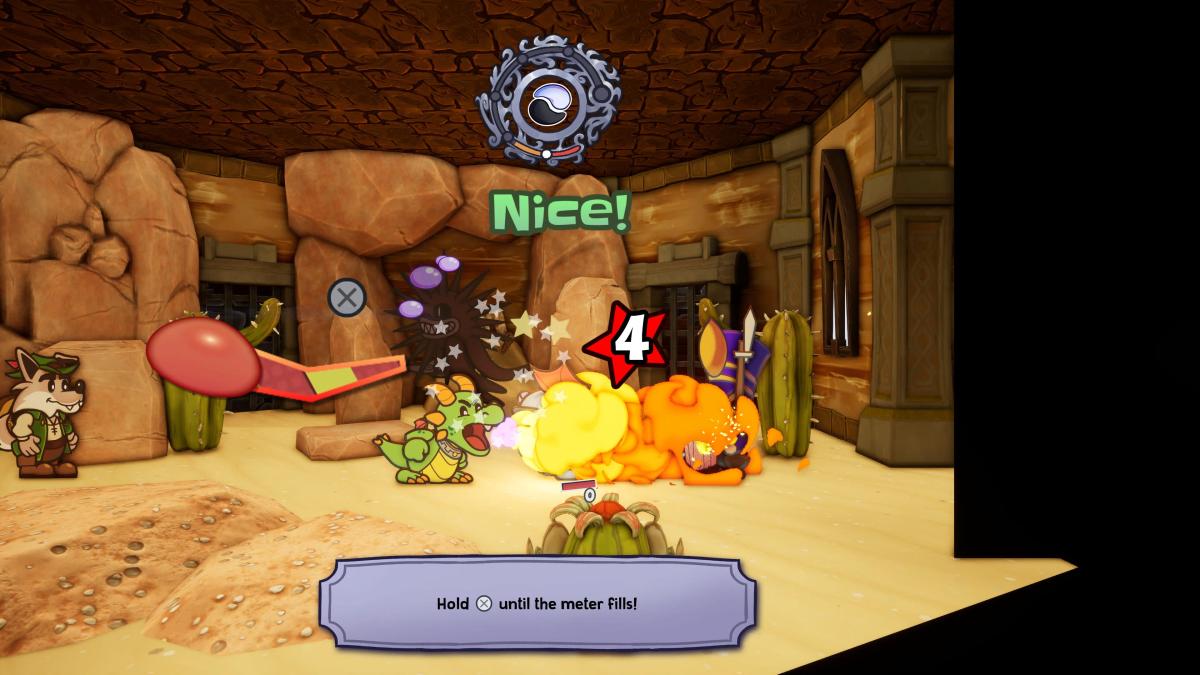
Whenever you run into a foe ambling around the world, you have the chance to get the first attack for free before jumping into combat proper. This is turn-based fare where two of your team stand on the battlefield, but you can swap them in and out by spending Synergy Points, which are also used for a few special attacks, too.
The intricacies of combat come down to understanding what attacks are best employed to deal with the situation at hand. That’s a fancy way of saying that if an enemy has a pointy sword aimed at you, don’t go using ramming attacks, yeah? Tinder’s flame is good at dealing with wooden shields, flying foes can be grounded with Flynt’s buckler, special smashing attacks are good at dealing with stacks of Gnomes and so on. There’s a solid mix of abilities, attacks, skills and items, along with a decent enemy variety and mixes to force you to use them.

There’s a small interactive layer thrown into the mix, by which I mean timing button presses boosts attacks and can stop you taking so much damage from enemy attacks. It’s not a new concept, but I like that it makes the action a bit more engaging.
Combat, then, is a highlight of the game, even if it does gradually become a little repetitive. Toward the end of the game (probably 10-20 hours, depending on how much side-content you tackle) I did find myself wishing I could skip fights against flunkies. But never enough to stop me battling toward the final fight.
In Conclusion…
The best Paper Mario game since The Thousand Year Door just so happens to be missing the Paper Mario nametag. Escape From Ever After spins an entertaining fairy-tale yarn, backed by likeable characters, smartly designed combat, and a clear affection for the genre it’s riffing on.
While it rarely pushes its storybook concepts as far as it could, and one chapter drags far longer than it should, the overall experience is charming, funny, and consistently enjoyable. If you’ve been craving something that feels like classic Paper Mario without replaying The Thousand Year Door for the fifteenth time, this is about as close as you’re going to get.