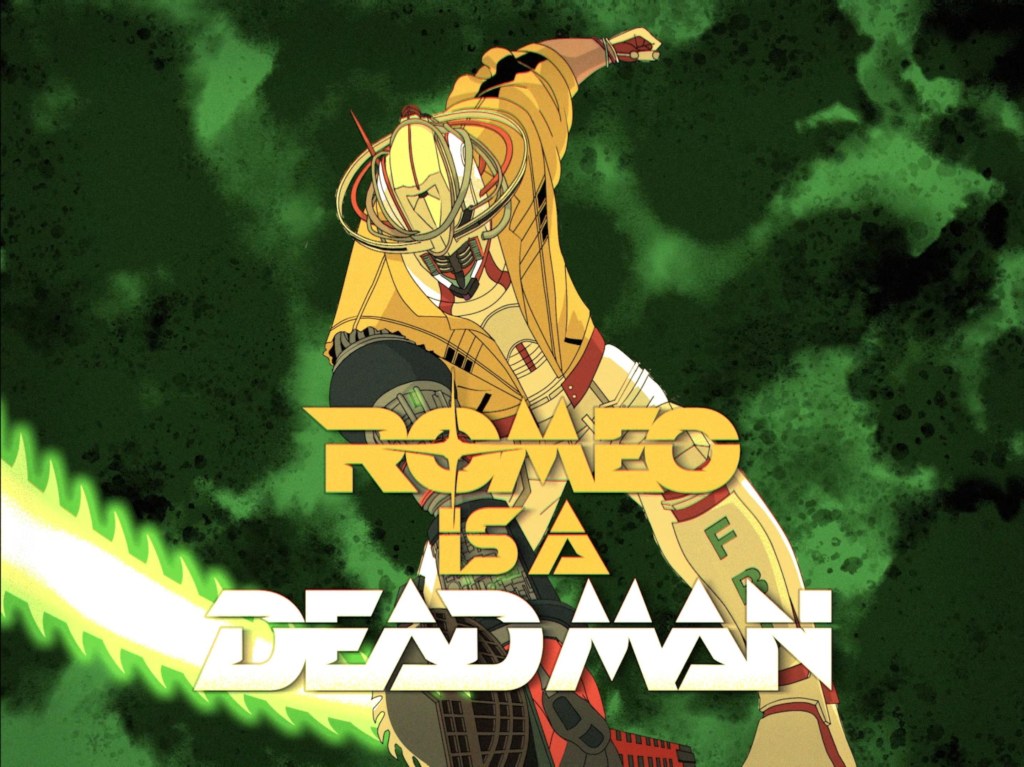
The problem with reviewing anything from auteur Suda51 and his team at Grasshopper is that it’s like trying to nail jelly to a tree. Except the jelly keeps swapping visual styles, the tree has now morphed into a 100ft tall super-mutant, and for some reason you need to increase your hammering strength by playing Pac-Man. There’s so much going on that reviewing Romeo Is a Dead Man boils down to this: it’s Suda51. Either you’re on board with the insanity, or you aren’t. Now stop reading.
Are you still here?
Available On: PC, Xbox, PlayStation
Reviewed On: PS5
Developed By: Grasshopper Manafacture
Published By: Grasshopper Manafacture
Review code supplied by the developer/publisher.
Ok, then. I’m somewhere in the middle. I want to like Suda51 games, but find myself enjoying them and disliking them in equal measure. This one is no different: a crazy romp filled with a million ideas, from stylistic shifts to weird mini-games. It’s manic and passionate and weird. It’s everything art should be, right down to the fact that sometimes you stare at it and just don’t get it. As I write this review, I have the creeping sensation that I’m in the second group — an insider looking in and wondering why everyone else is getting all the fun.
You are Romeo, a cop in a small town with a budding relationship with the lovely Juliet. Sadly, though, Romeo stumbles across a weird monster thing one night and gets his face ripped off, so his time-travelling super-genius grandpa portals in and saves him by sticking a weird mask on him. And giving him a robot arm. Can’t be a badass without a robot arm.
Turns out grandpa has also buggered up the space-time continuum or something, so now the universe has splintered. Romeo gets recruited by the space FBI (that’s literally what they are) and is now helping by travelling on a ship through space to different dimensions where he hunts down evil people and strange incarnations of Juliet. Except all those dimensions are basically just splinters of his hometown of Dreadford.
I am not making this shit up.
Clearly, this isn’t the Shakespeare classic, then. There’s… oh man, there’s a lot more going on in here, but that’s the general gist. It only gets weirder as you play through the game. While the story is actually straightforward, the weirdness and insanity continue to ramp up.
Dialogue is where I struggled the most. English is not the studio’s first language, so I suspect translation issues play a massive factor, but there are moments when the word choices don’t make sense, characters say something completely odd that doesn’t fit what’s going on, or just seem to ignore what was said to them. A couple of times it seemed like a pair of characters talking to each other were in entirely different conversations for a sentence or two.
Then you’ve got Suda51’s typical tonal whiplash. One second it seems to be trying to be taken seriously; the next, you’re manipulating a corpse’s face to match a photograph. It makes things tricky in the few moments when the game seems to want to be taken seriously and is trying to deliver an emotionally poignant beat.
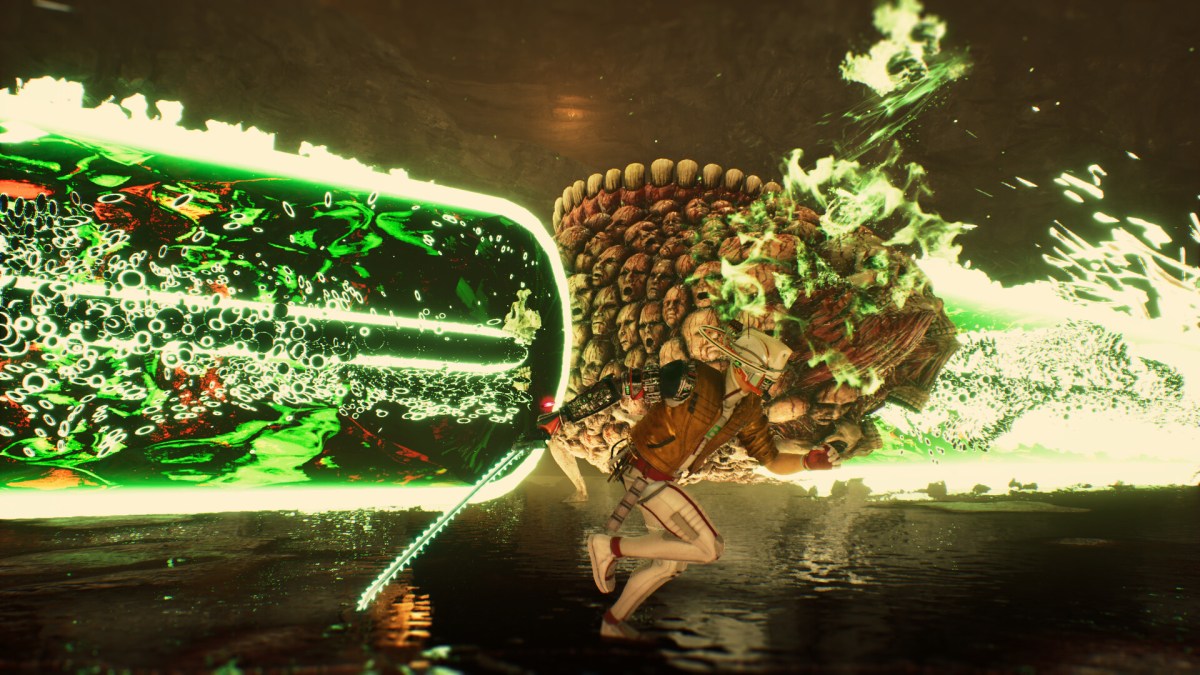
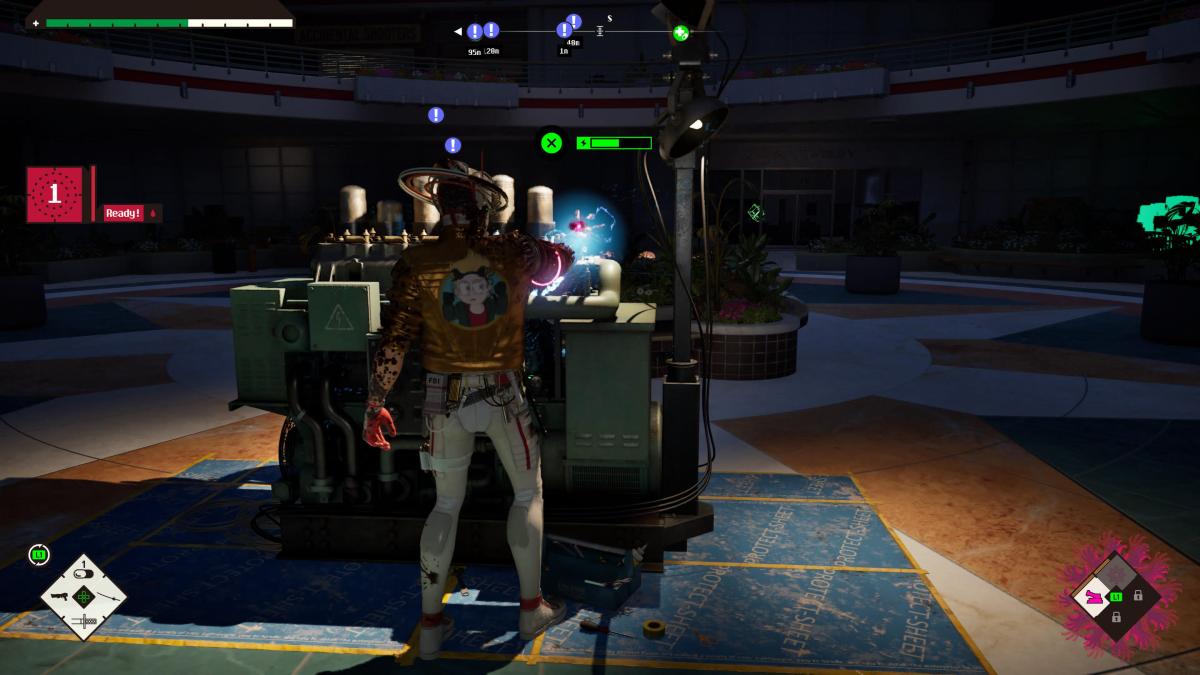
Influences are drawn from just about anything that moves, from pulpy movies to old-school comics. That’s reflected in all the weird graphical styles too, with the game frequently swapping out styles for something different, although the majority of the combat takes place in surprisingly bland real-world locations like a boring shopping mall or a bog-standard asylum. Again, it’s that odd tonal clash of the insanity versus the mundane. Or… Is it lazy development? I feel bad for saying that, but some of these environments do speak to the probably minimal budget that Grasshopper was working with.
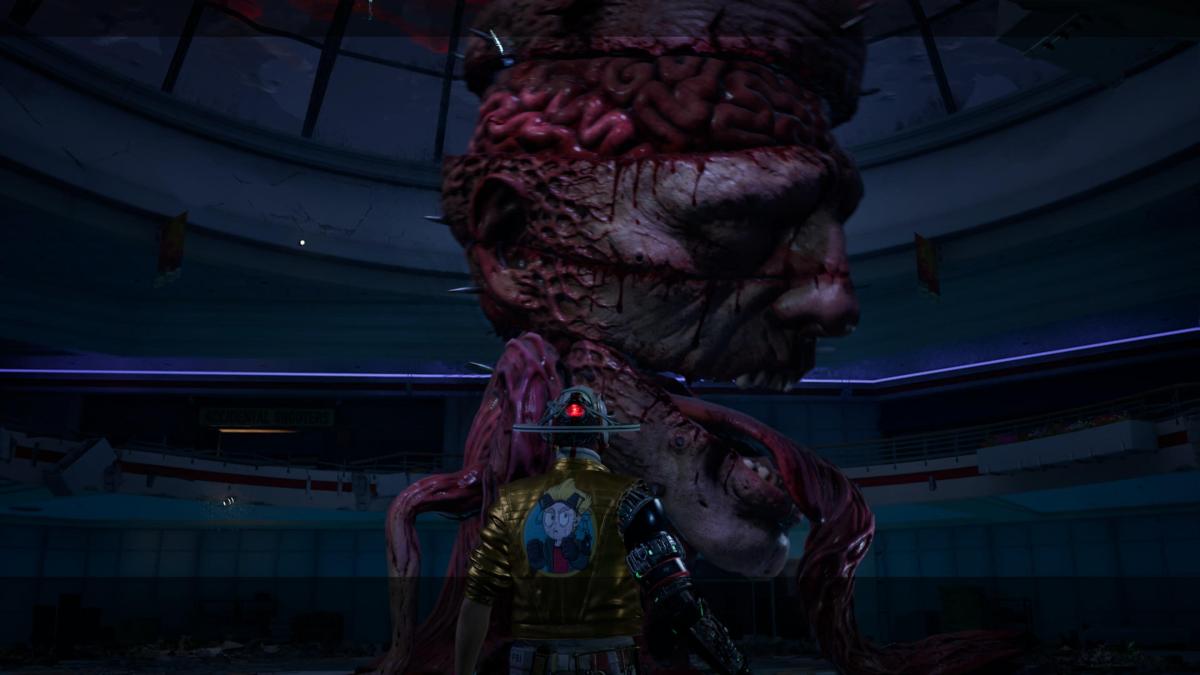
Going back to the narrative, there are deeper threads you can grasp onto amidst the mayhem, provided you can ignore the fact that one of your allies is a literal humanoid cat — something which barely even ranks on the WTF scale of Romeo Is a Dead Man. Ripping into these themes, the story does have some interesting things to say on the topic of star-crossed lovers, love in general, and trying to change yourself to appeal to another human. Whether you’ll even notice those deeper themes among everything else going on, though, is the question.
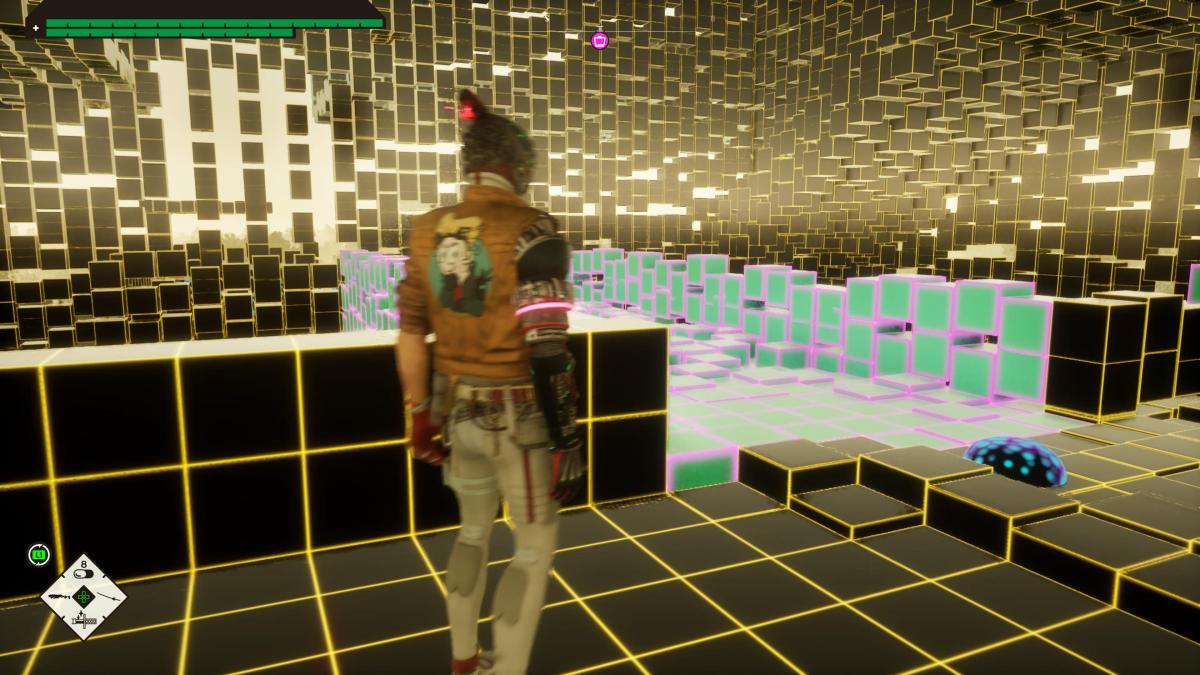
The way you get around is odd too. Levels are split into tiny sections, and sections are connected by jumping into subspace levels via floating televisions. Again, I’m not making this shit up. Subspace sections involve no combat and instead have you roaming around a weird cuboid world where walls appear and disappear as you get closer to them. Progress often revolves around finding parts of a key to unlock the chapter’s big boss, and that means finding TVs in subspace that let you jump back into the real world, where you fight your way to the next TV and jump back into a different point in subspace. Got that? That’s not all, because there are also fuzzy floating balls that you have to get into shape via a very simple mini-game, which will unlock new paths.
Subspace is probably the most boring aspect of the entire game. It’s fine when the sections are small, but there are some very lengthy subspace sequences that drag their feet. The visual style is great at first, but since everything looks the same it can quickly become annoying to navigate, especially when you’re jumping back and forth while opening new paths.
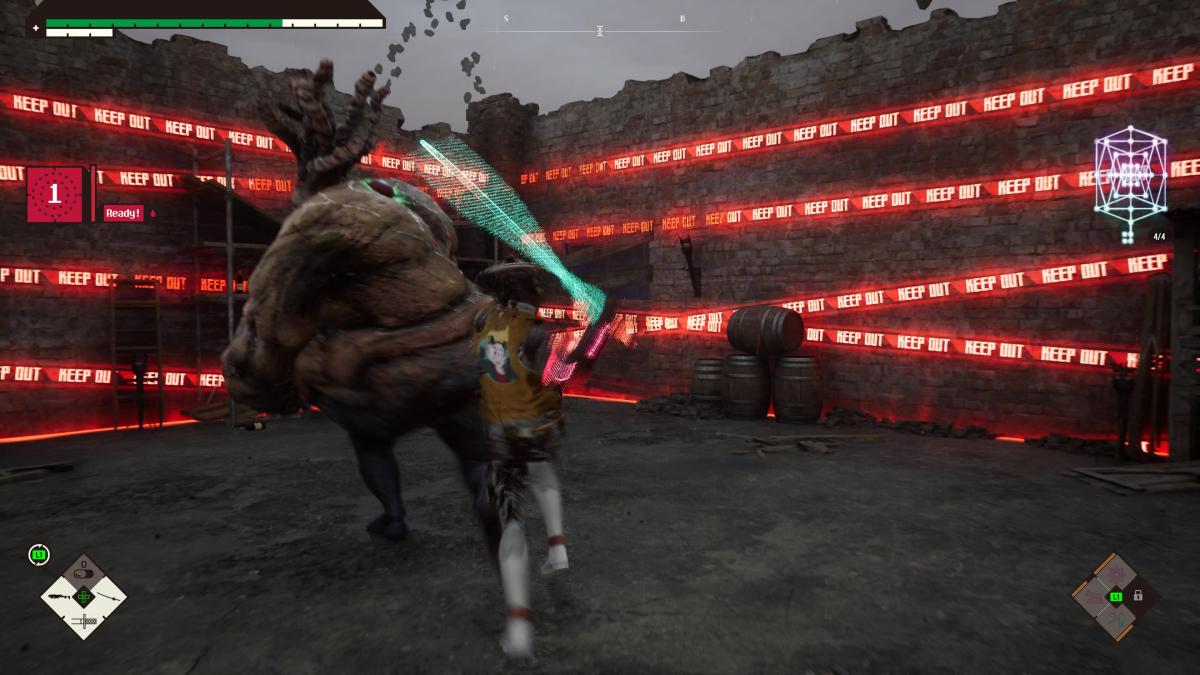
The core of the gameplay is close-up combat using a mix of four melee weapons and four ranged weapons that you can upgrade over time. A standard attack is your bread and butter, backed up by a stronger attack which I found myself rarely using. You can technically unleash some combos by bouncing between the two, but I found on the harder difficulty that the strong attacks are too slow and enemies are far too capable of attacking through your own strikes, rendering them useless.
Ranged combat is mostly there for dealing with one or two enemy types, and for hitting the glowing weak spots on the various zombies and weird monsters you’ll carve a gory path through. It feels decent, but again, on a harder difficulty the reload times make them tricky to effectively use until you unlock some upgrades that make ramming in new bullets much quicker.
Whatever attacks you use, you’ll soak up blood from everything you slice, dice, and riddle with bullets. All that red liquid feeds into the Bloody Summer special moves you can unleash, which also have the added benefit of restoring some health and usually staggering larger enemies like bosses.
All of these moves get used against roving packs of “Rotters”, which are little more than zombies, along with a small mixture of variants. The game revels in its gore, so slicing them up is fairly satisfying.
The problem with combat is that it’s stiffer than it should be for an action game. There are too many animation locks that leave you helplessly unable to dodge or swing with your sword. Too many awkward stun states or narrow corridors where the camera struggles. And too many cases of the screen being awash with effects that look great but leave you blind. None of this makes the combat bad, but it sure doesn’t make it good either. To put a brutal point on it, at its best the game would rank as a mediocre action game, and at its worst, a poor one.
You can summon some company mid-fight by deploying Bastards to the battlefield who… um, I should probably explain that sentence, right? I swear, reviewing a Grasshopper game is mostly about going, “Ok, hold on, let me explain this bit.”
Bastards are basically zombies which you can inexplicably collect in seed form and then plant in the ground back aboard your home ship. Once they grow, you can equip them as a skill and drop them onto the battlefield, where they can act as turrets, suicide bombers, healing points, spinning tornadoes, and more. And that’s not all, because you can also fuse Bastards together to create new variants or just increase their stats.
I swear, I am not making this shit up.
Romeo can get his own base stats increased by playing yet another weird-ass mini-game, this time one that feels vaguely like Pac-Man. By spending your hard-earned Emerald Flowsion, you can move a character around a pixel maze, gathering stat boosts for your attacks, health, and more. There are even little teleporters to bounce you from one side to the other. It’s this kind of quirky design that makes Suda51 and Grasshopper such appealing developers — or makes them your worst nightmare, depending.
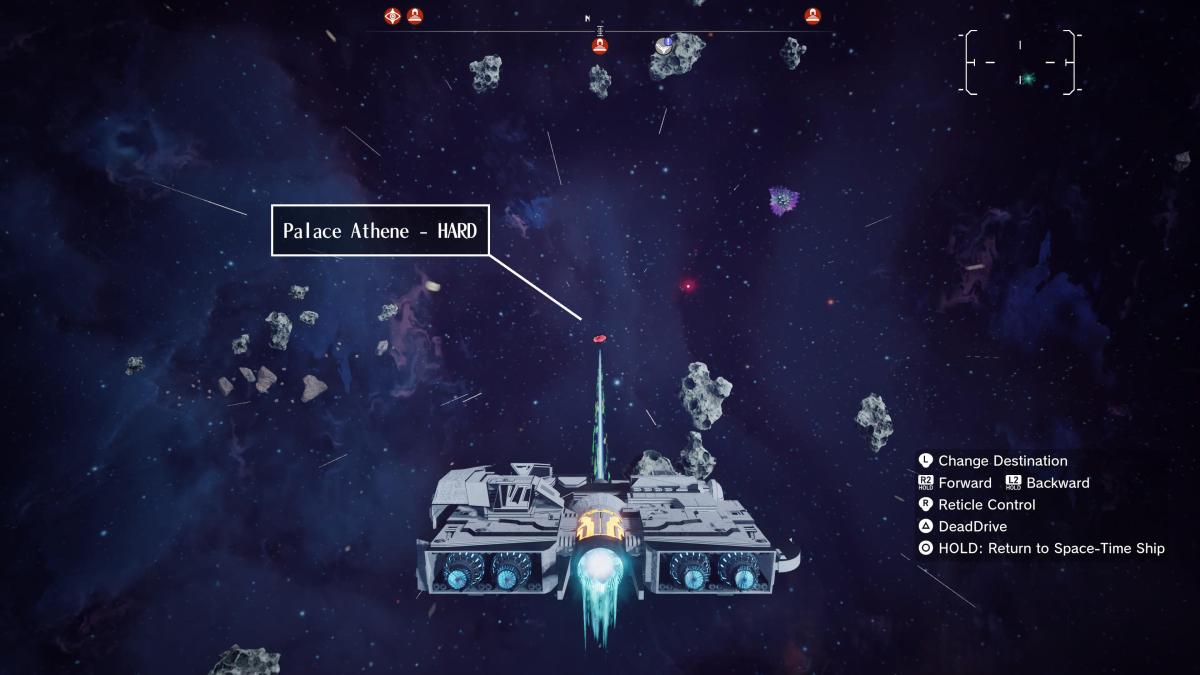
Weapon upgrades require another type of resource that you can harvest out on missions, or by visiting special tears in space called Athene Palace, which act like mini-dungeons. You can also get more of it by hoovering up space debris while you fly your spaceship between story missions. Oh yeah, there’s something else to explain. You pilot a ship to reach new destinations, but that’s being generous: really, you point it toward the desired destination and then go forward or back on a preset path. You can scan the surrounding space for debris, which can be converted into more upgrade resources. Oh, and the space debris also contains ingredients used to make katsu curry.
Wait, wait, wait. Hold on. Katsu curry. Let me explain that. Jesus Christ. Ok, you get ingredients like onions and mushrooms from space debris or during normal levels that can be turned into katsu curry using yet another mini-game, and those curries can be consumed to provide things like an attack boost for 30 seconds. Got that?
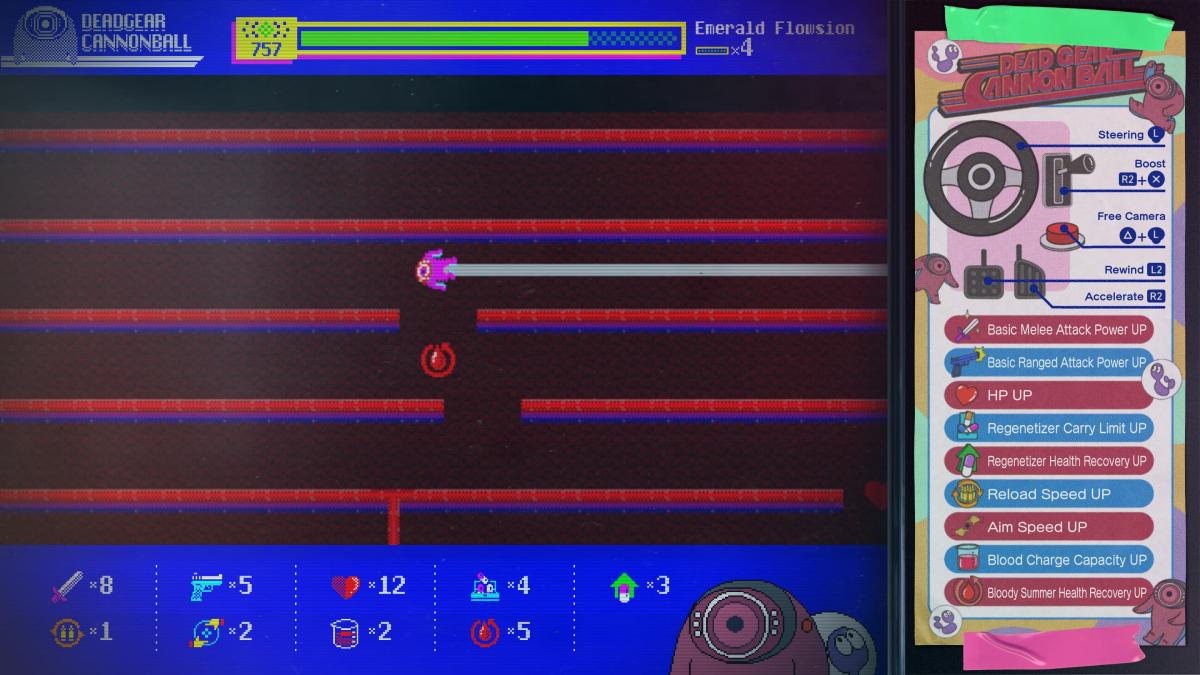
Oh man, and I didn’t even explain how scanning for the fissure in space requires playing a crazy version of Pong with four paddles where you have to get the ball back into the central pillar. It is a pain in the ass.
Still not making this shit up.
Considering how inventive the rest of the game is, the bosses are surprisingly dull. Some of them have cool visual designs, sure, but they are mechanically basic and occasionally annoying in how they can stun-lock and one-shot you into oblivion.
Performance is a big problem on the PS5 version I was playing. Frame rate drops were frequent and didn’t even seem to require that many on-screen enemies to trigger. And I’m not talking small dips either — I’m talking full-on crashes into a ditch. Luckily, you should be able to push through them and they’ll clear up, but the developers are going to need to update the game’s performance.
Coming to the end of this review, I think it’s fair that I address how much I haven’t talked about. There are so many small mini-games, art-style shifts, and weird moments that we’d never get out of this bloody review if we tackled all of it.
In Conclusion…
A mediocre and often very unpolished action game that’s only worth playing through because of the Suda51 insanity drizzled over it. But that’s the magic of Grasshopper and Suda51, isn’t it? The team continues to make bat-shit crazy games held together by duct tape and enthusiasm that appeal to a niche but die-hard crowd. That’s true art, and it makes me happy to see it exist and be loved, even if it isn’t completely for me.
Best enjoyed by existing fans. I don’t think this is the best game Suda51 and his team have produced, but it’s up there. For anyone else, it’s difficult to tell you whether to try this or not. If this review conveyed the manic weirdness of the game, then hopefully you’ll already know whether it sounds annoying or immensely appealing — and that’s all I can do for you. It’s up to you now.