
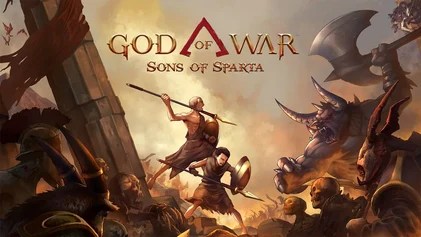
When rumours of a 2D God of War game began to spread, I imagined a crazy action game, perhaps set during Kratos’ Greek days where I could wield the Blades of Chaos in side-scrolling action. I did not imagine teenage Kratos in a Metroidvania from Mega Cat Studios, a team that somehow went from small indie projects to working with Sony Santa Monica. That must have been one hell of a pitch.. That must have been one hell of a pitch. So here we are, God of War: Sons of Sparta, a retro-inspired prequel.
Available On: PlayStation 5
Reviewed On: PS5
Developed By: Mega Cat Studios & Sony Santa Monica
Published By: Sony
Ultimately, it felt like if you named Kratos anything else and stripped away the God of War title, I wouldn’t be able to tell it was part of the series. This Kratos doesn’t feel like the same character, and the game is missing the bombastic combat, awesome weapons and insane scale that God of War is known for. Instead, we have a competent, well-made, unremarkable metroidvania with one of the biggest IPs in gaming slapped on top.
The game follows Kratos in his teenage years, long before he becomes a psycho-killer intent on massacring the gods and long, loooooong before he calmed down a bit and started hanging a severed head from his belt. Er, calming down is a relative term, I suppose. Here he’s in training alongside his brother Deimos, hoping to earn entry into the Vanguard Circle, an elite Spartan warrior group that apparently spends a lot of time running errands.
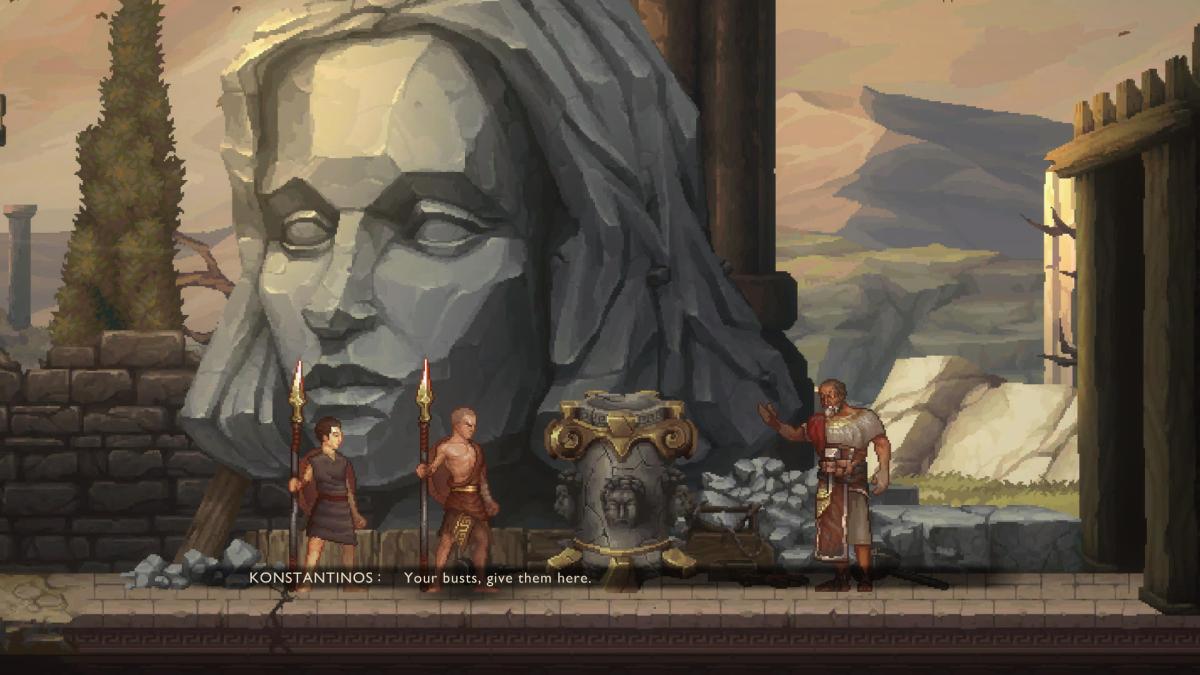
The Kratos presented here is stoic and completely focused on becoming the perfect Spartan soldier. He’s so dedicated that he can’t even spare time for frivolous pursuits like music. However, he’s also fiercely protective of his younger brother Deimos, even if Deimos’ excitable personality clearly wears on him. He’s radiating older brother fed up with his younger sibling energy.
To my mind, though, this version of Kratos is difficult to reconcile with the two other versions of him we know. I kept waiting to see a hint of the edge we associate with him — a glimpse of the intense anger simmering beneath the surface that we know will eventually erupt leading to a rampage so epic that literal gods end up as a bodycount. But it never really appears.
Without that intensity — or the hard-earned maturity of the newer God of War games — this Kratos is… well, boring. And that is not a word that should ever be associated with a man who has so many anger issues he could single-handedly keep every psychiatrist on the planet in work. In fact, this version of Kratos is so painfully dull that I eventually found myself waiting for someone to hurry up and kill his family so we could get the interesting version of him back. Harsh? Yes. True? Also yes.
Kratos and his brother eventually set out to find a missing Spartan named Vasilis, and that is quite literally the entire plot of the game. Well, that and Kratos repeatedly arguing with Deimos about whether Vasilis is even worth the effort.
The whole story revolves around finding this missing Spartan, which would probably be more compelling if the game ever gave us a reason to actually care about Vasilis. As it stands, the narrative mostly boils down to travelling somewhere, discovering he isn’t there, and then heading off to the next location where he might be. It’s hard to stay invested when even Kratos himself seems unsure why they’re bothering.
The returning Antony Del Rio does a solid job portraying teen Kratos, and it’s fun to see TC Carson back as adult Kratos, who narrates the story to his daughter Calliope. It’s a neat framing device, even if the story being told never becomes especially compelling.
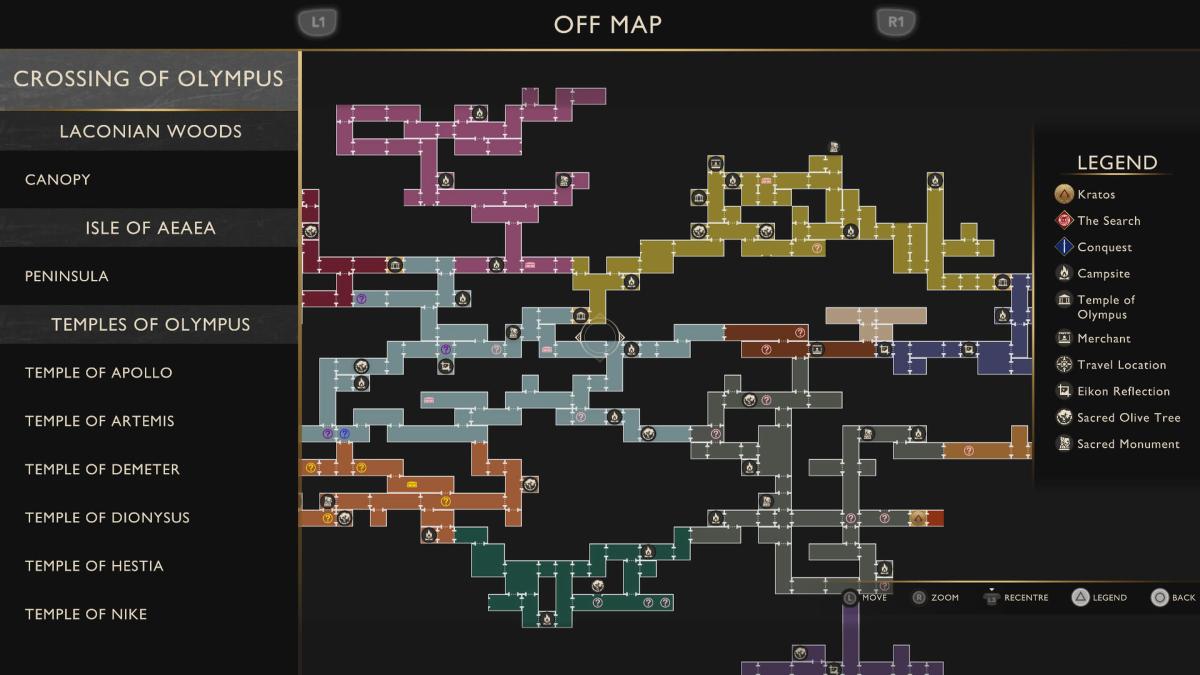
As Metroidvanias go, the structure here is fairly standard: a sprawling map that slowly unfurls into something resembling a plate of spaghetti thrown onto a table, combined with the steady acquisition of new abilities that open previously inaccessible areas.
The map design itself is perfectly serviceable. Each region has its own flavour — sewers, lush green environments, and a few more unusual areas like a winery — and there are some impressive vistas scattered throughout the game that will make you stop and admire the lovely visuals.
Backtracking can feel tedious early on, largely because fast travel is limited to temples that you gradually discover across the map. These temples also serve another purpose: they’re where you trade in rare resources found throughout the world to upgrade your Godly Boons, the special abilities tied to your various exploration tools. Unless you need to power up a little, backtracking is often best left until later when fast-travel becomes easier.
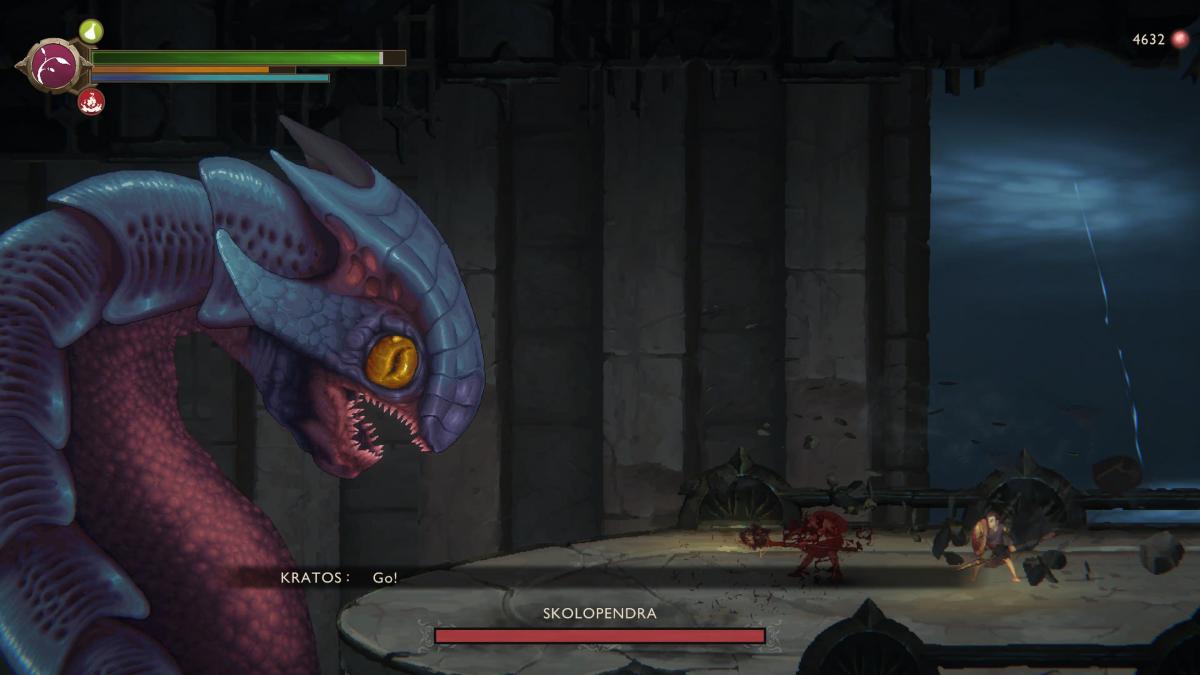
Those upgrades actually feel worthwhile. Hunting down rare resources and returning to the temples gives backtracking a sense of purpose, and unlocking stronger versions of your abilities provides a satisfying incentive to revisit old areas.
Elsewhere, progression is a bit of a mixed bag. Like most God of War games, you collect red orbs to invest in various skill trees covering offense, defense and movement. Unfortunately, many of these upgrades feel fairly unexciting, often boiling down to minor stat boosts rather than game-changing abilities.
You eventually unlock an additional system for spending red orbs as well, but even that rarely feels particularly impactful. The temple upgrades tied to the Godly Boons end up being the more interesting progression system.
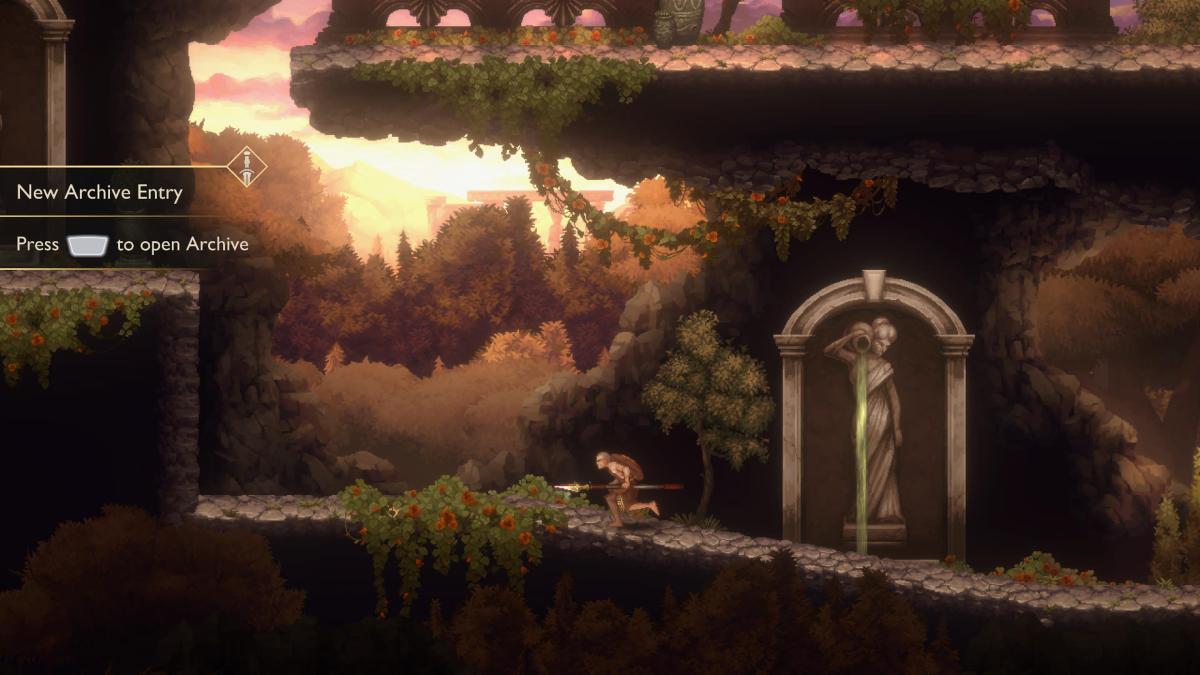
Still, the exploration loop works well enough. You’ll unlock climbing knives for scaling walls, a glaive that can activate ropes and chains, and a bizarre flaming branch that feels like it wandered in from a completely different game. None of these tools are particularly exciting, but they get the job done. Which is also how I would describe Kratos’ attitude toward the entire adventure.
Movement and platforming generally feel solid, although there is one odd design decision that kept bothering me throughout the adventure. For reasons that escape me, Sons of Sparta doesn’t allow movement with the D-pad. Instead, you’re forced to use the analogue stick at all times.
That might not sound like a big deal, but for a Metroidvania it feels strangely wrong. The genre has long thrived on precise directional inputs, and using the analog stick occasionally leads to small frustrations. Trying to stab directly upward, for example, can easily turn into an angled attack if the stick shifts slightly to the side, causing Kratos to miss enemies that should have been hit cleanly. It’s a minor annoyance, but one that could have been solved simply by allowing players to use the D-pad instead.
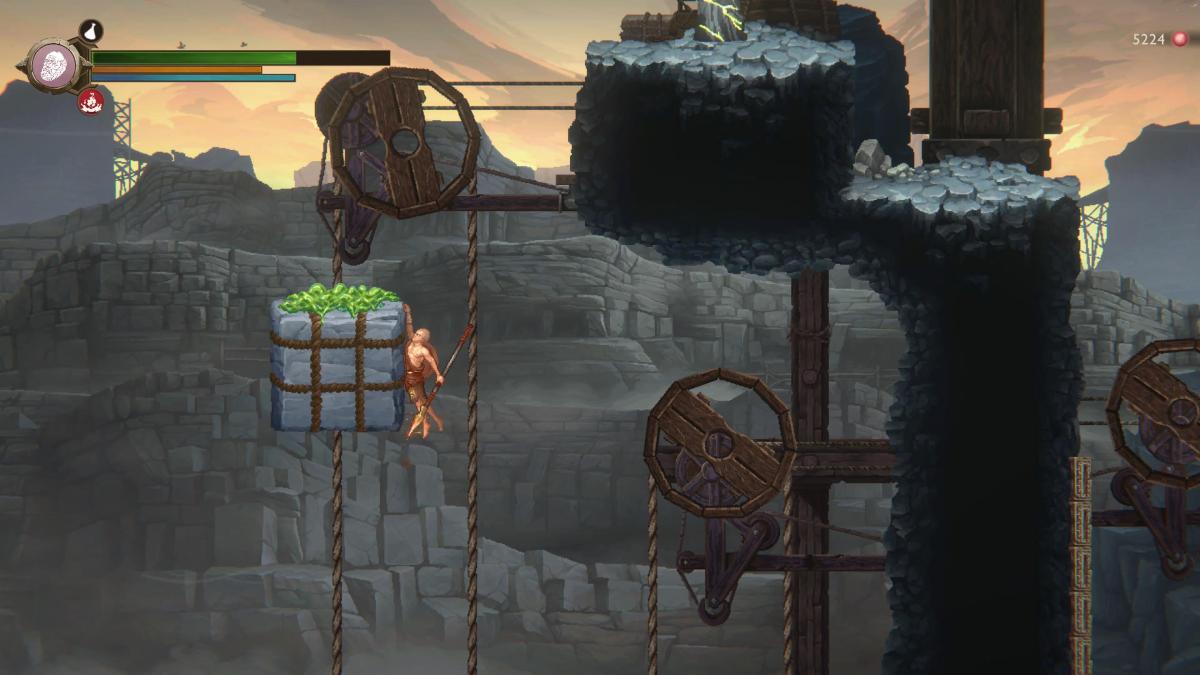
Aside from that quirk, movement itself feels responsive enough. Kratos gradually unlocks the usual suite of mobility upgrades like double jumps and faster traversal abilities, and navigating the world rarely feels awkward. Platforming doesn’t reinvent the wheel, but it works well enough and never becomes a major source of frustration.
The map system is also quite user-friendly. Players can place their own markers to track secrets or blocked paths, and the game even allows you to take snapshots of locations and pin them directly to the map for later reference. It’s a small feature, but an extremely useful one when you inevitably find yourself wondering where you were supposed to go next.
Which happens more often than you might expect. At times it feels less like God of War and more like God of Opening the Map Again Because I Forgot Where I Was Going.
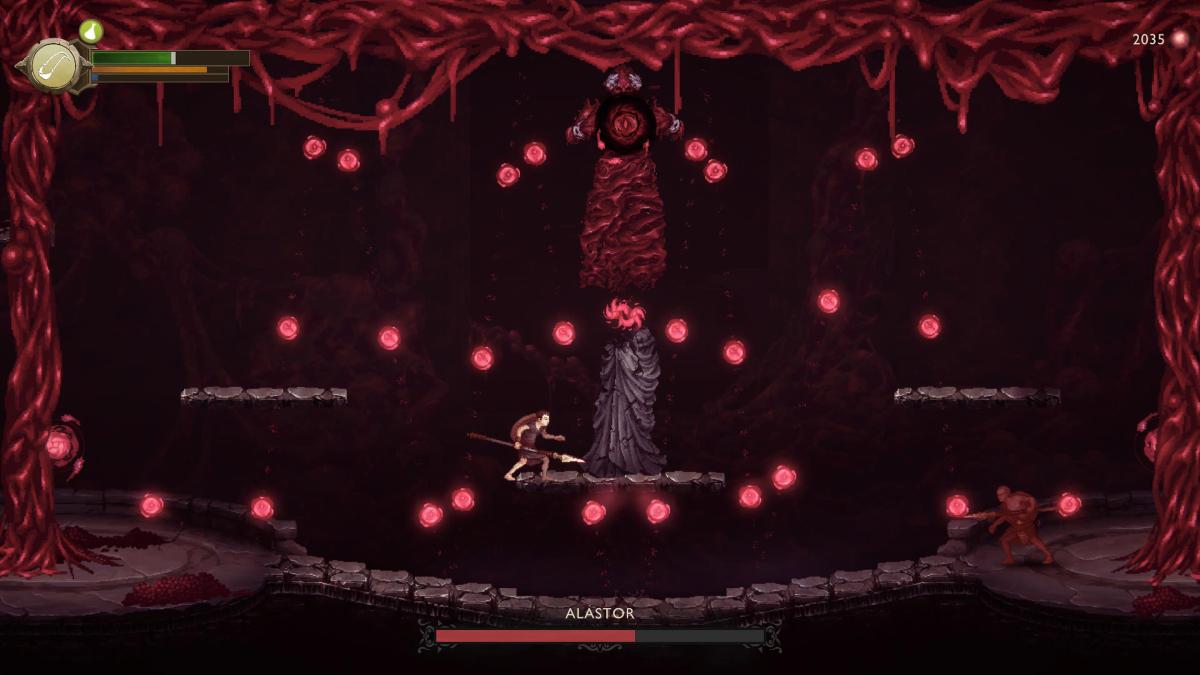
Combat is where things start to feel a little underwhelming, which in the God of War franchise is practically a criminal offence. Although, almost everything Kratos does is a criminal offense.
After literally annihilating gods with the Blades of Chaos and doing my best Thor impression with the Leviathan Axe, poking things with a fairly anonymous spear feels like a bit of an anticlimax. The spear can be upgraded with elemental tips and a handful of abilities, but it never feels nearly as satisfying as the iconic weapons the series is known for. Combat itself revolves around a fairly simple system of light attacks, stamina-based heavy attacks, dodging and blocking with Kratos’ shield.
Button mashing rarely works, which is good — you’ll need to dodge and parry attacks to survive tougher encounters. Finishing moves exist as well, although they’re tied to a stun meter that I rarely found myself focusing on.
Technically, many of Kratos’ exploration tools can also be used in combat, but swapping between them isn’t especially smooth. As a result, I rarely bothered incorporating most of them into fights.
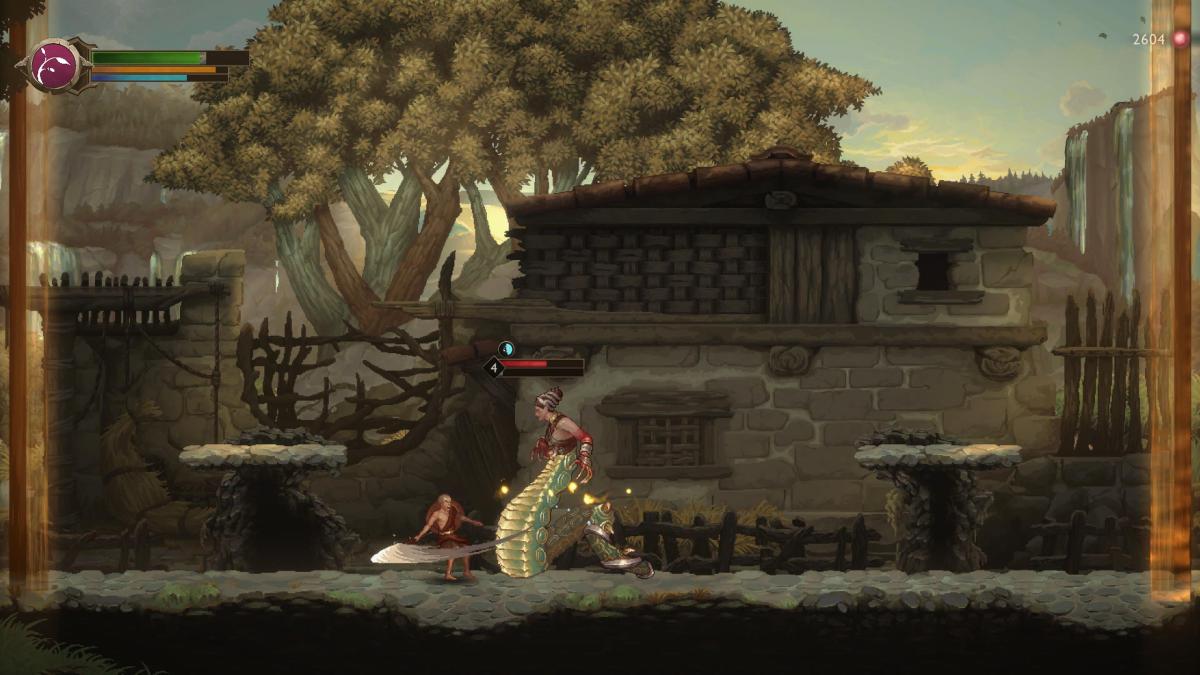
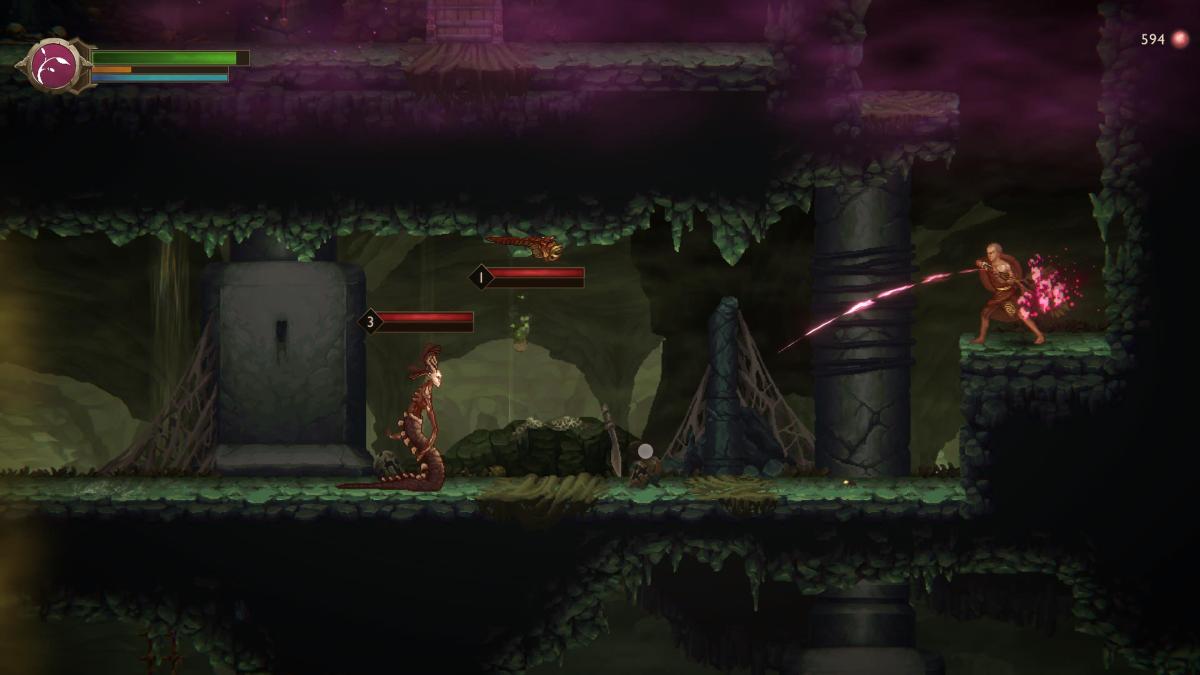
One area where the game does impress, however, is enemy variety. Throughout the adventure, you’ll encounter a wide selection of creatures pulled from Greek mythology, including eerie banshee-like monsters, hulking minotaurs, and other bizarre beasts.
Many enemies ultimately boil down to variations of familiar attack patterns that need to be blocked or dodged, but their designs are often visually striking and the game does a good job of steadily introducing new enemy types.
Unfortunately, there are a lot of enemies. You can barely walk ten metres without running into another fight. Eventually, I realised that battling everything would probably quadruple the length of the game while simultaneously halving my desire to keep playing it. Thankfully, you don’t actually have to fight everything — and you probably shouldn’t, especially since enemies respawn whenever you rest at a campfire.
Boss fights follow a similar pattern to the rest of the combat. Mechanically, they’re perfectly serviceable, usually revolving around learning attack patterns and exploiting openings. What they lack, however, is the sheer scale and insanity that God of War bosses are famous for. None of them really stand out in my mind compared to some of the absurdly epic encounters found throughout the rest of the series.
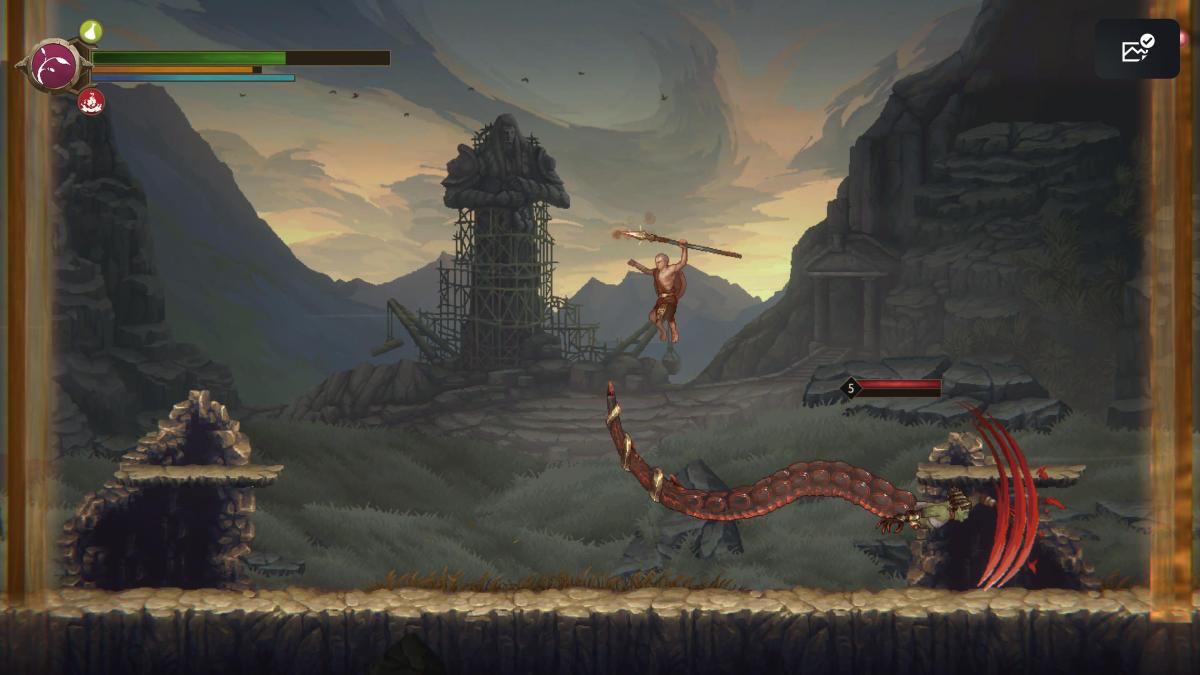
Presentation, on the other hand, is one of the game’s stronger elements.
Sons of Sparta adopts a pixel art style that appears to draw inspiration from Greek mosaics, creating a look that feels both retro and mythological at the same time. It’s an unusual direction for the series, but one that works surprisingly well.
The game doesn’t always capture the immense scale associated with God of War — something that’s understandably difficult to convey in pixel art — but there are still some impressive moments where gigantic statues loom in the background or ancient ruins stretch into the distance.
The soundtrack is another highlight. It blends retro-inspired melodies with the epic orchestral tone associated with the modern God of War games. It’s an unusual combination, but one that works surprisingly well and gives the game its own identity. When I discovered Bear McCreary handled the soundtrack, I nodded – the man knows his stuff.
Technically, the game also features a two-player co-op mode, although it’s a bonus feature unlocked after finishing the main campaign. It’s a fun addition, but it’s also a little misleading for anyone who saw the store page and assumed the entire game could be played cooperatively.
In Conclusion…
As a God of War game, it lacks the scale, brutality and larger-than-life spectacle that define the series. And as a Metroidvania, it struggles to stand out in a genre that already boasts heavy hitters like Hollow Knight, Dead Cells and Prince of Persia: The Lost Crown.
None of this makes Sons of Sparta a bad game. In fact, it’s quite easy to enjoy it while you’re playing. But by the time the credits rolled, my biggest takeaway wasn’t excitement or frustration. It was simply the feeling that I’d played something… fine. The kind of game you enjoy well enough in the moment, but probably won’t think about again once it’s over.
And for a series as iconic as God of War, that might be the most disappointing thing of all.
 WGB
WGB 