
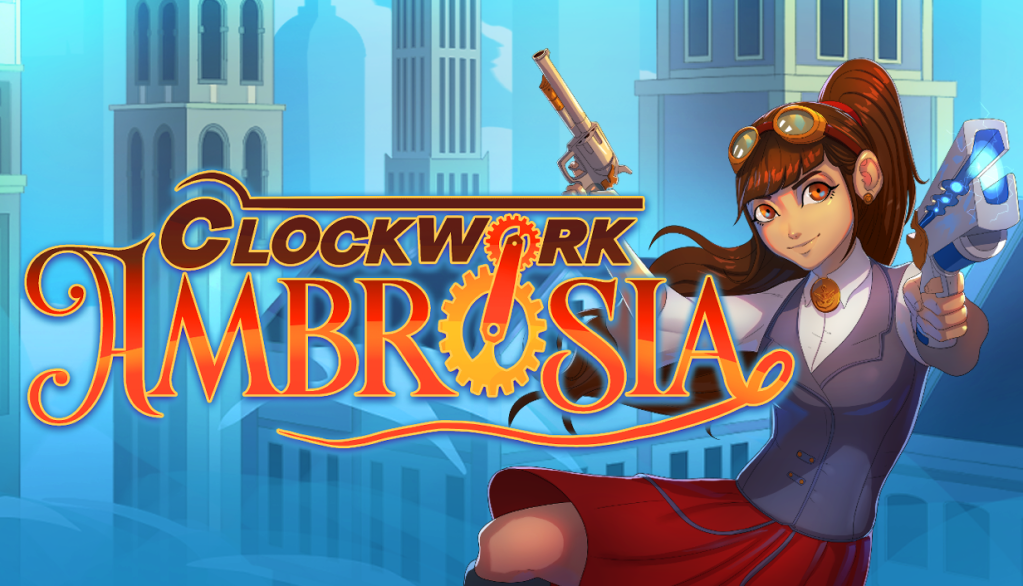
There’s something immediately compelling about Clockwork Ambrosia before you even boot it up. Maybe it’s the name, which sounds like the sort of delightfully pretentious phrase an indie metroidvania generator would spit out after too much coffee, or maybe it’s the fact that this is the culmination of more than a decade of work from its developers. Either way, it arrives with the kind of backstory that practically begs for a triumphant underdog success story, the sort of tale where years of passion and persistence finally pay off in spectacular fashion.
Available On: PC
Reviewed On: PC
Developed By: Realmsoft
Published By: OI Games
Review code provided by the publisher
What players get instead is something far more modest: a perfectly competent metroidvania with one genuinely clever central gimmick, wrapped up in polished pixel art and backed by solid fundamentals. It’s also a game weighed down by awkward navigation, frustrating pacing decisions and a tendency to keep its best ideas locked away for far too long. I enjoyed my time with it and I’m glad I saw it through to the credits, but in a genre packed tighter than my kitchen junk drawer, “perfectly fine” doesn’t always cut it.
Clockwork Ambrosia’s biggest issue is that it takes far too long to give players the tools needed to make it interesting. The early hours are, bluntly, a bit of a slog. Fast travel doesn’t unlock until well into the adventure, and before then, the game repeatedly asks you to trudge across its sprawling map while fighting enemies you’ve already dispatched again and again.. More than once, I found myself hovering dangerously close to quitting altogether as I wandered around trying to figure out where the game wanted me to go next.
And that’s where my biggest complaint lies.
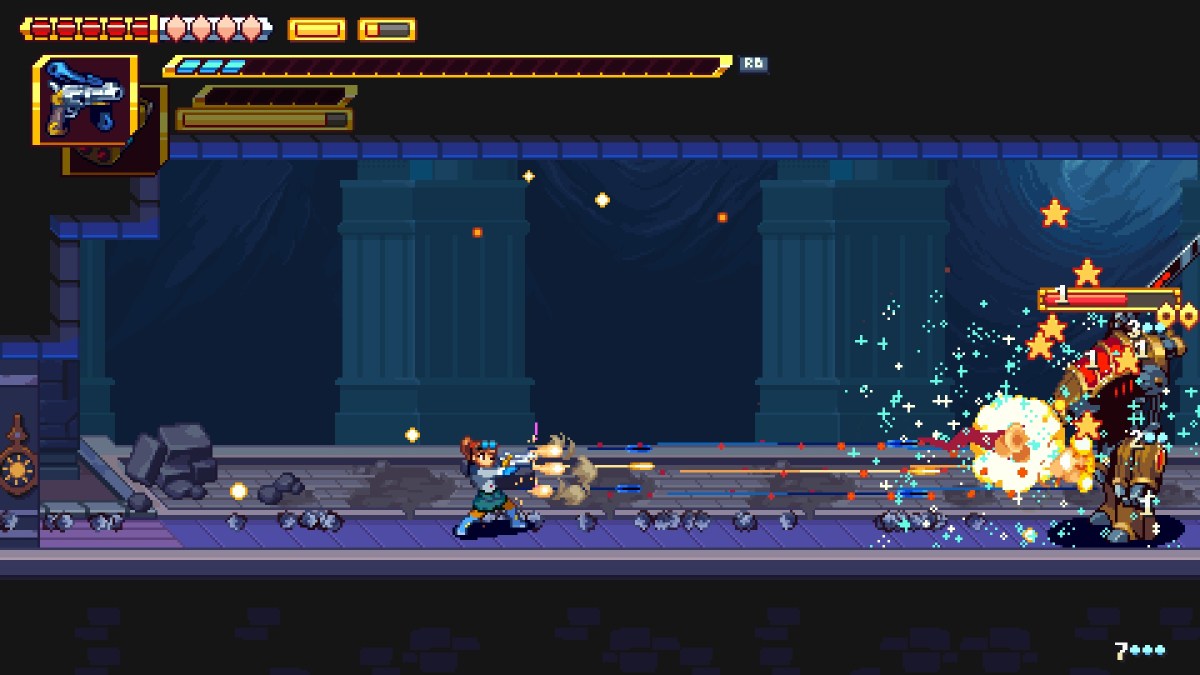
Metroidvanias are, by design, built around exploration and uncertainty. Getting lost is part of the appeal, as is noting areas to come back to later on. The best examples of the genre understand this and subtly guide players through environmental cues, smart map layouts or small nudges that make progress feel like discovery rather than blind luck. Clockwork Ambrosia mostly just leaves you to wallow in your own ignorance, and while some players may love that hands-off philosophy, I found it more frustrating than rewarding.
Far too often, progression came down to tediously scanning the map for blank room exits or eventually discovering that the path forward was tucked behind some barely visible tunnel I’d previously dismissed as background decoration. It isn’t that I wanted the game to hold my hand, but occasionally pointing me in roughly the right direction would have been appreciated. The ability to pin icons on the map is genuinely useful for marking previously inaccessible areas, though a few more icon types would have been welcome. A proper zoom-out function would help enormously, as would clearer zone labels and a teleport menu that actually tells you where each destination is beyond a cryptic list of names.
It’s a frustratingly recurring theme throughout Clockwork Ambrosia: systems that are almost excellent, but stop just short of being truly player-friendly. It needed another pass by someone who could just point out the quality-of-life hiccups and UI trip-ups.
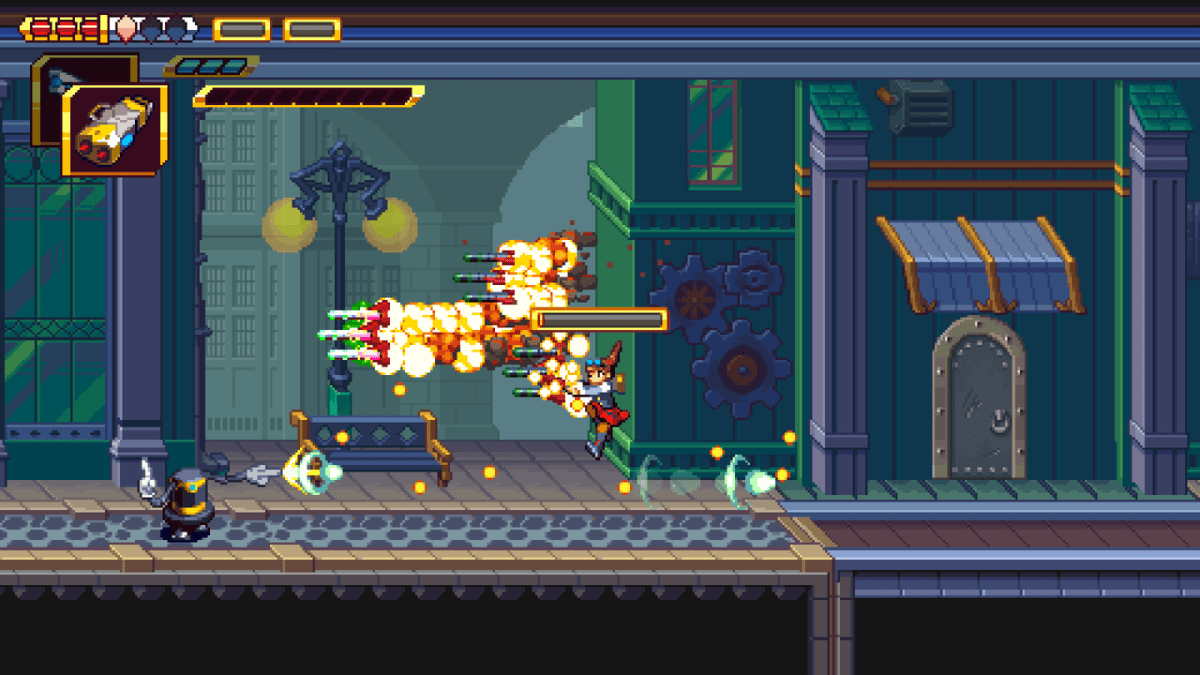
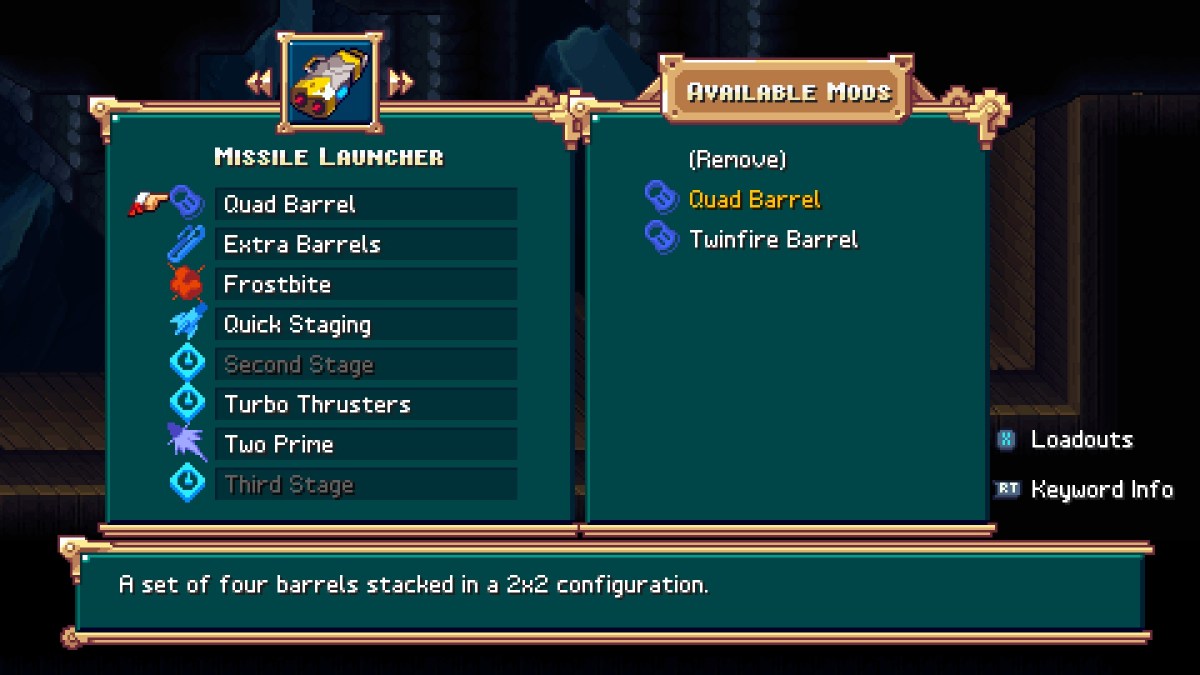
The game’s defining feature is its weapon modification system, and to its credit, this is where Clockwork Ambrosia earns its identity. You’re given four base weapons — revolvers, an energy rifle, a grenade launcher and a rocket launcher — each of which can be extensively customised with over 150 different parts that alter their behaviour in often absurd ways.
The system is a bit like making a salad. The base ingredients are fairly plain, but start chucking enough weird stuff into the mix and before long you’ve accidentally assembled something that probably violates several international treaties. A rocket can suddenly cut off mid-flight, roll harmlessly along the ground for a moment and then violently spear upward for reasons known only to whatever deeply concerning engineer designed it. The energy rifle can be transformed into a pseudo-shotgun through enough modifiers, while other combinations create gloriously chaotic death machines that feel less like weapons and more like evidence for a future Geneva Convention hearing.
When the system finally opens up, there’s genuine fun to be had in seeing just how ridiculous your arsenal can become. And the amount you enjoy Clockwork Ambrosia is probably going to come down to how much you like tinkering.
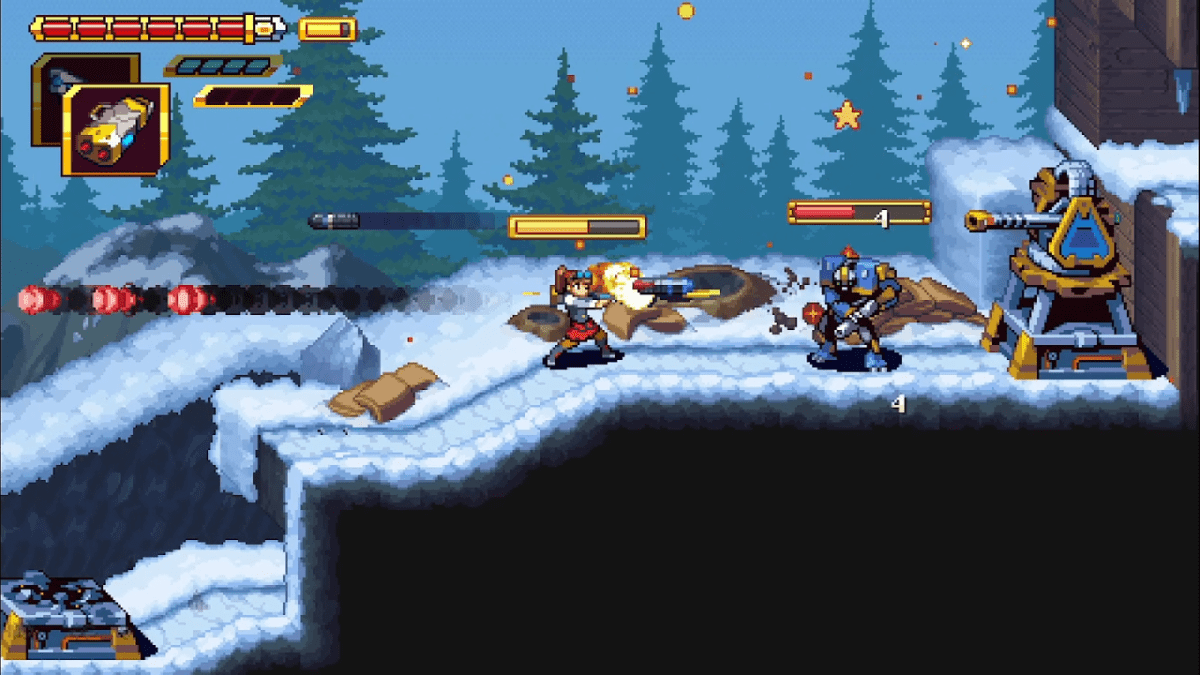
The problem is that it takes far too long to reach that point. For much of the early game, useful modifications are sparse enough that I settled into a handful of effective builds and rarely felt compelled to experiment. By the time the system truly opens up, I’d already fallen into habits that the game never gave me much reason to break. I’ll freely admit younger me might have gleefully spent hours obsessively tweaking every weapon for every encounter, because that’s really what the system wants you to do. Current me usually looked at the available options, shrugged, and solved problems using whatever Frankenstein’s monster I already had equipped. My default? The revolvers with shadow bullets, explosive rounds and massive cylinders so that I could spray bullets like a cowboy.
Still, if experimentation is meant to be the heart of the experience, it should feel frictionless and rewarding enough to naturally encourage that behaviour. Too often I found myself thinking that a particular mod might be useful for a specific encounter, only to decide it was less hassle to brute-force the situation with my current setup. That leaves Clockwork Ambrosia in the awkward position of having its most distinctive feature often feel more like a fun toybox than a transformative gameplay system.
Outside of its weapon tinkering, this is a very traditional metroidvania. You’ll unlock familiar traversal upgrades like enhanced jumps, environmental mobility tools and other movement abilities that send you scuttling back through earlier areas in search of newly accessible secrets. The combat starts on the slower side but improves significantly once movement upgrades begin stacking, eventually evolving into something closer to a satisfying run-and-gun platformer. Boss fights are generally solid too, though there are occasional difficulty spikes that feel like the inevitable side effect of balancing encounters around a weapon system this flexible.
Visually, Clockwork Ambrosia is undeniably polished. Its pixel art is consistently attractive and there’s a decent variety of environments to explore, but there’s a curious flatness to it all that’s difficult to fully articulate. It looks good, certainly, but rarely striking enough to leave a lasting impression. There’s technical confidence in the presentation, yet it lacks that extra spark of atmosphere or visual identity that elevates the best games in the genre from merely pleasant to genuinely memorable.
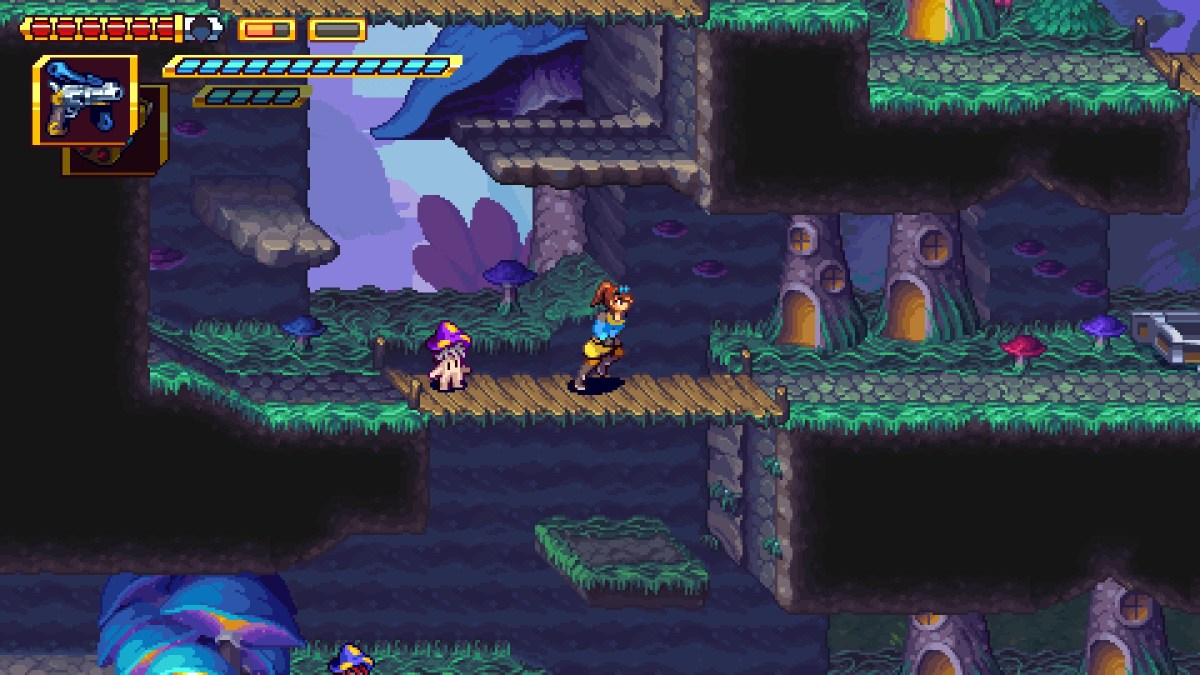
The story barely registers, though that’s hardly a dealbreaker. You play as Iris, an airship pilot who crash-lands on a mysterious island after being attacked by a robotic dragon, because of course she does. The island’s surviving inhabitants occasionally offer snippets of lore and optional dialogue, but the narrative mostly exists as a paper-thin excuse to justify all the shooting, platforming and occasional owl-related violence. Honestly, that’s perfectly fine. Not every metroidvania needs sprawling lore or emotional depth.
In Conclusion…
Clockwork Ambrosia’s gameplay suits its name, ticking along like clockwork: reliable, predictable and rarely surprising.
After fourteen years in development, I wanted it to leave a bigger impression than it ultimately did. There’s clear passion behind it and enough clever ideas to show why the project endured for so long, but passion alone can’t elevate familiar design or smooth over awkward pacing. What’s left is a solid metroidvania with an inventive gimmick, one that genre diehards will likely enjoy even if it never comes close to challenging the heavy hitters of an absurdly crowded genre.




 WGB
WGB 