

Ubisoft is making major moves to save itself from plummeting stock prices, confirming details on its new plans. Part of that was cancelling, multiple titles, including the Prince of Persia: The Sands of Time remake, and delaying 7 others. The next step looks a lot like more layoffs and a big restructuring of the company.
First, Ubisoft confirmed that the recent closures of Halifax and Stockholm studios were part of the reset. VGC reports that in the conference call they were invited to attend, Ubisoft stated they would consider selling other assets if needed, but did not elaborate.
Ubisoft has also said it plans to speeding up its cost reduction plans, aiming to save another €200 million in the next two years. They didn’t confirm any layoff plans as such, but did say in regard to cancelled projects that there will “…some people who will be refocused on other big projects, and some may leave the company.”
Layoffs, though, are practically inevitable. Ubisoft typically employs a staggering number of people. By late 2025, its own website listed 17,000 employees, which equates to somewhere in the realm of €2.5-3 billion, based on the company’s financial reports. “restructuring” was confirmed for the Abu Dhabi, RedLynx, and Massive teams, some of which we’ve already seen.
Moving on, Ubisoft is carrying on with its previously announced plan to split the company into independent “creative houses”. We already know about the first one: Vantage Studios, the subsidiary in which Tencent owns just over a quarter. Of course, Tencent also holds stakes in Ubisoft itself, too.
Vantage Studios holds the rights to Assassin’s Creed, Far Cry and Rainbow Six.
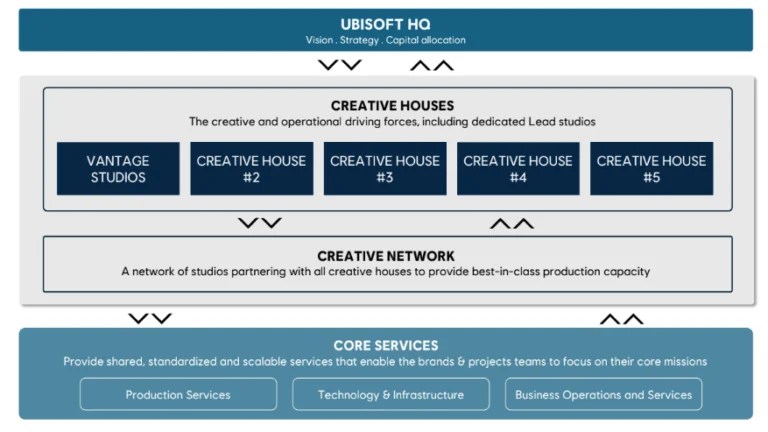
Four other “creative houses” are being planned, each one being organised around a genre. So far, they have not been given names, but underneath those there will be a “creative network” of studios that partner with the main teams, and then below that there’s core services.
Here’s the breakdown:
- Creative House 2: “competitive and cooperative shooter experiences.” Includes The Division, Ghost Recon and Splinter Cell.
- Creative House 3: Focusing on “live” games such as For Honor, The Crew, Rider’s Republic, Brawlhall and Skull & Bones.
- Creative House 4: Fantasy and narritve driven stuff, including Anno, Might & Magic, Rayman, Prince of Perisa and Beyond Good & Evil.
- Creative House 5: Casual and family, including Just Dance, Uno and Hasbro stuff.
“”These measures mark a decisive turning point for Ubisoft and reflect our determination to confront challenges head-on to reshape the Group for the long term,” Ubisoft CEO Yves Guillemot said in a statement. “The portfolio refocus will have a significant impact on the Group’s short term financial trajectory, particularly in fiscal years 2026 and 2027, but this reset will strengthen the Group and enable it to renew with sustainable growth and robust cash generation. Ubisoft is entering a new phase – one designed to reclaim creative leadership and build value for players and stakeholders over the long term.”
Bluntly, the move to “creative houses” is most likely a way to hide and preserve Ubisoft’s big IP should the main company collapse. But, if each one is allowed some proper independence, it could result in better quality games. Only if they get freedom and Ubisoft’s eases up on its demand that every game is made using the same template, an idea that once served well, but these days has resulted in less quality overall.

 WGB
WGB 