In a galaxy far, far away, there were a bunch of lazy sods who simply could not be bothered to properly maintain their equipment. No self-respecting Empire should leave the bridge of a Star Destroyer looking like Shrek used it as his personal swamp, and Luke Skywalker should be thoroughly ashamed of the state he left his aunt and uncle’s homestead in. Frankly, it’s shocking.
This review comes from the perspective of a power-washing noob. I did not play the first Powerwash Simulator despite wanting to. I did not graduate from the hallowed School of “What the Fuck Is That and Why Is It So Sticky?”, nor was I trained by the ancient power-washing grand masters. I am merely a man with a van, a dream — that I clearly gave up on, because here we are — and a budget-friendly washing unit. I do not ask questions. I do selectively choose jobs. If you have the cash, you too can hire… a bloke in a van who has no plan.

REVIEW AT A GLANCE

Developer FuturLab

Publisher FutureLab

Reviewed On PS5

Available On PS5,Xbox Series, Switch 2, PC

Release Date 23/10/2025

Price (UK) £19.99/ Star Wars Pack £7.99

Genre Simulation

Review Code Provided by FuturLab
Quick Take:
Captivatingly simple, deeply relaxing and renovating for the soul.
Somebody has nevertheless decided that I am qualified to clean everything from cars and tractors to theatres, temples and enormous Imperial war machines. Nobody asked to see a certificate, performed a background check or wondered whether handing this random Scottish man a high-powered jet of water was a sensible idea. They simply pointed me towards several tonnes of concentrated filth and trusted that I would eventually make it shiny.
They chose wisely.
PowerWash Simulator 2 plays exactly how you would expect it to. You turn on your pressure washer and then move left, right, up and down, slicing a path through layers of dirt, grime and whatever unholy substances these people have apparently been living in. It is simple. It is not even fun, per se, but it is rewarding, relaxing and renovating for the soul.
On paper, this should not work, and yet it absolutely does. There is something mentally satisfying about slicing through a layer of filth and revealing the crisp colours, clean shapes and often shiny metal hidden beneath it. Every sweep of the nozzle provides visible progress, and before long you are completely absorbed in a task that sounds catastrophically boring whenever you attempt to describe it to another human being.
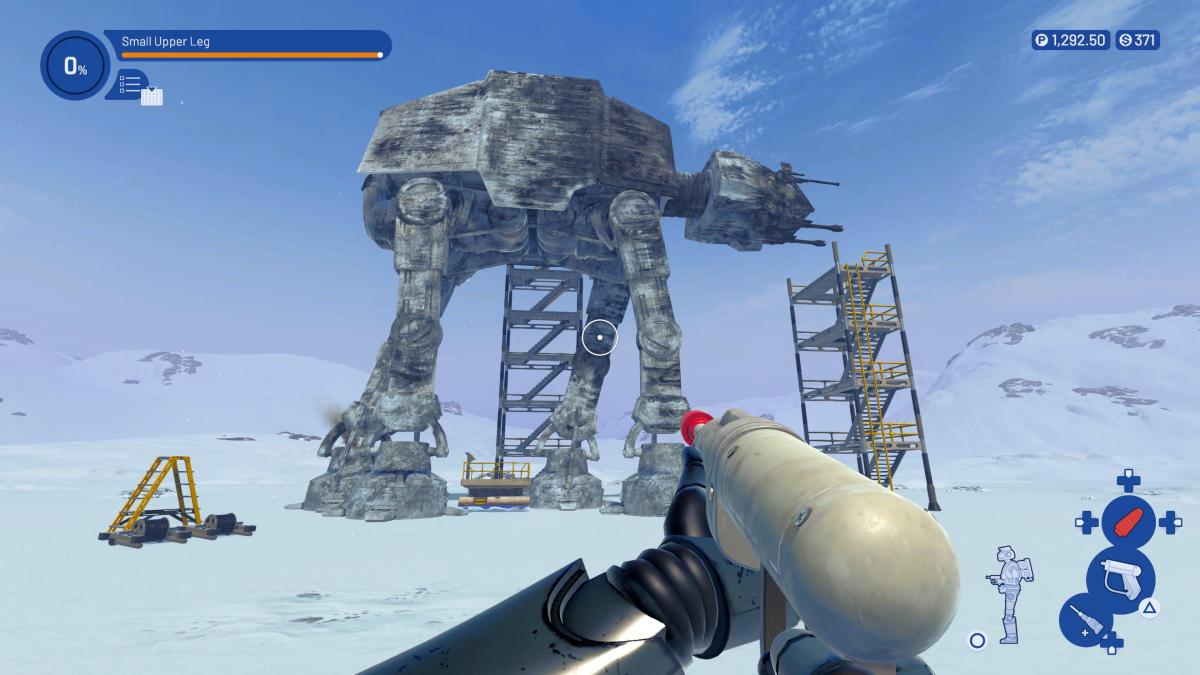
Why in the name of the Force did I spend three hours cleaning an AT-AT from the ground up? Why did I spend an hour restoring an Art Deco house and feel genuinely proud of myself when it sparkled at the end? Nothing about that sounds exciting. In fact, it sounds like housework. Yet somehow PowerWash Simulator 2 is captivatingly simple, captivatingly stupid and remarkably difficult to stop playing.
The levels range from small cars and tractors right up to entire theatres, discos, temples and other sprawling locations that can take hours to clean. The pacing is generally handled well, though, as the enormous jobs will often give way to something much smaller that can be wrapped up in five or ten minutes. You are not always staring down the barrel of another two-hour commitment, even if the larger levels are where the game’s hypnotic qualities really begin to take hold.
Many locations also hide extra sections behind dramatic reveals. You will finally finish cleaning an area, only for a concealed room, folded-away roof or mysterious extension to swing open and reveal yet more grime waiting to be blasted away. Sometimes this produces an exhausted cry of, “Oh, for fuck’s sake, there’s more?” Other times it is more like, “Thank Christ, even more dirt to soothe my soul.” Somehow, both emotions can exist simultaneously.
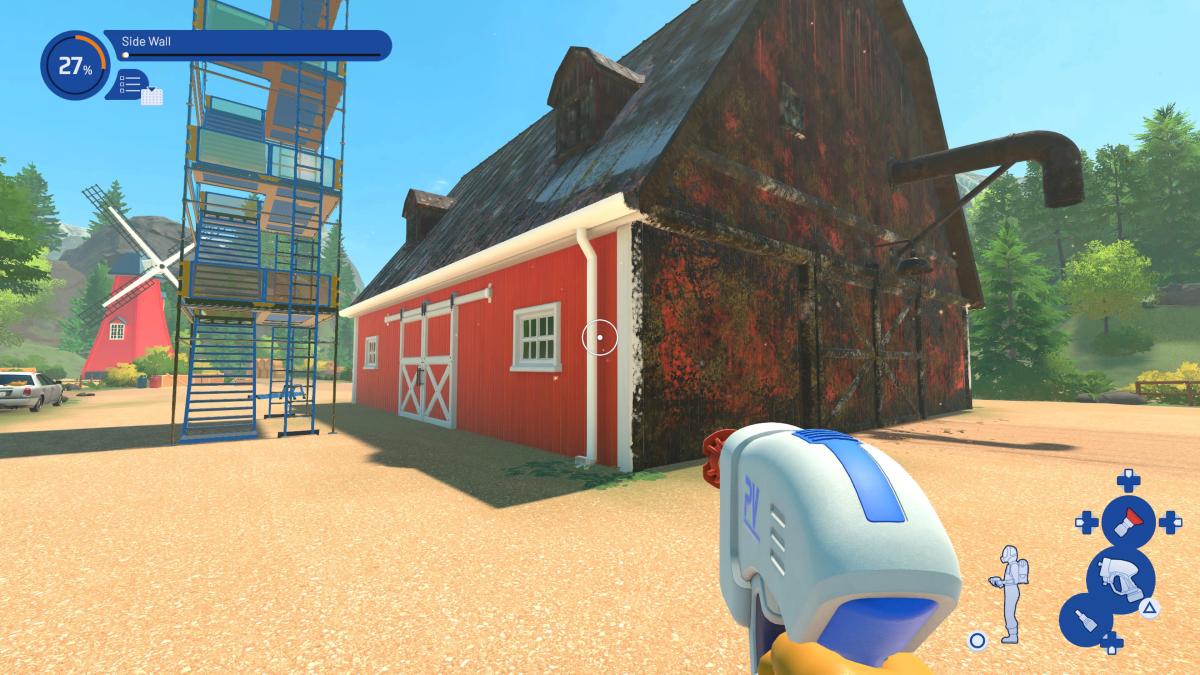
Mechanically, there are plenty of nozzles and attachments intended to spice up the process. You can equip a triple-tip nozzle that fires three jets of water across a wider area, or a strange rotating turbo attachment that is particularly good at cutting through stubborn stains. However, I rarely found much reason to use most of them because the adjustable nozzle, which can be purchased almost immediately, handled practically everything I needed.
Tapping left and right on the D-pad changes the width of its stream, allowing me to narrow it for more concentrated pressure or open it up to cover giant arcs across walls and floors. With that in hand, I was able to tackle every job just as efficiently as I felt I would have done with the separate nozzles. I am sure there are meaningful differences buried in the numbers somewhere, and perhaps if I had performed controlled experiments and dedicated my life to the honourable pursuit of pressure-washing science, I might have discovered them.
I did not.
It is to the game’s credit that it never forces you to use any of the specialist equipment, though. You could refuse to buy anything, continue using the default washer and still eventually make it through. Sure, you might have to spend five minutes spraying the same stubborn patch back and forth until either the dirt or your sanity finally gives in, but persistence alone will get the job done.
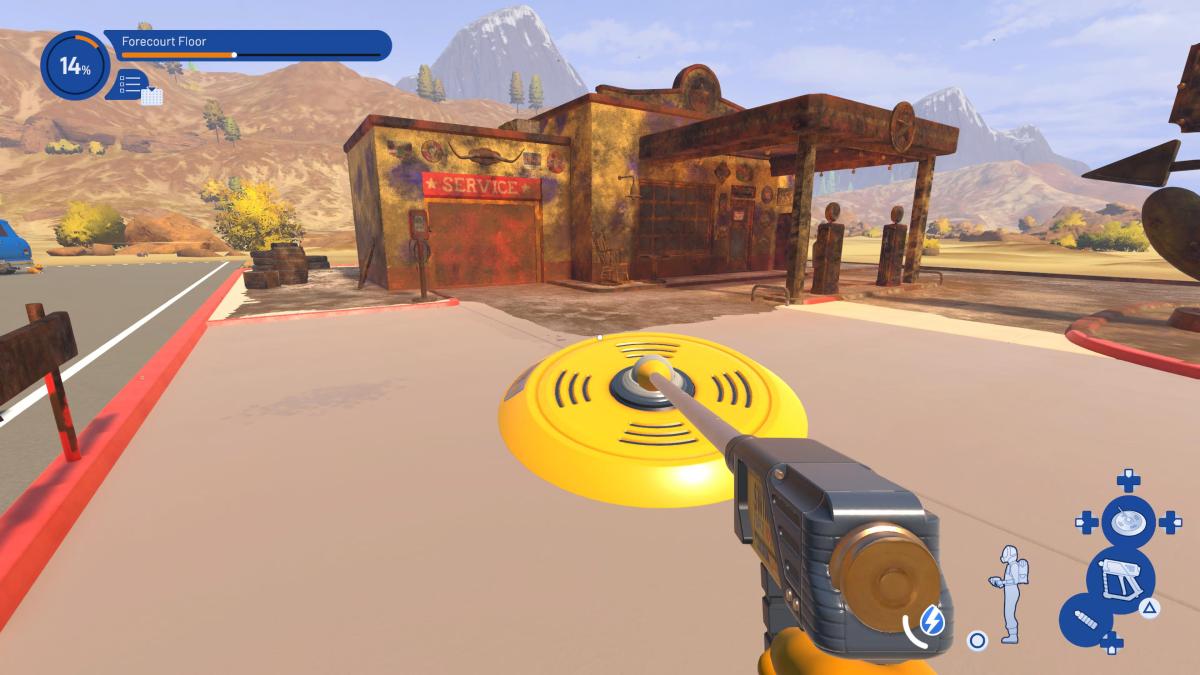
The only additional tools I used with any consistency were the soap nozzle, which helped remove some of the more stubborn stains without spending half a working day attacking them with plain water, and the wonderfully ridiculous surface cleaner. This is a massive rotating disc that can be attached to floors, walls and ceilings, allowing you to wander around in circles while it cheerfully scours everything beneath it. It is the sort of machine you see janitors in movies mysteriously appear with and then, moments later, equally mysteriously disappear with.
As you complete objects within each level, little payments land in your bank account and gradually build enough of a fortune to purchase new equipment. Pressure washers progress from light to medium, heavy and eventually professional, with the jump between each tier providing a noticeable improvement in power. There are also two competing brands, with one supposedly favouring raw blasting strength while the other offers slightly more coverage, but I never felt that the difference was pronounced enough to really care. The move from one equipment class to the next mattered; the logo printed on the side did not.
I would have liked the brands to possess more distinctive strengths and weaknesses, although admittedly there might only be so many exciting ways to differentiate one machine that fires water very hard from another machine that also fires water very hard. As it stands, I usually bought whichever one happened to catch my eye and got back to the important business of eradicating dirt.
Alongside the normal cash used to purchase practical equipment, you also earn PowerWash Points, a separate currency that can be spent on cosmetics and furniture. These allow you to buy new skins for your washer, your van or even yourself, although most of it felt largely pointless from my perspective. Take the van, for example. It is a distant object in the background that you might glance at once during a level because the rest of your time is spent staring forlornly at a layer of grime so thick that archaeologists are beginning to turn up and ask you to stop disturbing the site.
The Home Base is another entirely optional addition that I very rarely entertained. The idea is that you can travel back there between jobs, pet your cats and spend PowerWash Points on furniture, which you then hilariously have to power wash before placing down. However, I never found much reason to return. It is essentially a space you can decorate and use the map to select your next destination, but I could also hit continue, choose the next job and jump straight into it. I am sure some people will enjoy having a little headquarters of their own, and it is a nice addition for them, but it did nothing for me.
I am here to power wash things. That is my only purpose in life.
The locations themselves are ultimately where PowerWash Simulator 2 works its magic. They are varied, imaginative and generally strike a good balance between large, satisfying surfaces and smaller, more intricate details. The game is at its best when you are making constant, visible progress: dragging the nozzle across a filthy wall and watching a clean line appear behind it, or stripping years of grime from a vehicle one bright metallic panel at a time.
I am here to power wash things. That is my only purpose in life.
Occasionally, though, a level will tip a little too far towards the fiddly side. Pipes, railings, bolts, machinery and awkwardly recessed sections can force you to hunt for tiny patches of dirt that are only reachable from one very specific angle. Most of the time it is merely a mild irritation. You reposition yourself, swap nozzle or climb a ladder and eventually get the job done, but it can interrupt the relaxing flow when you are stuck trying to fire a jet of water through a gap approximately three millimetres wide.
Moving the larger pieces of equipment can be annoying as well. Ladders, scaffolding towers and scissor lifts can be picked up and carried around to help reach awkward areas, but positioning them while standing at ground level makes it difficult to judge where the top will end up. The game also has an irritating habit of turning an object red and declaring it cannot be placed somewhere without making it remotely clear why. Move it a few inches, perhaps even back towards the exact same patch of ground, and suddenly everything is fine.
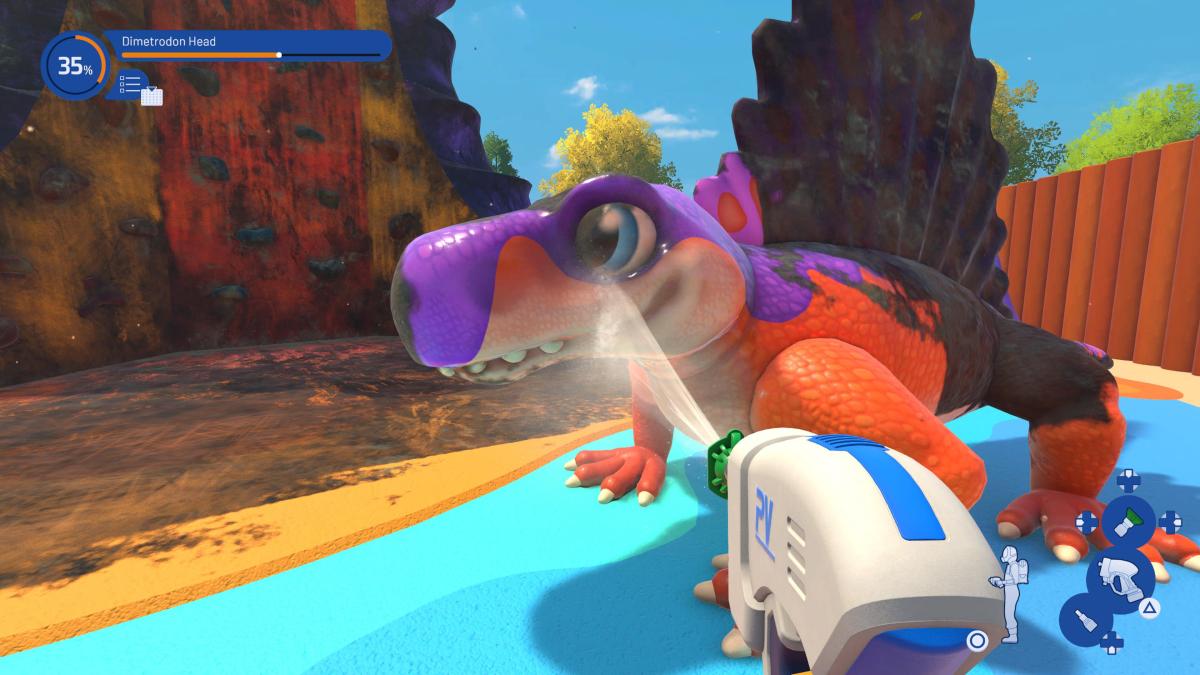
Some sort of dedicated placement mode would have helped enormously, perhaps allowing the camera to pull back into a top-down or isometric view while you moved the object directly. It might have been less realistic, but it would have been considerably more useful, and wrestling with invisible placement restrictions is hardly the pinnacle of authentic pressure-washing simulation.
Surprisingly, PowerWash Simulator 2 even has a story, and a decent one at that. To the game’s credit, however, it is also entirely optional. As you play through the levels, text messages from various characters appear in the bottom-left corner, while occasional environmental details feed into a hidden background narrative of weird mysteries, conspiracies and increasingly strange goings-on.
I will not spoil any of it here, and there is a good chance you could play through the entire game without noticing much of it anyway. You can ignore every message, continue happily spraying soap and keep slicing through the dirt to uncover whatever colourful treasures are buried beneath. However, should you decide to pay attention, the story is genuinely quite entertaining and adds another little reward beyond watching a progress bar steadily crawl towards 100%.
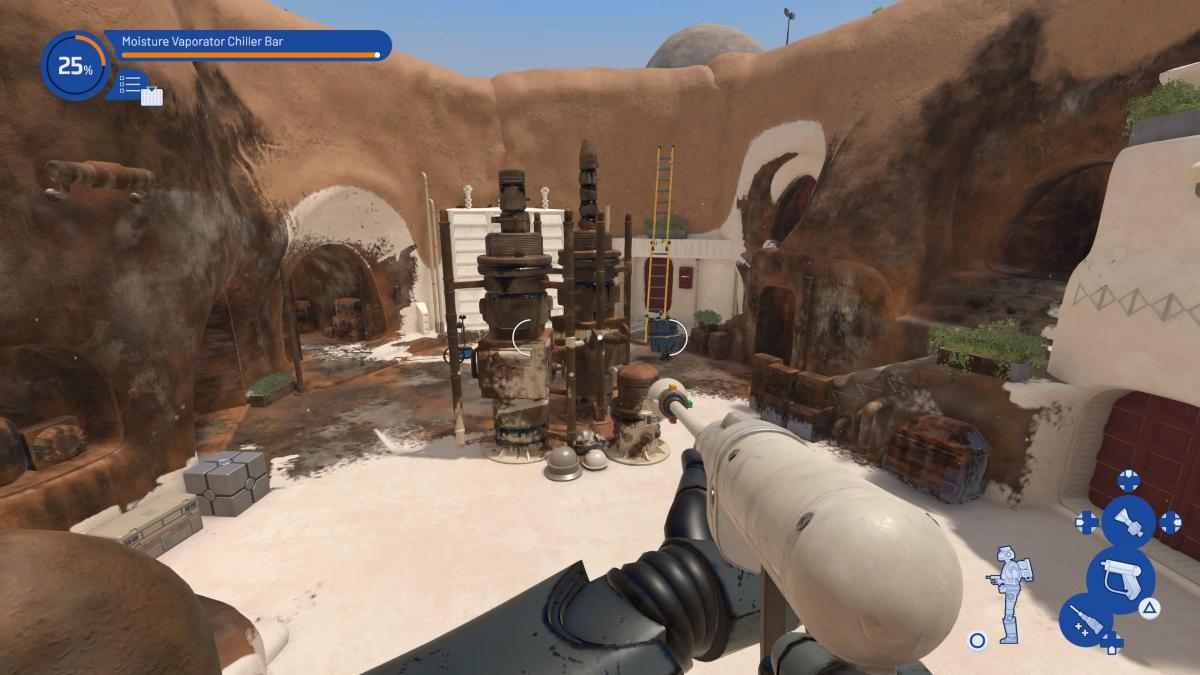
Personally, I was usually too busy role-playing as a bloke for whom all of this is an entirely normal working day. I do not question who hires me; I simply turn up and do the job. I do not care that I am cleaning a giant four-legged Imperial war machine. That is not my problem. I do not care that the bridge of the Star Destroyer I am washing has probably been responsible for countless deaths. Again, not my problem. I have no questions regarding the odd temple that has a secret staircase going into a basement where a smartphone resides on an altar.
Rebels, Empire, corporations or a nice elderly couple who have not cleaned their patio since 1976: I serve whoever pays the invoice. You point me towards the filth and I will make it super shiny.
The Star Wars Special Pack follows the same basic philosophy. It does not dramatically alter the gameplay or add some revolutionary new mechanic; it simply provides six more things to clean, except these things happen to be iconic locations and vehicles from a galaxy far, far away. The pack includes Luke Skywalker’s childhood homestead on Tatooine, an X-wing, an AT-AT, the Mos Eisley cantina, the bridge of a Star Destroyer and the Millennium Falcon, all recreated with an impressive amount of detail.
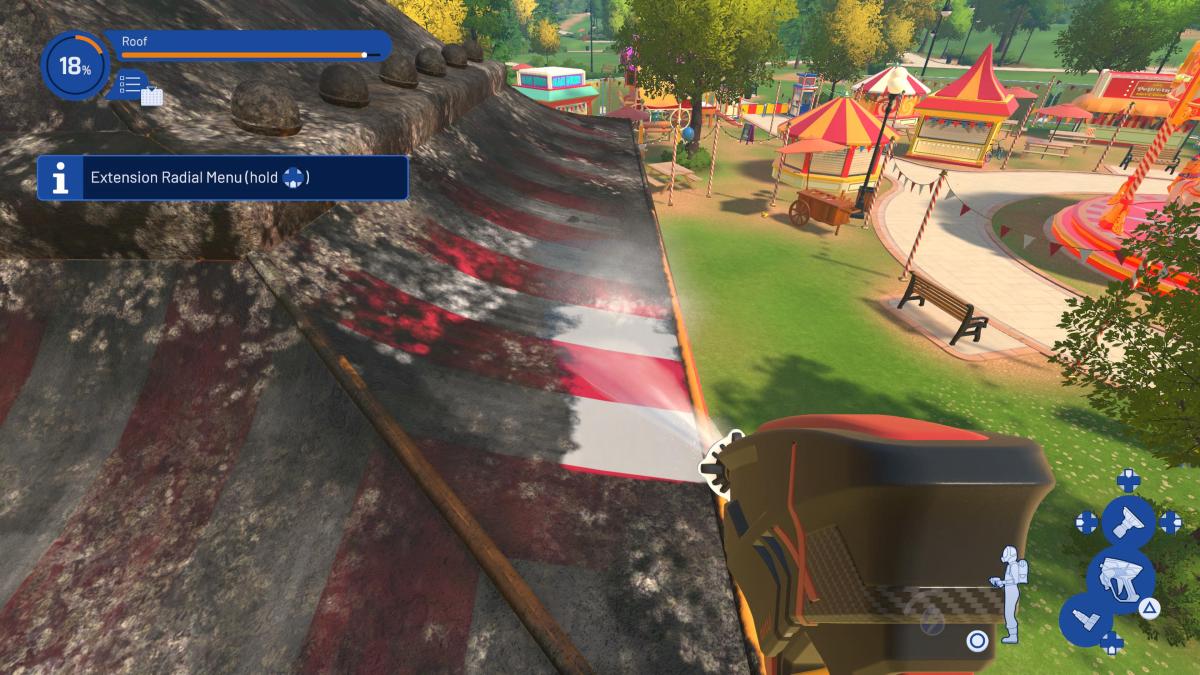
There is something inherently amusing about seeing these legendary pieces of Star Wars history reduced to another miserable cleaning contract. The contextual story surrounding each job is fun as well, although there is less of a grand conspiracy and more of an explanation for why everything has been left in such a disgraceful condition. Why does the Millennium Falcon look like it was sunk in the swamps of Dagobah for 500 years, dredged up, dropped back in for another year and then painted with seaweed? Because Lando Calrissian borrowed it from Han Solo for a job and did not bring it back in quite the same condition.
Understandable, really. We have all borrowed something from a friend and returned it looking like Shrek did a line of pepper, sneezed across the entire thing and then abandoned it in a bog.
I do wish the pack had occasionally leaned further into Star Wars’ darker humour. I would have happily cleaned a suspicious red smear from underneath the foot of the AT-AT after it crushed some Rebel scum, and polishing Darth Vader’s armour back to its proper glossy black finish seems like an obvious missed opportunity. I also would not have complained if the developers had let me clean the bones of Luke’s aunt and uncle, although that last suggestion might not fit the cheerful, relaxing atmosphere they were aiming for. Cowards, frankly.
As a whole, though, it is a nice jaunt through Star Wars lore and the locations of the original trilogy. It is not necessarily overflowing with incredibly obscure deep cuts, and there is obviously far more from the franchise that could have been included, but at £7.99 for six new jobs, it feels like a fair amount of content for the price. Most of the levels are fun to work through, faithfully recreated and filled with recognisable little details and references. And I like that they stuck to the original trilogy.
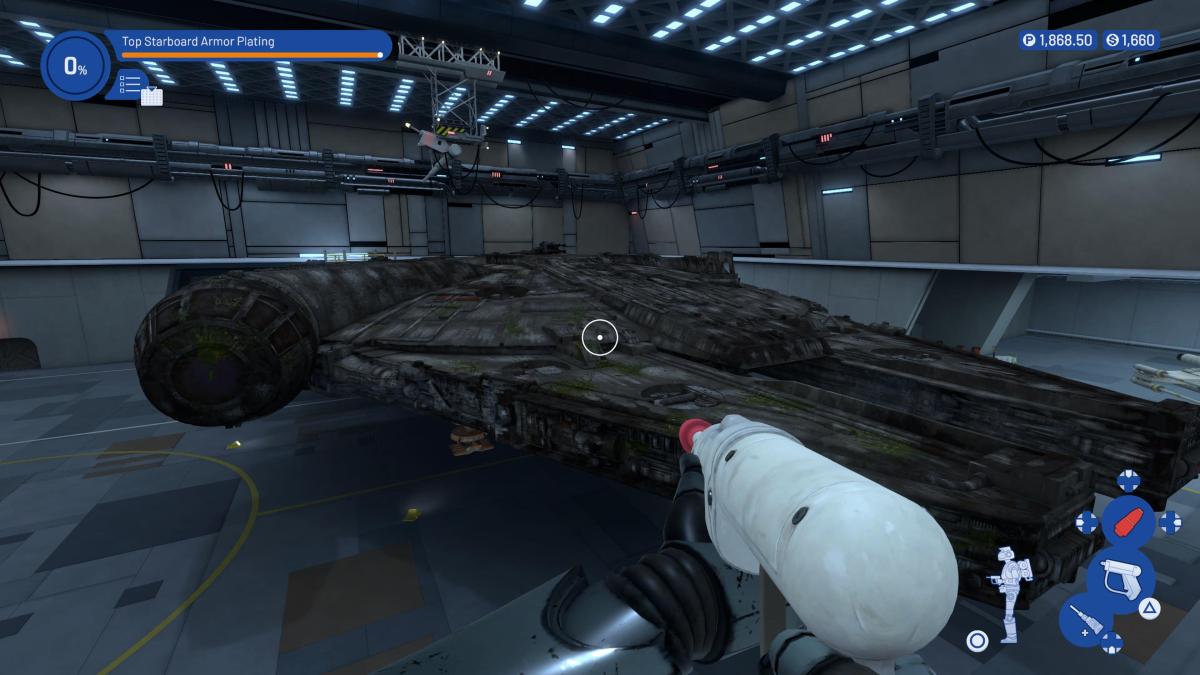
The major exception is the Millennium Falcon, which became considerably more irritating than the rest of the pack. The ship is naturally covered in panels, vents, machinery, landing gear and countless tiny nooks and crannies, all of which must be cleaned from the correct angle. That design is faithful to the source material, but it also means the level spends far too much time forcing you to hunt down tiny patches behind pipes or inside gaps rather than letting you make those broad, satisfying sweeps across a surface.
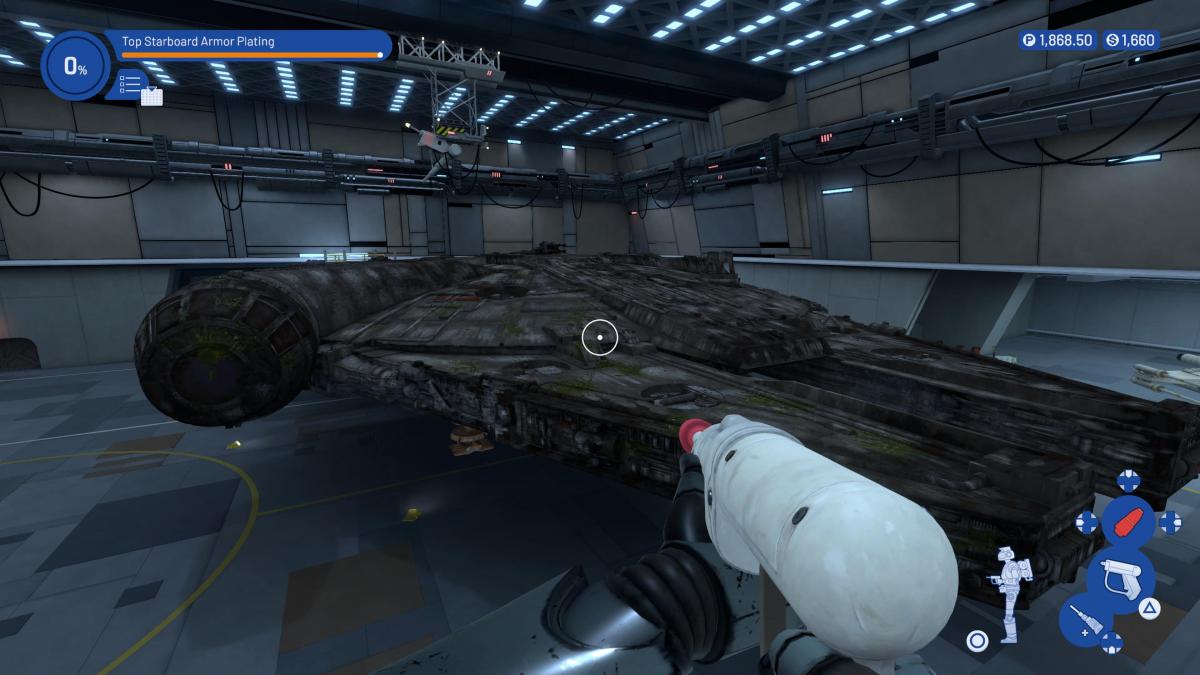
It eventually started to feel less like PowerWash Simulator and more like actual power-washing work, which is surely the greatest insult I can give it.
Still, aside from the Falcon’s fiddliness, I enjoyed the pack and am interested to see where future DLC goes. The original PowerWash Simulator became well known for somehow convincing an extraordinary variety of licence holders to let players blast their most famous creations with pressurised water, including SpongeBob SquarePants and Warhammer 40,000. Should the sequel eventually get anywhere near that same level of variety, I look forward to switching off my brain and cleaning all of it.
Unfortunately, the PS5 version also has some unpleasant performance problems. With autosaving enabled, I experienced severe frame-rate drops whenever the game appeared to save, with performance briefly collapsing into what felt like the single digits. Besides looking horrible, the stuttering affected the controls, causing my aim to jerk across the surface and leave random clean lines wherever the spray had bounced.
Disabling autosave made a dramatic improvement. The worst stutters became far less frequent and the game generally felt much smoother, although it did not completely solve the problem. Larger, more complicated levels could still suffer from occasional frame drops, with the Millennium Falcon once again being a particularly good example.
Turning off autosave also creates the obvious risk of losing a significant amount of progress should the game crash or something else go wrong. The workaround certainly helps, but players should not have to choose between stable performance and the reassurance that several hours of virtual cleaning will not suddenly vanish.
In Conclusion…
Ultimately, I would argue that PowerWash Simulator 2 is barely even a game at this point. It is meditative therapy for the soul. Usually, we play games to have fun, challenge ourselves, test our reflexes or perhaps even think really hard about something, but when I was playing PowerWash Simulator 2, I was deliberately thinking about nothing. I would usually put a podcast on in the background, point the nozzle at another layer of mysterious filth and simply switch my brain off.
It is the sort of game you sit down with for 20 minutes, only to look at the clock three hours later and wonder where the evening went. You have not saved the galaxy, defeated an ancient evil or outsmarted a rival player. You have simply pressure-washed an old theatre, a tractor or an enormous Imperial war machine until it sparkled.
You have not really done anything, and yet you come away feeling relaxed, calm and refreshed, as though you have spent the evening tidying up your own brain as much as the game’s world. PowerWash Simulator 2 should not work. Nothing about moving a jet of water back and forth across a wall sounds compelling, and yet here I am, dozens of hours later, already wondering what else needs cleaned.
It is captivatingly simple, captivatingly stupid and renovating for the soul. But will it encourage me to finally clean my actual house? Hell no.