Marvel Tōkon: Fighting Souls is nothing short of a banger on paper. Arc System Works is one of the best fighting game developers around, Marvel brings a ridiculous roster of household names, and PlayStation is backing the whole thing. The reality is almost as good as it sounds: slick, flashy and clearly aiming to welcome both complete noobs and seasoned fighting-game veterans.

REVIEW AT A GLANCE

Developer: Arc System Works

Publisher: Sony

Reviewed On: PS5

Available On: PS5, PC

Release Date: Aug 6, 2026

Price (UK): £59.99

Genre: Fighting

Review Code: No
Quick Take:
Arc System Works brings the fighting-game chops and Marvel brings the superheroes. The result is fast, flashy fun that somehow caters to both seasoned veterans and crackhead-chimpanzee button mashers, even if the solo offering could use a little more meat.
I fall very firmly into the former camp. I like fighting games, but I am not especially good at fighting games, and I bounce off discussion about frame data faster than Cap’s shield off a mugger’s face. There are people far better equipped than me to break down optimal combo routes, matchup charts and whatever other terrifying nonsense lives at the high end of the genre. What I care about is whether a fighting game feels good, whether I can have fun without treating it like a second job, and how much there is to do when I am not being repeatedly humiliated online.
The main story mode is split into five episodes, one for each of the game’s pre-made teams, with every chapter following the same broad storyline from a slightly different angle. The groupings range from obvious to completely bizarre. Captain America, Hulk, Iron Man and Black Panther (Suri, in this timeline) make up the Fighting Avengers, while the Samurai Outriders somehow throw Ghost Rider and Blade together with Deadpool and Loki. The X-Men team also introduced me to Danger, a living embodiment of the Danger Room and a character who made me quietly murmur, “who?” at the screen. Thor, meanwhile, is conspicuously mentioned as being missing several times. I smell DLC.
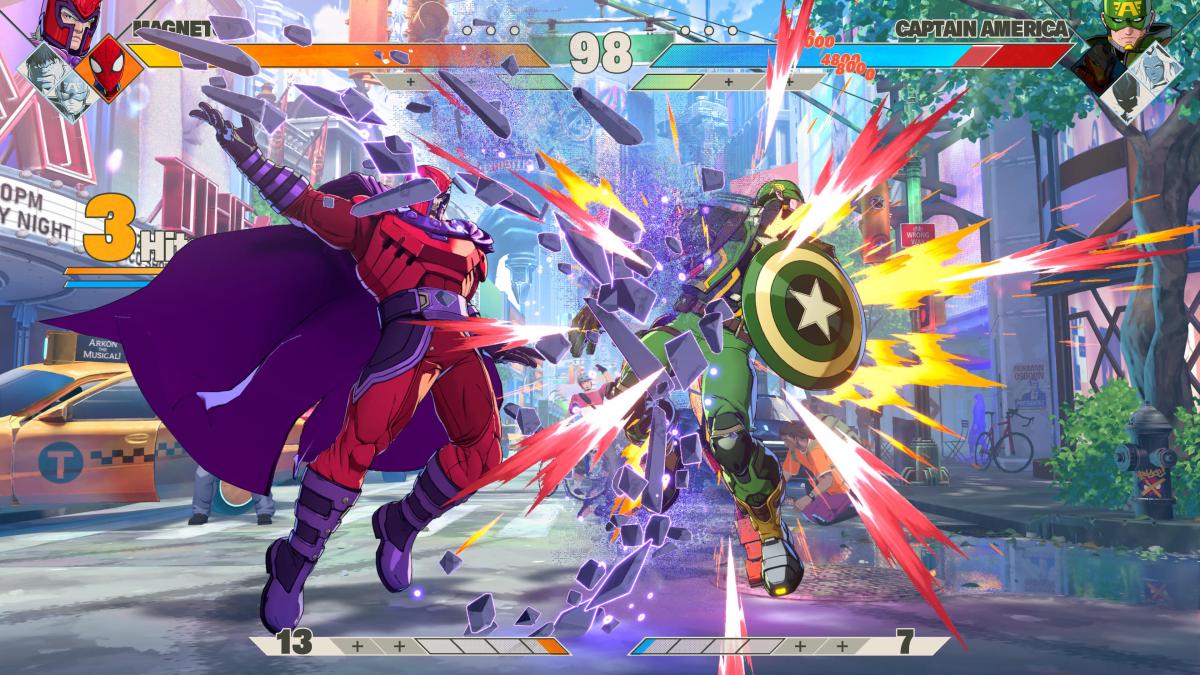
The oddball team-ups are part of the fun, and the villainous side gets some of the best material. Doctor Doom manages to rope Magneto, Green Goblin and Carnage into his Doom Knights, with Doom’s ridiculous ego doing a lot of the heavy lifting. Green Goblin is also one of the standouts of the entire game, both in how he looks and how he moves, even if he doesn’t get anything to actually do. Carnage, meanwhile, is there. Never thought I would describe the rampaging serial-killer symbiote as just being there, but he really does not get much to do beyond wanting to murder people.
In fact, that’s the general theme of all the storylines. Each chapter lasts maybe 30-45 minutes, so each character really only gets a handful of lines, and some of them even less than that.
All of these assorted heroes, villains and lunatics are dragged into a tournament revolving around a new threat simply called The Champion, an absurdly powerful fighter who travels from world to world challenging the strongest warriors he can find. Those who fail to impress him are disposed of, so naturally Earth’s finest have to beat the snot out of each other to decide who gets the honour of trying not to have the planet erased.
The Champion is heralded by the Promoter, a wonderfully bouncy character who treats the whole apocalypse like an exciting gameshow. She hypes up his arrival, dishes out invites and generally has far more personality than the big bad himself. The Champion is a reasonably cool new villain, but the Promoter steals the show with her antics.
It is a paper-thin plot, especially when you consider how quickly everyone, including the Avengers, accepts the situation. There is very little time spent wondering who the hell this guy is or why they should trust anything being said to them before everyone starts punching each other. But the whole thing has such a campy Saturday-morning-cartoon vibe mixed with plenty of anime energy that it is easy enough to just roll with it. Plus, it’s a fighting game based on comic books, so punching is practically a method of polite communication.
The presentation helps enormously. The handful of proper animated cutscenes are absolutely gorgeous, full of vibrant colours and slick animation that blends Marvel’s comic-book identity with Arc System Works’ Japanese sensibilities. The disappointing part is that every episode shares the same major cinematics, and I would have loved to see that side of things expanded.
Instead, most of the episode-specific storytelling is handled through comic-book panels with limited animation and full voice acting. Each chapter uses a different artist, which gives them their own flavour even when the underlying story remains the same. Personally, I found the Fighting Avengers art the weakest, while the Doom Knights episode looked superb. Green Goblin in particular looks fantastic here, one of my favourite interpretations of the character in quite some time.
The writing is equally thin, though certainly not bad. It is light-hearted, campy and happy to lean into the personalities of the cast, so Doctor Doom gets to indulge in his theatrical ego, Deadpool gets to be Deadpool and Ms. Marvel remains an unstoppable ball of enthusiasm. Most importantly, the characters still feel faithful to their source material while being tweaked just enough to give Marvel Tōkon its own flavour.
That carries over into the visual redesigns as well. Some characters, like Wolverine, Storm and Doctor Doom, stay relatively close to their usual appearances, while others get a much stronger Japanese influence. Captain America gets a swanky new jacket, while Iron Man looks like he has spent the last six months studying Gundam for inspiration.
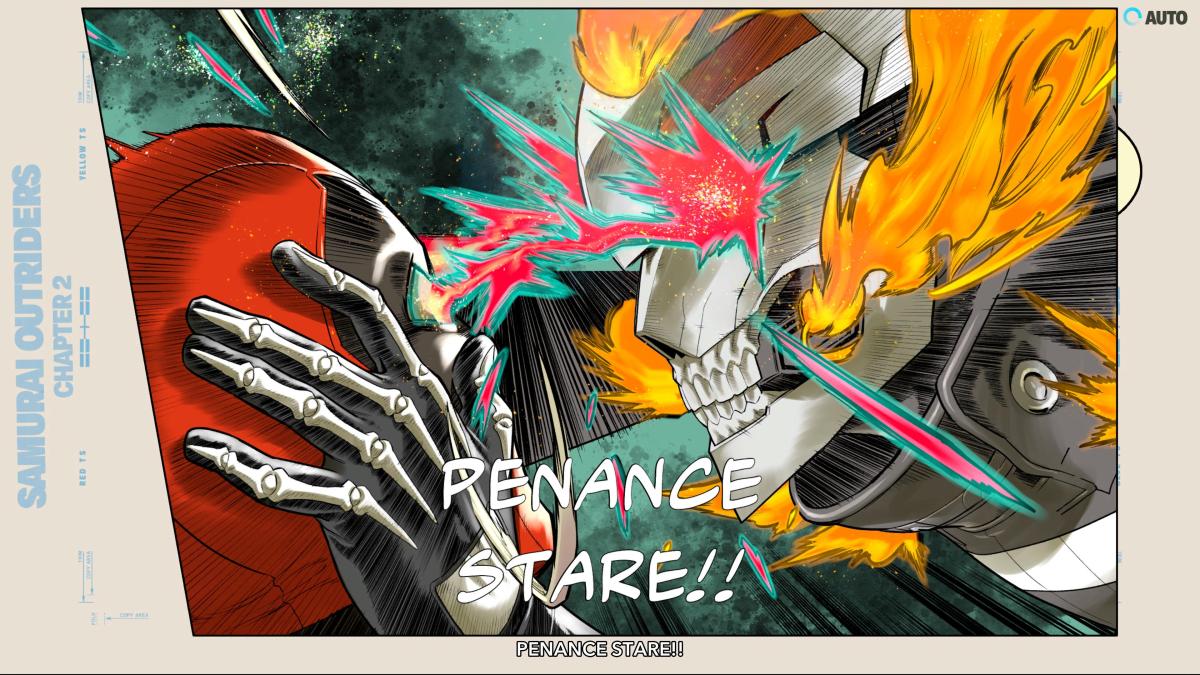
All in all, the story mode is good fun, but it feels like a missed opportunity. The few proper cinematics are so beautiful that I kept wishing the whole campaign had been built around one lavish crossover storyline in the same way Mortal Kombat loves to go completely overboard with its campaigns. Instead, we get five fairly short variations on the same story using the more boring comic-book panels.
Still, all that superhero drama ultimately boils down to beating the snot out of each other, and that is where Marvel Tōkon really starts to shine.
What we have is a fun mishmash of complicated mechanics that can nevertheless be tackled via the precise art of hammering buttons like a fucking crackhead chimpanzee. And let there be no illusions here: I am that chimpanzee.
There is a lot going on underneath the hood. Tag mechanics, assists, counters, specials, supers, character-specific abilities, shared health and probably another forty-seven things that better fighting-game players have already spent hundreds of hours dissecting. But crucially, you do not need to understand all of it to have fun.
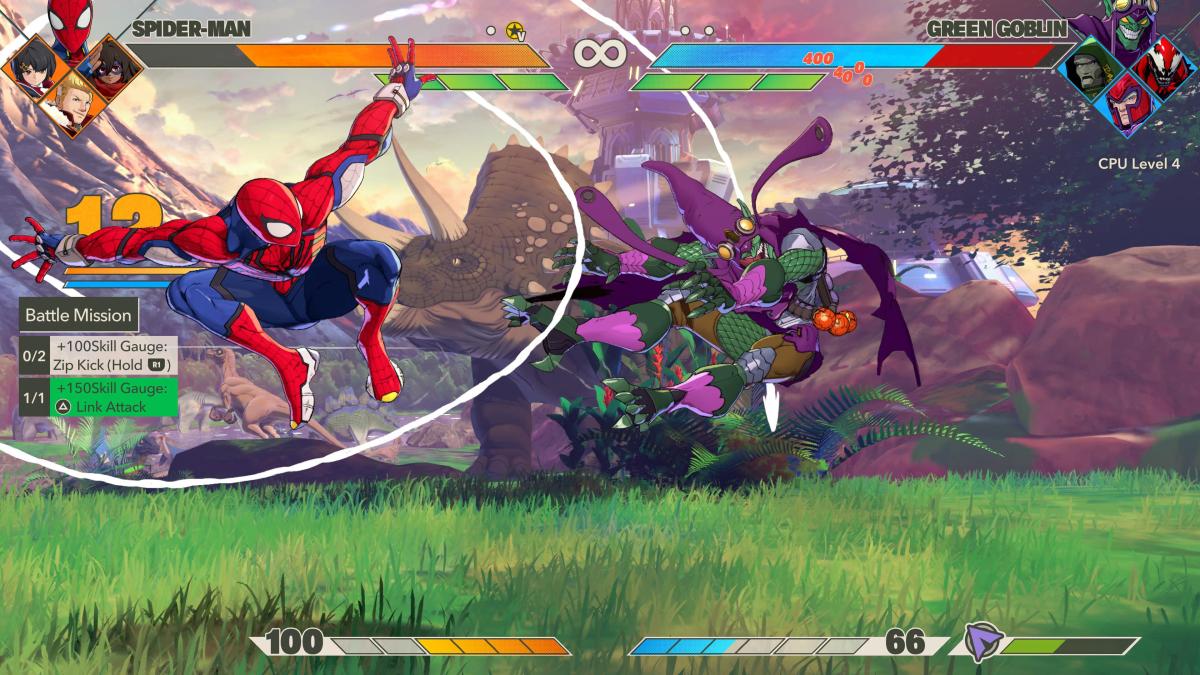
The auto-combo system does a lot of heavy lifting here. Hammer away at one of the three main attack buttons and the game can automatically cap things off with something flashier, assuming you have the meter available. Light attacks can lead into an Assemble Break, while heavy attacks can eventually finish with your biggest super. Proper directional and button inputs still reward you with slightly more damage and more Skll Gauge increases to fuel attacks, so the game gently nudges you toward learning what you are doing without immediately demanding that you memorise a thousand inputs.
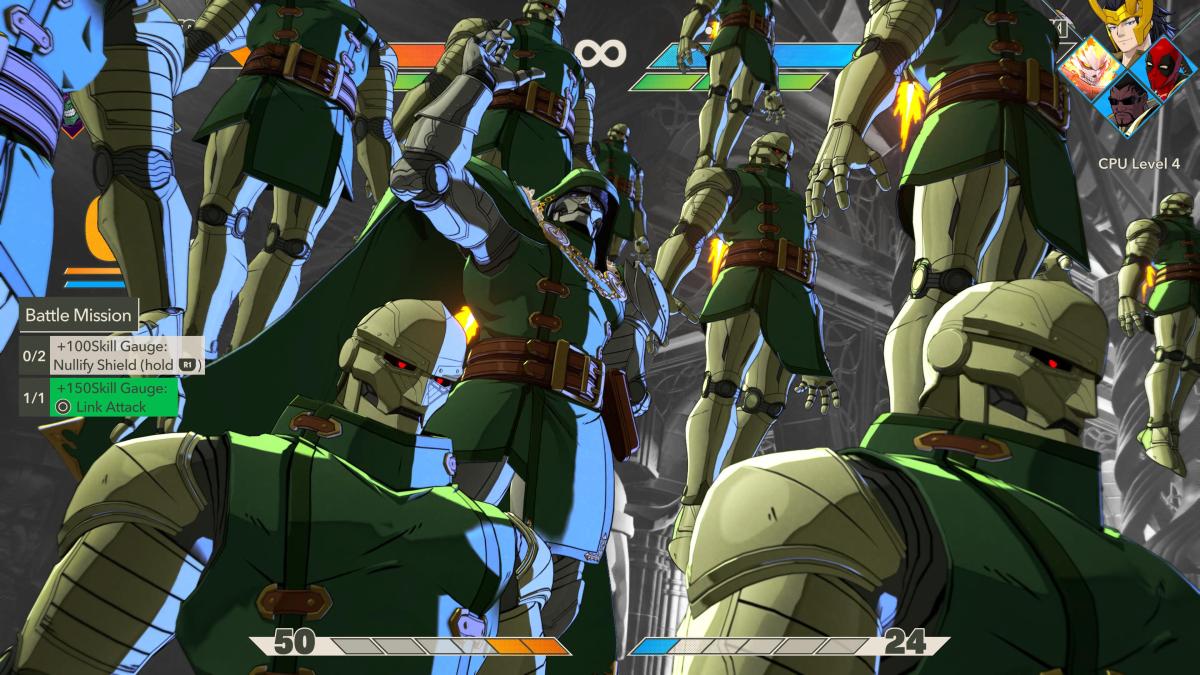
And those supers are pretty kickass. Land the opening hit and you are treated to a few seconds of pure spectacle as your chosen hero or villain beats the shit out of whatever poor sod happens to be standing in front of them. Doctor Doom summoning an army of Doombots is a particular highlight, largely because it feels exactly like the sort of absurd escalation Doom would consider completely reasonable.
That balance is one of Marvel Tōkon’s biggest strengths. You can jump in, make cool shit happen almost immediately and slowly begin picking up better habits without really noticing that the game is teaching you. For somebody like me, that is a far more appealing way to learn than spending six hours staring at a move list and wondering what life choices brought me here. The answer is bloody poor ones.
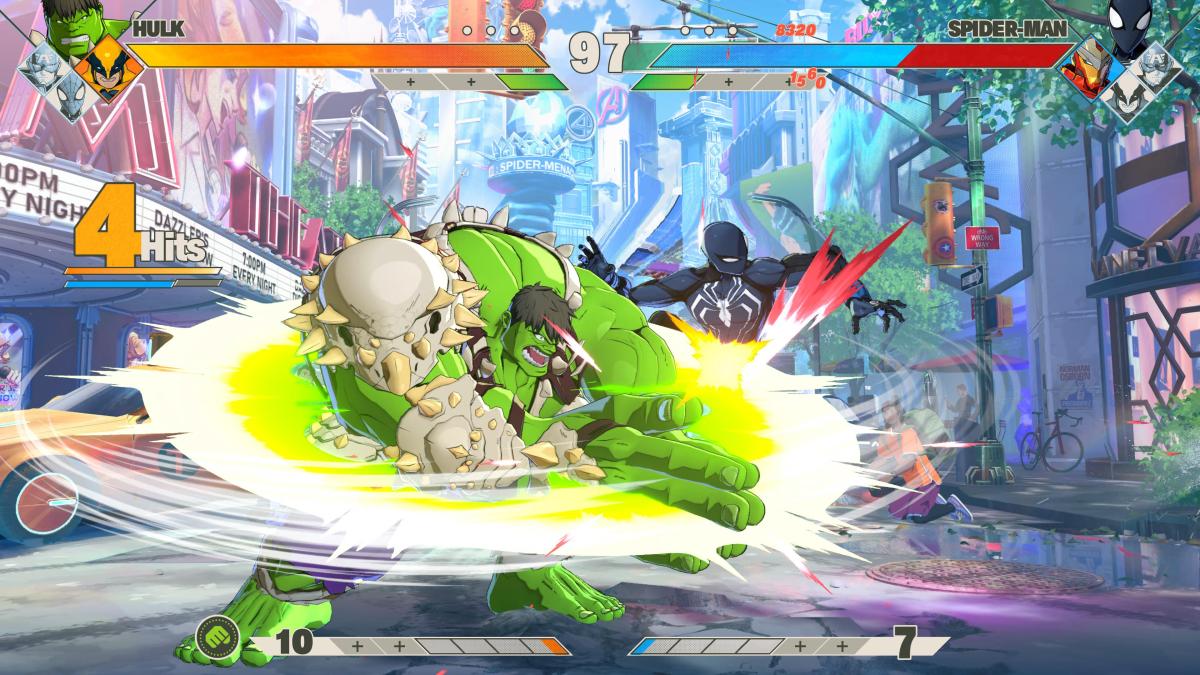
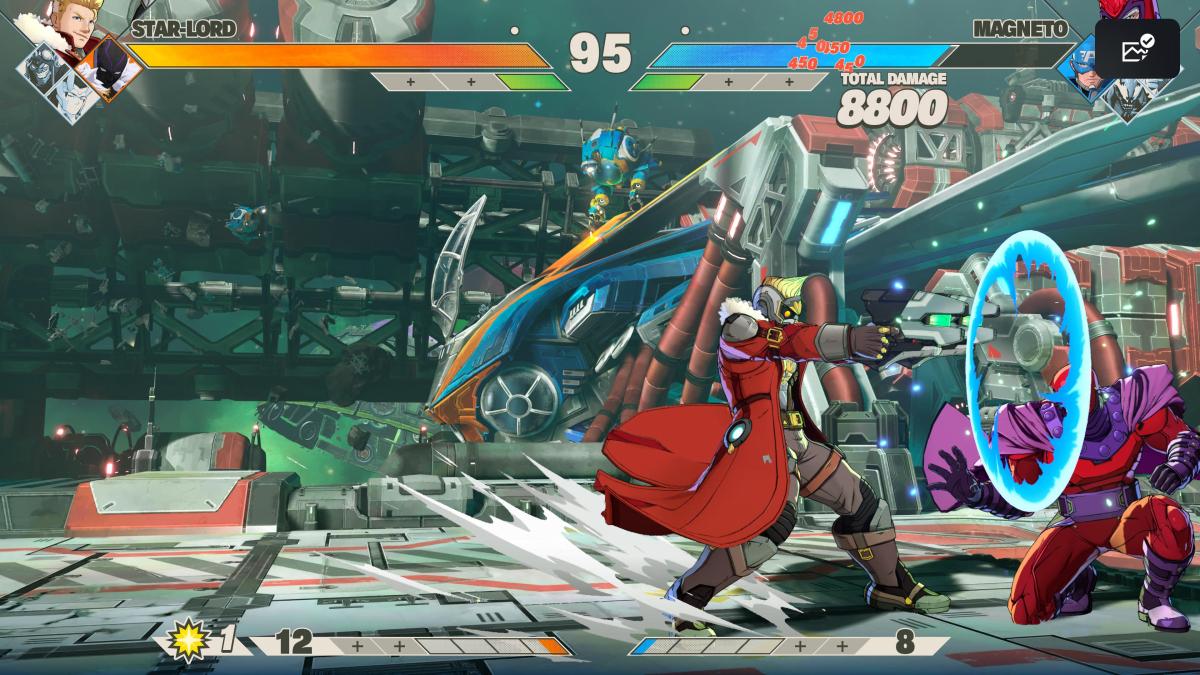
The entire combat system is built around four-character teams, so assists and switching are a huge part of every fight. You can bring teammates in to extend combos, tag between characters mid-attack or use assists defensively to interrupt an opponent and turn things around. Once both players start throwing multiple characters onto the screen at once, things can get fairly chaotic, but most of the time it remains surprisingly readable.
There were definitely moments where multiple assists were flying around, counters were being thrown out and I briefly lost track of which brightly coloured idiot on the screen was actually mine. Usually only for a second, though, and for the most part the chaos feels exciting rather than incomprehensible.
There are a couple of clever twists to the team system. You start each fight with your lead character and one assist available, while the rest of the team joins as the match progresses. Losing a round unlocks another teammate, as does smashing your opponent through certain parts of a stage in what the game calls a Break. Your entire team also shares one health bar, meaning you cannot simply hide a battered character in the background to recover.
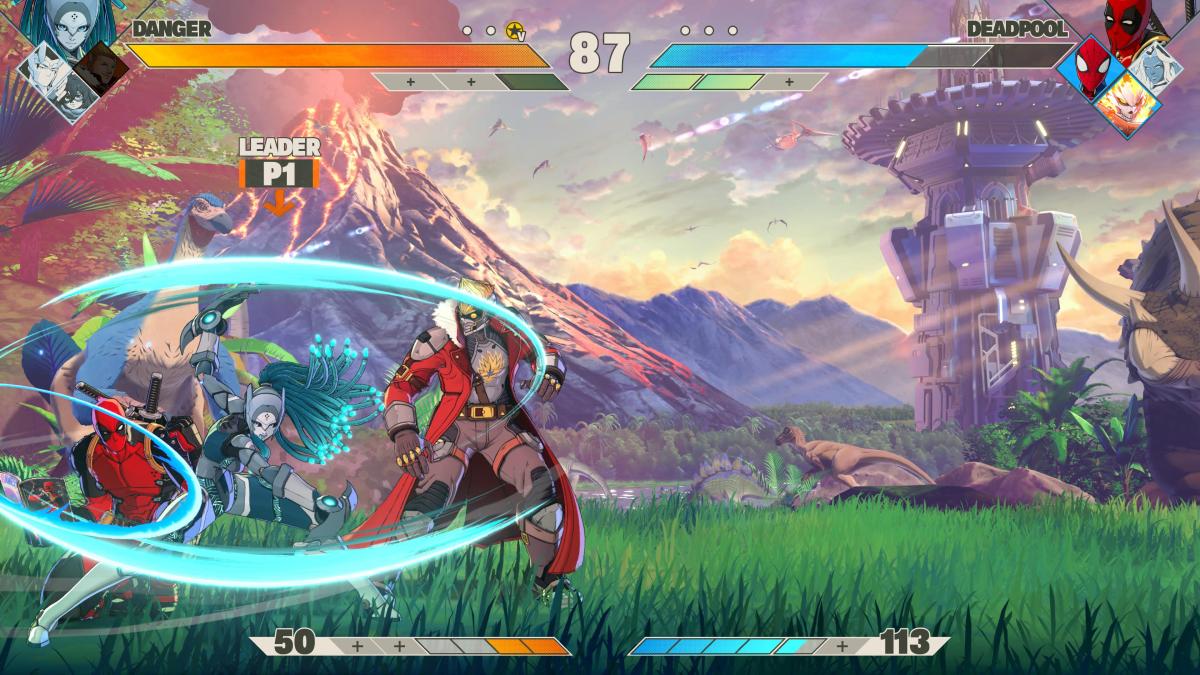
That shared health also means you can focus largely on one fighter if that is how you want to play. You do not need to master four completely different characters just to function, which is useful because the roster has a good amount of variety.
Captain America was probably the character I gravitated toward most, which may be the most boring vanilla choice imaginable. He is the all-rounder, the sensible pick, the fighting-game equivalent of ordering vanilla ice cream and then insisting it is underrated. But he feels great to use. His moves are straightforward, his shield gives him useful ranged options and he is forgiving enough that I could concentrate on what was happening rather than desperately trying to remember which sequence of buttons I was supposed to press.
Doctor Doom was another favourite, although that may simply be because everything Doom does looks fucking cool. Spider-Man should theoretically have been my obvious choice because he is my favourite Marvel character, but he is a little more technical, with a moveset built heavily around web swings and zipping around the screen. I never quite put enough time into learning him properly.
Danger was another good example of how different the roster can feel. She is much happier fighting at range and is considerably more technical than Captain America, which I discovered online when somebody stood at the opposite end of the screen and repeatedly fired things at me until I died. It was an educational experience. Mostly I learned that I should not go online.
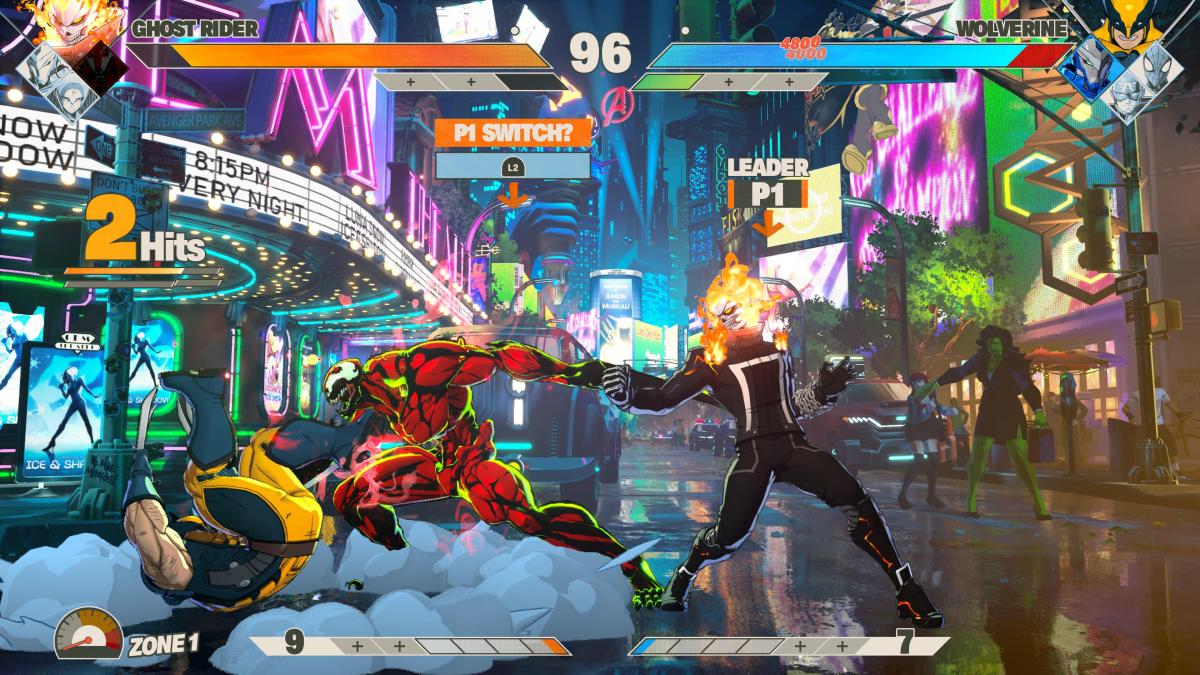
The point is that the roster is not simply a bunch of Marvel skins wrapped around identical movesets. Everyone seems to have their own place, and experimenting with different combinations is half the fun. Finding what mix works best for your own style of crackhead-chimpanzeeing is genuinely satisfying. The mix of big-name heroes and lesser-known Marvel characters is good, too, with plenty of room for expansion.
As a fighting-game weakling, there is still a lot to handle. It can be daunting and occasionally confusing when assists start invading the screen, but the auto-combos and easy access to special moves make it possible to mess around, watch cool stuff happen and slowly get better without turning the whole experience into homework.
If you do want to learn properly, Marvel Tōkon gives you the tools. The tutorial suite is surprisingly strong, with the usual practice options joined by character-specific lessons that walk through unique mechanics, special moves and bread-and-butter combos. There is enough here to teach new players the fundamentals while also giving anyone who wants to properly study a character a clear route forward.
That is where I personally fall apart. Carnage is not just a character, it is a reference to watching me attempt to input a combo longer than five inputs. I simply do not have the time or patience anymore to sit in training mode drilling combos for hours like I might have years ago, but I can absolutely appreciate that the game gives people a strong learning path if they want it.
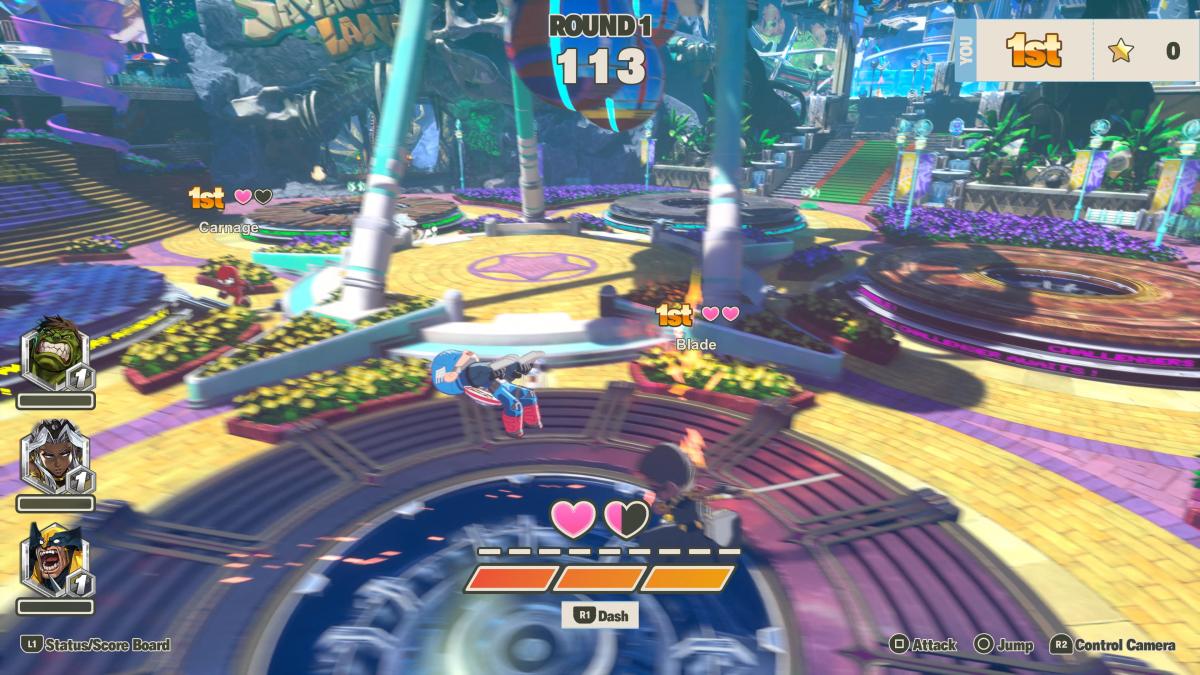
Thankfully, there are a couple of other single-player options in the mix.
All-Star Arena has you battling through a string of fights while occasionally choosing different routes on a board-game-style path. The direction you take affects who you battle next, giving it a little more flavour than a standard arcade ladder. It is not revolutionary, but it is a decent enough way to spend some time outside of the main story. Although I wish choosing left or right made a bigger difference.
Arcadia Rumble is considerably stranger. You take control of chibi versions of the roster and run around a small environment collecting Fighting Souls that buff your stats. You can smack the other tiny Marvel characters wandering around, but the main goal is to reach arcade cabinets that spawn around the stage and jump into proper fights. Those battles have a 60-second time limit, with every KO counting toward your score.
It is a weird little mode, and I enjoyed it, but I am not convinced there is much depth or longevity to it. Running around collecting buffs and smacking chibi superheroes is entertaining for a few matches, but I never really felt much desire to keep going back after that initial novelty wore off.
And that highlights what I think is Marvel Tōkon’s biggest weakness from my particular perspective. As somebody who focuses heavily on solo content in fighting games, Mortal Kombat still feels like the stronger package. Its cinematic campaigns, towers and constantly rotating single-player distractions simply give players like me more reasons to hang around when we do not fancy having our faces rearranged by strangers online.
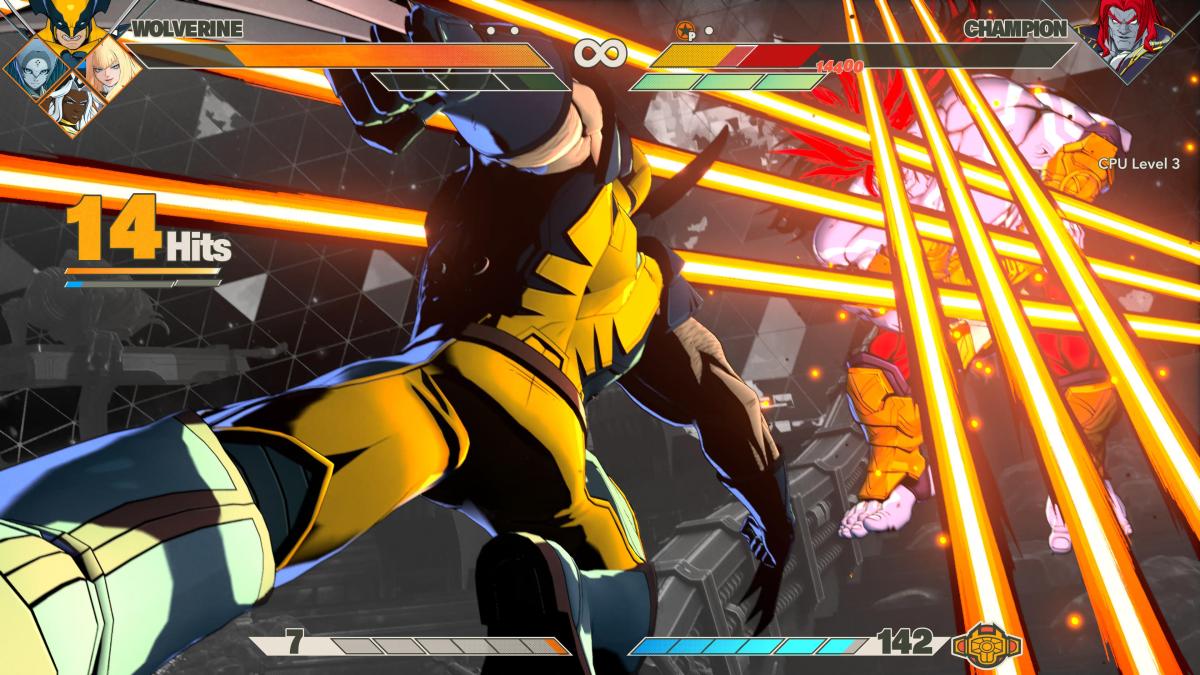
Marvel Tōkon has enough single-player content to keep you occupied, and most of what is here is good, but I am not convinced it has the same longevity. That is going to matter a lot less to people who intend to live in ranked matches, but for solo-focused players it is worth keeping in mind.
Which brings us neatly to online play, where I only dared venture a handful of times before being firmly taught never to wander there again on pain of witnessing another absurdly long, seemingly endless combo that took down my entire health bar before I had managed to blink. There are the usual casual and ranked options for people who enjoy competitive sweating, along with Match Rooms for playing with specific groups rather than throwing yourself directly into the wilderness.
I respect all of you who spend hundreds of hours mastering this stuff. I will be over here pressing buttons and watching Doctor Doom summon robots.
In Conclusion…
And that is ultimately why Marvel Tōkon: Fighting Souls works so well.
It’s flashy fun with a cast of characters you already know and love, Japanese-ified in interesting new ways. The fighting is fast, smooth and responsive, while the underlying systems clearly have enough depth for people who want to dig much further than I ever will. At the same time, the auto-combo setup and strong tutorials make it surprisingly welcoming to people who mostly just want to pick Captain America and hit somebody with a shield.
My only real hesitation is longevity. I’ve had a blast with the solo stuff, but I’m not convinced there’s enough here to keep me coming back for months unless I suddenly develop a competitive streak and start willingly subjecting myself to online humiliation. And I’m not that kind of kinky.
But the actual fighting is bloody good, and that matters most. Arc System Works brings the mechanical excellence and Marvel brings the celebrity firepower. It is a damn good match.