Damn, Godzilla fans are eating well these past couple of weeks, aren’t they? Godzilla Minus Zero has stomped into cinemas, delivering another excellent Godzilla tale that I’d highly recommend seeing, and now we’ve got Godzilla: Destroy All Monsters Melee Remastered. It’s another example of how we’re living in an era where seemingly random games can be dragged back from the dead and given a whole new lease of life. This time it’s a brawler from the GameCube and original Xbox days, mixing a little bit of Super Smash Bros. with a whole hell of a lot of kaiju for an entertaining monster-sized scrap. And today it’s *checks notes* the official Shrek 2 licensed game. What? Who is even picking these things?

REVIEW AT A GLANCE

Developer Pipeworks Studio

Publisher Atari

Reviewed On PS5

Available On Xbox, PC, PlayStation, Switch

Release Date November 3, 2026

Price (UK) £24.99

Genre Fighting

Review Code Provided by the publisher
Quick Take:
A strong remake of a cult-classic brawler that brings back the fun monster-smashing gameplay, but adds in a questionable new unlock system. Get some mates round, a few beers and some pizza, and it’s well worth it.
Despite the name, this is closer to a full-blown remake, rebuilding the game in Unreal Engine 5 while trying to preserve how it originally played. That leaves me in an interesting position as someone who never played the original. How do you judge a game like this today? How much do you forgive because of its age, and how much does that matter when you’re still trying to have fun with it in 2026? Let’s try to figure that out, shall we?
Visually, the result still looks like an older game that’s been spruced up. The monsters have more detail, but the cities and their destruction hardly resemble a modern blockbuster. It looks fine, though, and performance on PS5 was faultless throughout my time with it. There’s probably a joke somewhere about this being one of the best-performing Unreal Engine 5 games I’ve played. Pipeworks has retained original animations and other assets, so the familiar-looking movement is part of a deliberate attempt to recreate the old game.
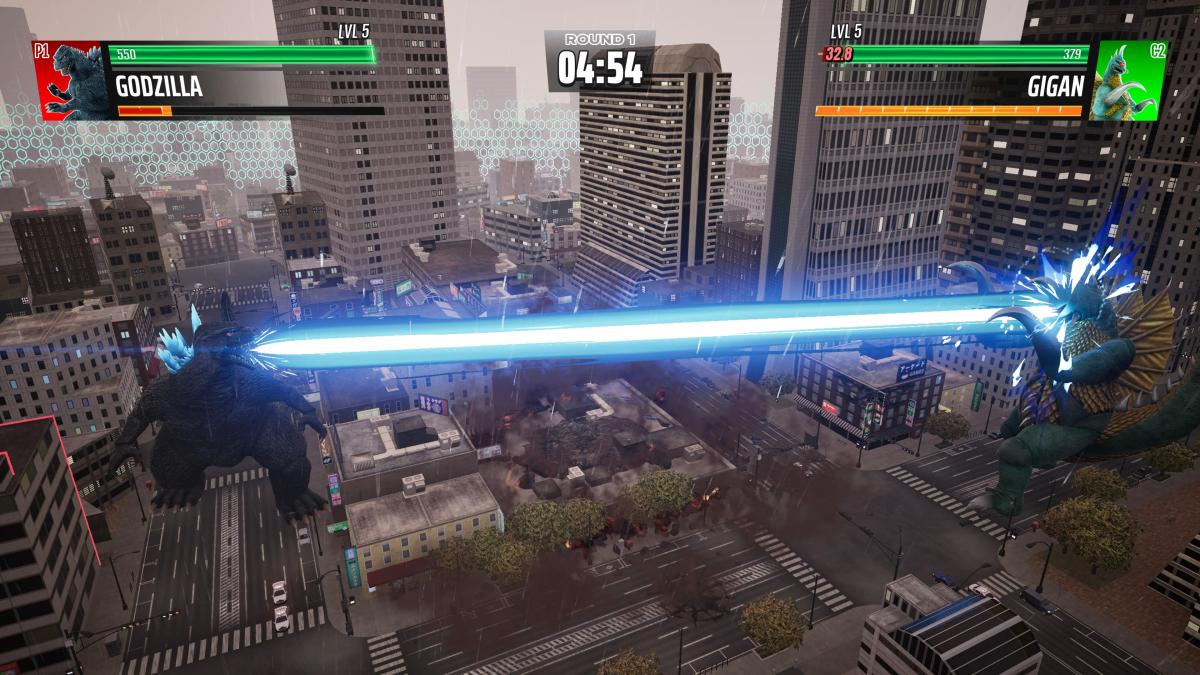
There are twelve playable monsters, including two versions of Godzilla, King Ghidorah, Gigan and Rodan. The roster broadly follows the expanded Xbox version, with Showa-era Mechagodzilla replacing the Heisei incarnation. Adventure Classic strings together fights through cities and other arenas as you deal with an alien invasion, ending in a showdown aboard the invaders’ mothership. It’s a thin excuse for monsters punching each other, which is about as much story as this needs.
The controls remind me a little of Smash Bros., with straightforward attacks modified by holding a direction. Neutral attacks tend to be quick, while directional variations can involve a hefty wind-up before sending an opponent flying. You can grab, throw, jump and run, and spend energy on beams, missiles and other monster-specific abilities. One particularly amusing attack leaves damaging goo on the floor, making an enemy hop around clutching its foot. Apparently even giant monsters suffer the indignity of stepping in something unpleasant.
I expected more button-mashing going on, but patience is surprisingly important. Blocking matters, and committing to a slow attack at the wrong moment gives your opponent plenty of time to beat the shit out of you The cityscape plays a useful role, too. Ducking behind buildings protects you from ranged attacks, while anything you can lift becomes something you can throw, even if the game sometimes doesn’t seem to register that I want to pick up the small building right beside me. There’s an enjoyable rhythm to finding an opening and then picking up your opponent to introduce them to the local architecture.
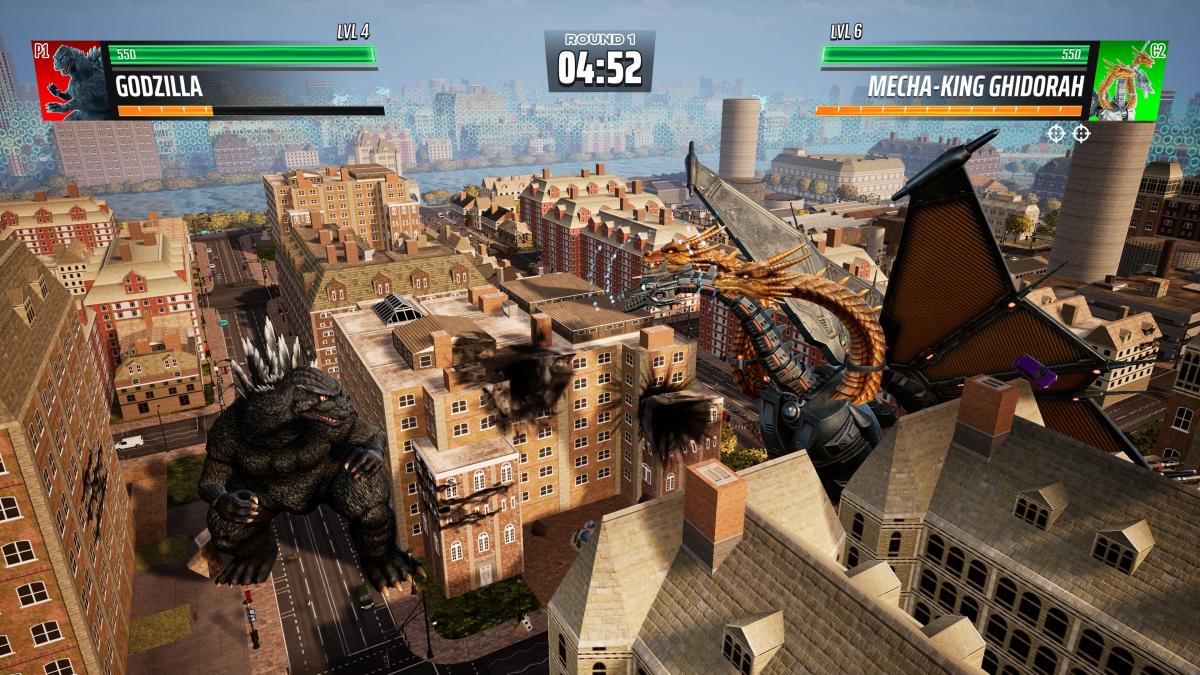
It’s also unmistakably clunky. Movement and attacks have a stiffness that takes some adjustment, and throwing a monster into a building can result in an awkward bounce rather than the dramatic collapse you might imagine. Damaged buildings can crumble, but you don’t consistently get that spectacle of kaiju smashing through everything in their path. Sometimes I also got a slow directional attack when I thought I’d released the stick and asked for a quick neutral.
But these limitations also have to be considered alongside the age of the game. The developers have tried to keep this as a faithful recreation of the original Xbox and Gamecube title, so clunkiness is expected. It just means if you’re a modern gamer, it takes a bit of adjustment. Before long, you’ll be happily tail-whipping monsters in the face.
The AI’s difficulty settings are similarly odd. Hard didn’t feel much different from Medium, while Easy seemed to alternate between putting up a reasonable fight and barely having a functioning brain. There’s fun to be had learning how to handle the monsters, but the settings didn’t give me a particularly reliable sense of what challenge to expect.
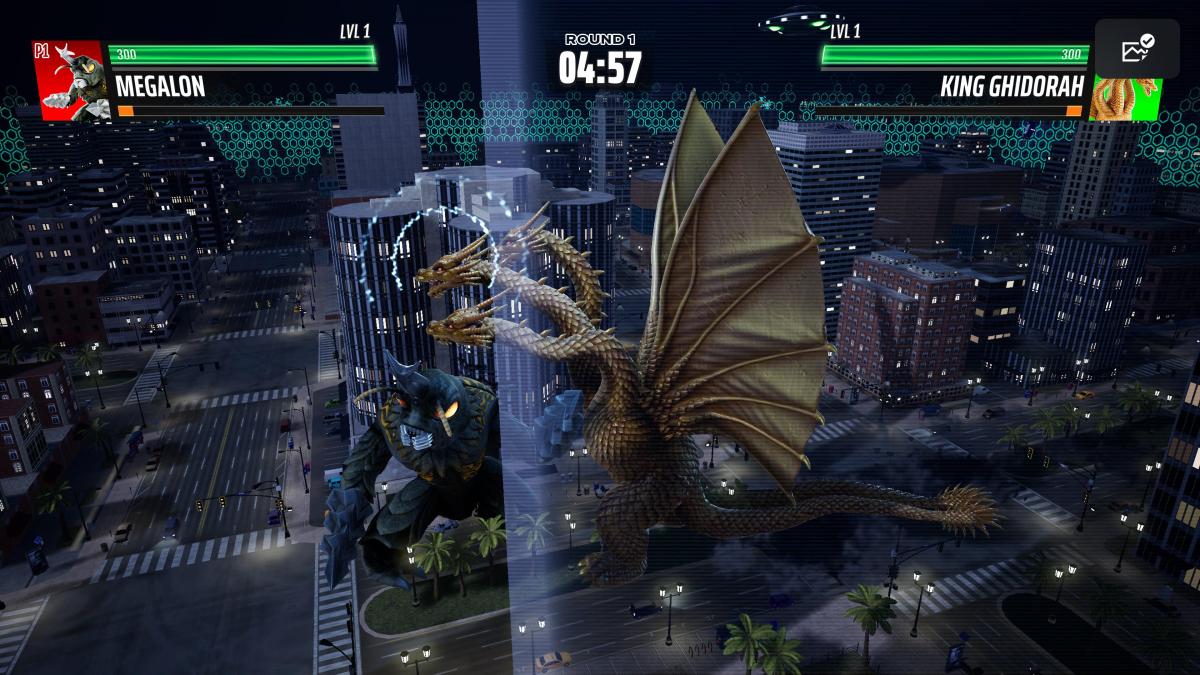
Beyond Adventure Classic, there’s Survival, city-wrecking Destruction and a Practice mode. The new Adventure Gauntlet pits you against two monsters at once, while Adventure Challenge offers another set of tougher encounters. Despite the additions, it remains a fairly slim package built around repeating the same basic fighting. That wouldn’t trouble me much if some of the other changes didn’t seem so determined to keep you doing exactly that.
Each monster now levels up to ten, gaining substantial bonuses to things like health and energy regeneration. Even Rage moves are tied to progression, which is a big change from the original. On my first Adventure run, I reached Mechagodzilla at level three and got my arse handed to me. I went away to earn some levels, then returned to find the opponents had levelled up as well. The final fight did feel easier, but the initial difficulty spike left me unsure whether I needed to fight better or grind more. I’m not convinced adding persistent stat upgrades improves a game like this.
Unlocking the roster has also become more involved. The original used Adventure completion chains, where finishing with particular monsters opened up others. Here, you complete Rumor objectives to make Research Projects available, then fill the selected project with points earned through play. Requirements can include finishing Adventure multiple times or unlocking enough battlegrounds. It isn’t terribly complicated once you understand it, but the game does a poor job of explaining the relationship between those requirements and your active research.
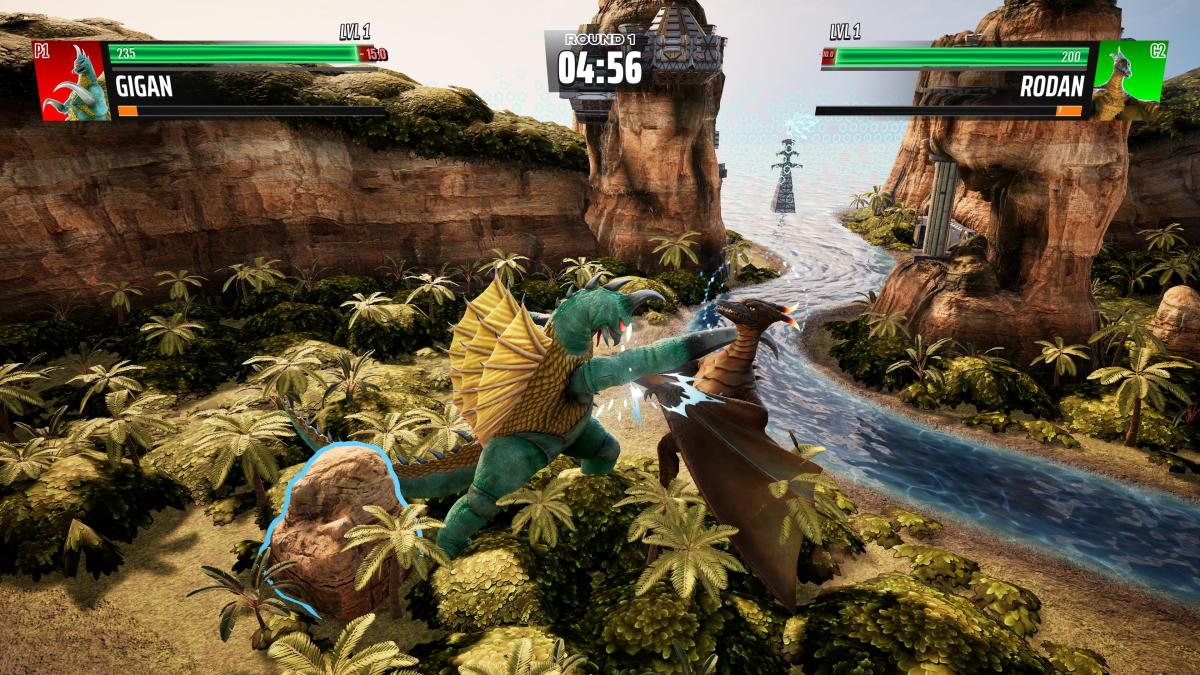
I eventually worked out from the results screens that research points are equal to ten percent of your match score, so better performances help. Survival offers a faster research route at the cost of XP, but my objection is to how much repetition the system encourages in the first place. I haven’t unlocked everything, and I haven’t felt much desire to keep repeating fights purely to fill the bars. The old system sounds more appealing to me.
Thankfully, there’s a Tournament Mode toggle in the settings that opens the monsters and stages for local Custom Battles. It halts progression and doesn’t bypass the unlocks for Adventure or online play, but it means you can get some friends together and immediately pick the monsters you want. I’m very glad somebody thought to include it, even if the option could be advertised more clearly.
Custom Battles and online support up to four players in free-for-all scraps, which can become a chaotically fun mess. Online matchmaking and connections have been hit-and-miss for me, though. Find the right people and there’s a good time here, but the fighting also leaves plenty of room for cheesing opponents and generally being an asshat, and matches quite often descend into those antics. Couch play is comfortably the best way to enjoy it.
In Conclusion…
I’m glad we’re living in an age where old games like Godzilla: Destroy All Monsters Melee can get another chance at life and find a new audience. It’s certainly showing its age, even after the remaster/remake treatment. The fighting can be clumsy, and I’m not convinced the new unlocking system has done much beyond making it grindier than it needed to be. But I’ve still had plenty of fun with it, even if I don’t see myself sticking around to unlock absolutely everything.
Underneath those rough edges is a hugely entertaining brawler that’s at its best when you and a few friends can sit on the couch, grab some controllers and call each other names while getting punched in the face by Godzilla. Basically, it’s the perfect pizza and beer game. For that reason alone, it was worth resurrecting.
Now go and watch Godzilla Minus Zero.