As much as I enjoyed the original Moonlighter, at no point after finishing it did I find myself wishing for a sequel. And yet here we are with Moonlighter 2: The Endless Vault, over eight years after the original game came out. And to my surprise, Moonlighter 2 does manage to justify itself, even if it also overcomplicates things sometimes.

REVIEW AT A GLANCE

Developer Digital Sun

Publisher 11 bit Studios

Reviewed On PS5

Available On PC, PS5, Xbox Series X/S, Switch 2

Release Date 2 September, 2026

Price (UK) £24.99

Genre Action RPG/ Roguelite/Shop Sim

Review Code Provided by the publisher
Quick Take:
Kill things and sell the loot via solid roguelite mechanics. it’s an addictive loop, but there’s an annoying grind in the late game that holds Moonlighter 2 back from being truly brilliant.
Shopkeeper Will is back in action, this time in a different realm because somewhere between games a weird supernatural bloke called Moloch took over Will’s hometown of Rynoka and kicked everyone out. Not that Moonlighter 2 feels especially inclined to show you these events, completely skipping over how Moloch took power and all the questions that spawn from that. When we last left Rynoka, it was prospering; Will was essentially a multimillionaire relic hunter and the town had accepted its place as a new power in a multidimensional universe. Then Moloch apparently strolled in, took everything and banished the population. Where was Will while this was happening? Did anyone fight back? Was there a resistance? Did Moloch conquer the town in an evening before everybody had finished their tea? The game isn’t interested. Instead, we gradually learn about Moloch’s plans through a handful of flashbacks, but having skipped what should have been the emotionally important part, I struggled to give much of a shit. Will wants his home back, which is understandable, but I hadn’t visited Rynoka in eight years and had already settled into a new shop in Will’s new home. I was quite happy to stay where I was and continue selling haunted spoons to passing idiots, or whatever the hell half these relics are.
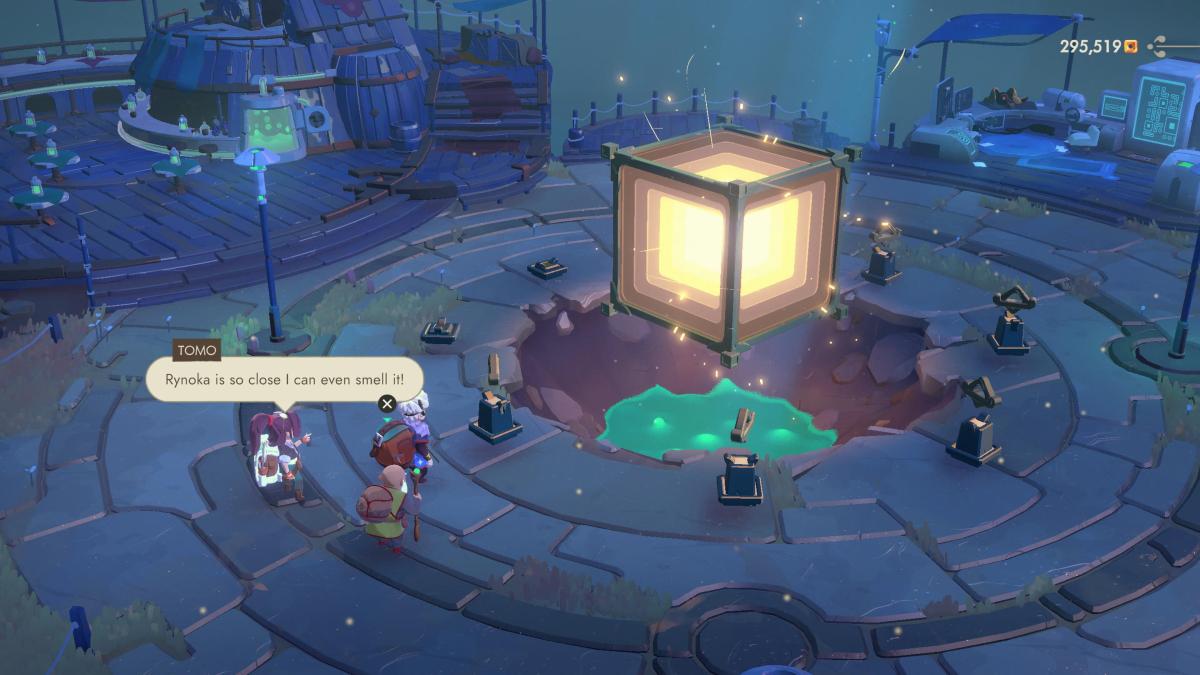
Moloch’s target is the Endless Vault, a floating cube that appears in Tresna, Will’s new hometown. It periodically dishes out rewards when you meet its targets — usually earning increasingly ludicrous piles of gold via the art of flogging products — with the ultimate prize being a single wish. In the case of Will and his pals, that wish is their ticket to getting their home back. This gives the game its overall structure, but my problem with the story is how it wants to anchor itself to what happened eight years ago without properly addressing it. I can appreciate the writers not wanting to rely too heavily on a game that came out so long ago, but instead of creating a clean standalone adventure, they tied everything back to Rynoka and then skipped over how it fell.
The core loop is still the same, though: venture into a dungeon in order to murder your way through the various creatures inhabiting it, then take the loot home and use it to stock your shop. To Will, the term “kleptomaniac” is a compliment. Now, though, there is a heap of new systems ladled atop it all and far more emphasis on roguelite runs where you power yourself up as you adventure, before heading home to buy permanent upgrades and sell everything that wasn’t nailed down. It’d an addictive sort of loop, keeping me engaged enough that I was willing to forgive a serious lull in the pace toward the later stages of the game.
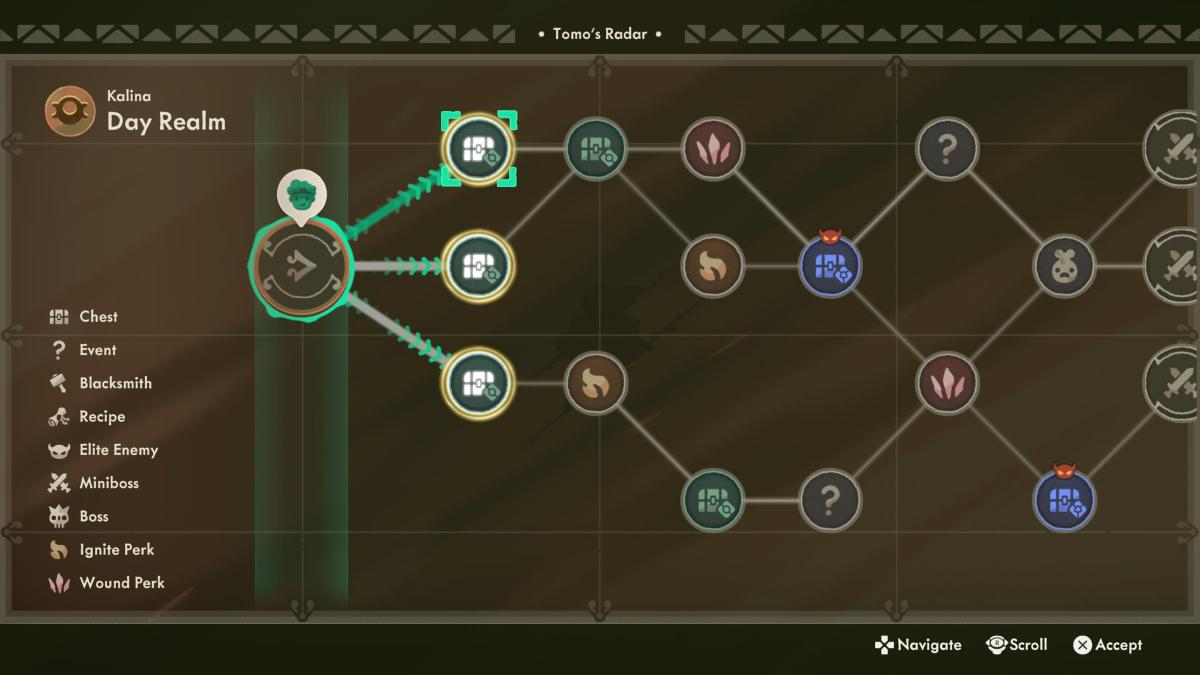
Back in the distant days of 2018, you entered a dungeon and ambled along a mostly linear path to collect your treasures. Moonlighter 2 takes a different approach that emphasises the improved roguelite side of things. You choose from a small selection of 3 locations (with two variations each) and travel from node to node, with each stop offering a chest at the end, or a combat perk or some other type of upgrade. Do you take a node that will strengthen the current build and help against the final boss, or focus on cramming more expensive tat into your bag? It’s a simple decision, but an effective one.
At any point, you can opt to peace out and teleport home, keeping your loot intact. Should death successfully punch your ticket, you still keep your relics, but their value will drop, so at least it’s not a complete waste.
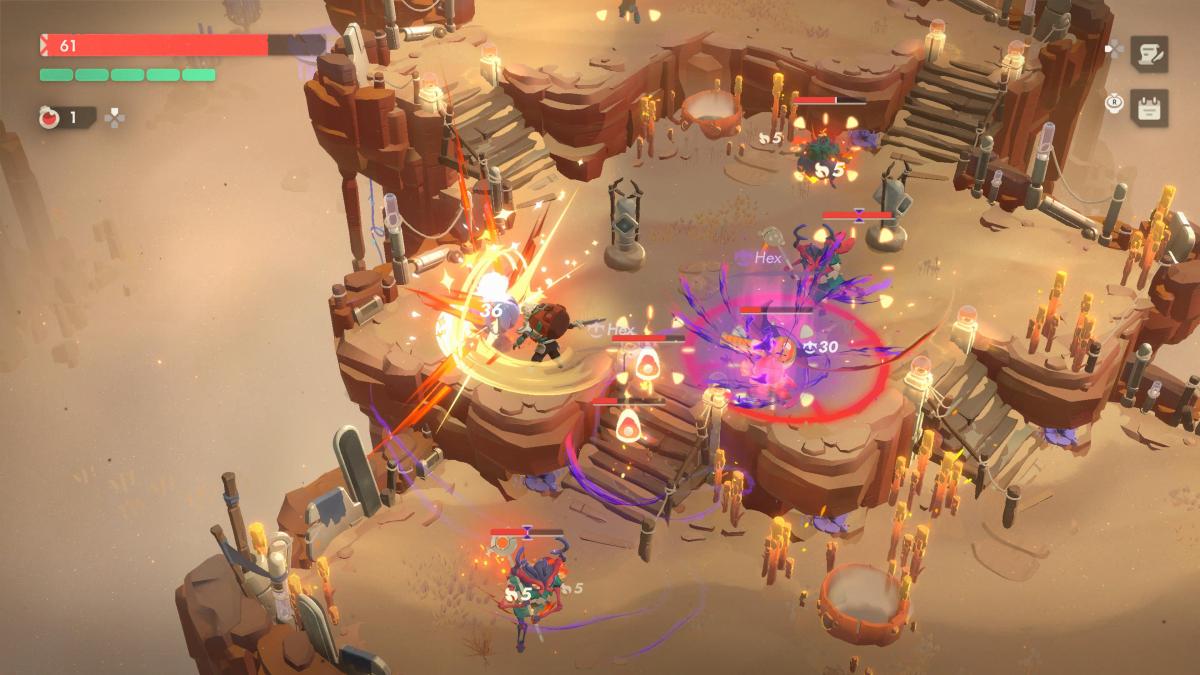
Combat helps keep everything moving at a punchy pace. Normal attacks, a weapon-specific special, a gun and a dodge give you a straightforward set of tools, while the backpack can be used to slap ruptured enemies into walls or each other. It isn’t tremendously complicated, but smacking some poor bastard across the room using the same bag currently stuffed with his civilisation’s priceless artefacts never stopped being entertaining. Plus, there’s a good sense of weight behind your blows.
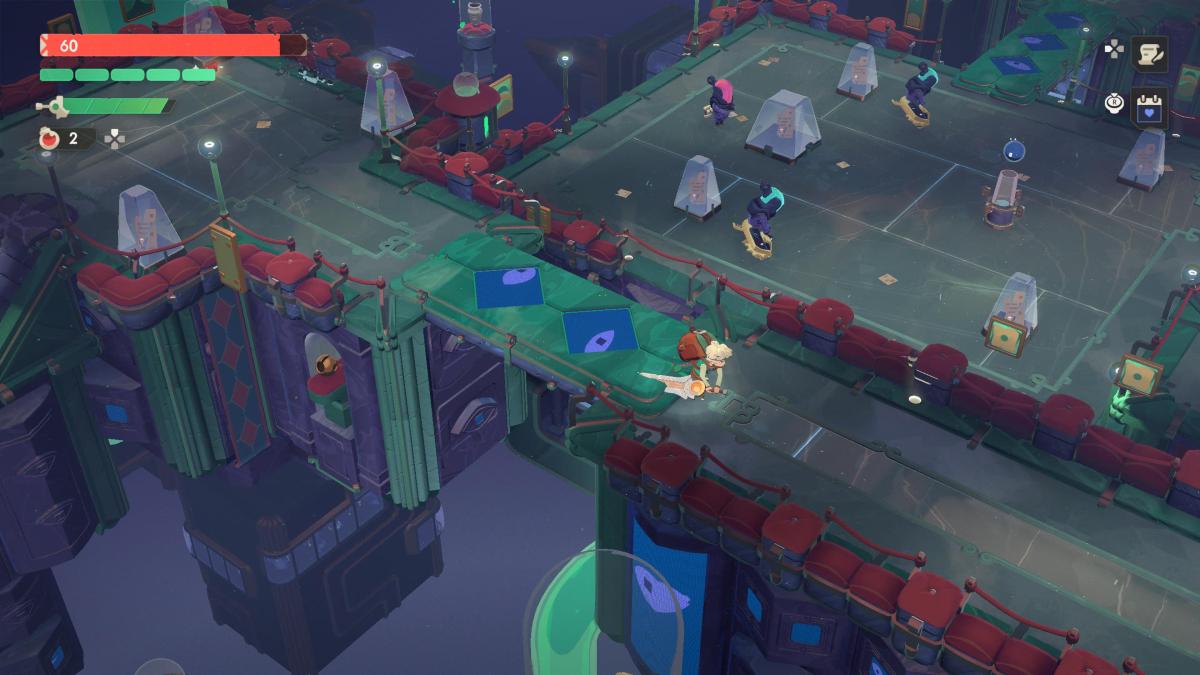
The four weapon types have enough going on to make experimenting worthwhile. The sword is the dependable all-rounder, while the spear leaves heads embedded in the ground which can then be summoned back through anything unfortunate enough to be standing in the way. The massive broadsword hits like an angry delivery van but uses a sharpness system that has to be managed, and the gauntlets trade individual impact for a flurry of attacks. The gauntlets were probably my least favourite because the hits never felt as satisfying, but each weapon has multiple craftable variants that rearrange how its basic gimmick works. One broadsword might spend sharpness on an enormous special attack, for example, while a spear variant makes its returning heads home in on enemies instead of demanding careful positioning.
During a run you’ll also collect perks built around effects such as Ignite, Foam, Thunder, Poison and Volatile. A fair few can start to feel similar in how they operate – and there is also a blacksmith who provides a temporary weapon upgrade right after the miniboss on every run – but Moonlighter 2 nails the satisfaction of cobbling together a strong build. Get the right effects bouncing off each other and the same boss that battered you previously can be completely fucking annihilated. But even without a good build, the combat feels good enough.
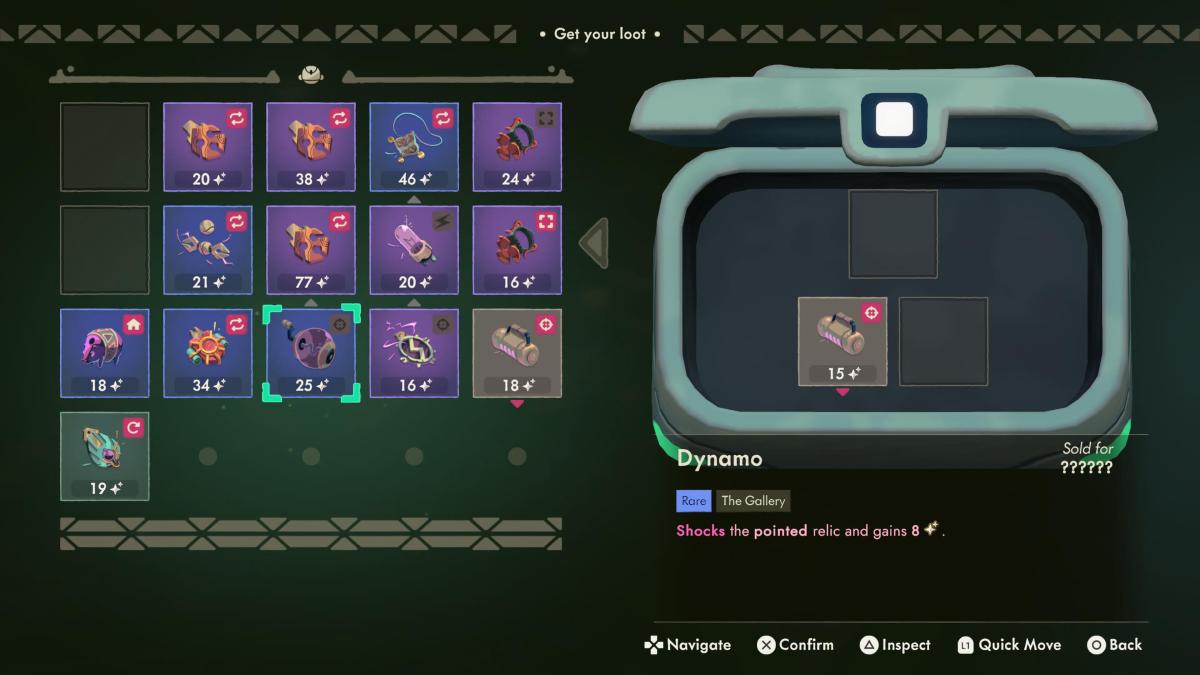
Loot is no longer hoovered directly from corpses, but taken from chests at the end of nodes, and your inventory has become a puzzle of its own. Most relics affect other slots in your bag in some fashion, so getting maximum value means constantly shuffling everything around. In one world, relics can shock whatever they’re pointing toward, activating useful effects but destroying an item if it gets shocked twice unless a battery removes the charge. Elsewhere, dolls absorb matching dolls or crystals of the same rarity, gradually becoming more valuable.
It’s the feature I’m most mixed on. Finding a clever arrangement that massively improves a relic can be genuinely satisfying, especially when an initially unremarkable bit of rubbish becomes the star of the entire haul. But there are also times when I simply don’t want to stop after every chest and rearrange my backpack again. For much of the game you can get away with tossing things in without being overly careful, although the enormous gold requirements later on make engaging with the system increasingly important.
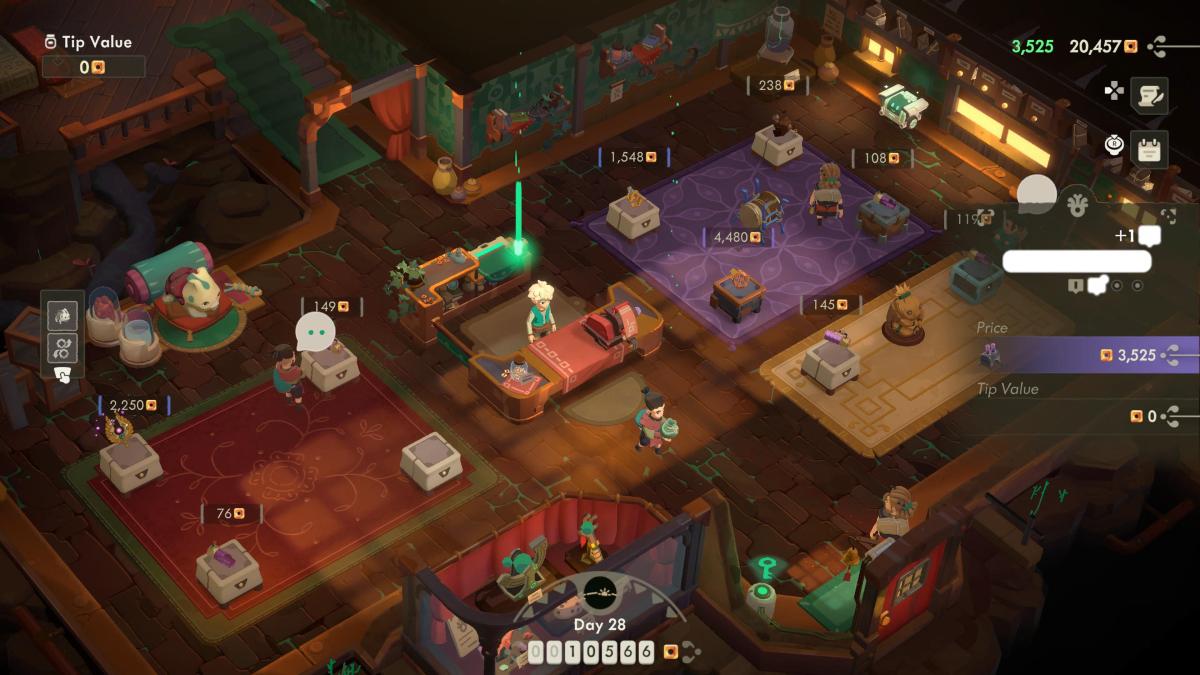
Selling everything back at the shop has changed too. In the first game, it was mainly about finding the right price for each item through trial and error. Now there is a whole bloody puzzle involved. Selling cheap or at the perfect price fills a meter that grants perks, potentially rewarding you things like deliberately making several poor sales before dramatically inflating the value of something expensive. Different customers might tolerate higher prices, demand a bargain or leave enormous tips, while furniture and specialised display stands provide yet more bonuses, as do weird adoptable pets that you can plop in a corner. It sounds like a lot, but in practice it isn’t overly demanding. If you don’t fancy operating Will’s shop like a one-man Amazon empire, you can ignore some of the finer details and sell things as though you’re trying to clear out your garage. Choose to delve into it, though, and squeezing every possible penny from a day can be good fun. It also raises an important question: who are all these people, and why are they so eager to buy my interdimensional tat?
Unfortunately, the relaxed approach stops working quite so well as the Vault’s demands climb. The 500,000-gold challenge was where the pacing first began to buckle, and the subsequent demand for a million gold coins exaggerated the problem. By this stage I had already seen both variants of all three areas, unlocked most of the weapons I wanted and bought virtually every major upgrade that interested me. There were technically still smaller things to chase, but meaningful progress had stalled while the game asked me to repeat the same handful of locations for an increasingly large number. I did what the game clearly wanted and started learning how to min-max the shop. Rather than selling whatever came home after each outing, I stockpiled two entire runs, used cheap relics to build multipliers and held the most valuable items back until all the bonuses were humming. One carefully managed day brought in around 330,000 gold, so mastering the systems demonstrably works. It also made the underlying issue clearer: even after becoming much more efficient, I still needed several trips through areas I had already exhausted, gathering money I had very little reason to spend.
This is where more varied Vault objectives could have helped. Earlier challenges asking for 50,000 gold in a single day, a certain amount earned through tips or a batch of upgraded relics would have encouraged players to understand the shop gradually while breaking up the procession of cumulative gold targets. Instead, Moonlighter 2 lets its new mechanics feel optional for hours and then abruptly starts charging an unofficial tax for ignoring them. Apparently, I have reached the stage in life where I’m asking a game for slightly more hand-holding. Horrifying.
What carried me through was that punchy pace. Runs don’t take overly long, the combat remains enjoyable and there is always some satisfaction in deciding whether to strengthen the current build or gamble on more loot. I could jump in, complete a run and get back out without feeling as though I had signed away an entire evening. The individual runs retained their energy long after the campaign surrounding them had run out of momentum. It desperately needed another proper area. Having two versions of each location does provide some variety, but by the time the largest financial roadblocks turned up I had already seen what all six versions had to offer. Another biome, enemy set and pair of bosses would have done far more to justify the grind than simply finding new ways to send me around the existing carousel.
Visually, Moonlighter 2 is a good-looking game. The move to full 3D brings colourful environments, chunky animation and plenty of visual energy to combat, although it does lose some of the distinctive charm supplied by the original’s pixel art. Technically, I ran into a couple of crashes, but frequent saves meant I never lost anything substantial. I also occasionally had unexplained fireballs floating around Will despite having no perk or equipment that seemed responsible. Perhaps the years of handling cursed antiques have finally caught up with him.
In Conclusion…
Moonlighter 2 is an interesting sequel because at times it feels exactly as unnecessary as I expected, shovelling systems onto a wonderfully simple concept and stretching its progression out. Its story reaches backwards without doing the work needed to make Rynoka’s loss matter, while the later Vault challenges expose just how little fresh material is waiting beyond the early momentum.
And yet, when everything clicks, it works. Dungeon runs are punchy, combat feels good, building a ridiculous combination of perks is satisfying and turning a backpack of stolen rubbish into a small fortune still activates something worryingly primal in my brain. The sequel loses some of the original’s simplicity, but its heap of new systems can be rewarding once you let them simmer. I just wish it knew when it had made its point and let me get back to being the friendly local kleptomaniac without demanding another million gold first.