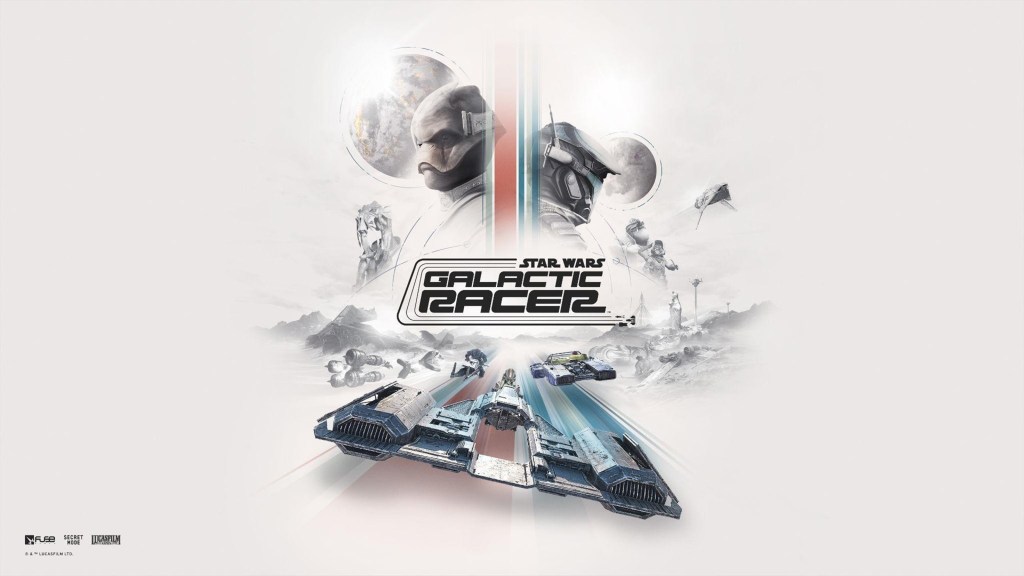
Star Wars: Galactic Racer is the kind of game that makes you feel like a Jedi when you barely make it through a series of tight tunnels without taking your finger off the ramjet, and a Sith Lord when you deliberately slam another racer into a wall at hundreds of miles per hour, revelling in the resulting fireball. It’s less concerned with perfect racing lines, clipping every apex and shaving tenths of a second than it is with scrappy racing, blistering speed and feeling like you’re always a second away from fucking up. Because you are. Sometimes it’s not even a second. It’s a blink. Galactic Racer wants to make racing dangerous again, and it succeeds.

REVIEW AT A GLANCE

Developer Fuse Games

Publisher Secret Mode

Reviewed On PS5

Available On PS5, Xbox Series X/S, PC

Release Date October 6, 2026

Price (UK) £49.99

Genre Racing

Review Code Provided by the publisher.
Quick Take:
Star Wars: Galactic Racer makes racing feel genuinely dangerous again. Blistering speed, brutal crashes and constant risk-versus-reward decisions combine to create one of the most exhilarating racing games in years, even if its chaotic streak can occasionally make victory—and defeat—feel frustratingly outside your control.
And somehow it has a surprisingly decent story, too. Kestar Bool is the perfectly smug son of an immensely wealthy man and current champion of the Galactic League, which he is increasingly taking over by throwing his money and influence around. League founder Darius Pax responds by bringing in Shade, your almost entirely personality-free character, to dethrone Kestar and settle an old score. What follows is a fairly basic plot with a couple of fun twists, one that makes absolutely no sense and a cast of racers who get just enough screen time to show some personality. It isn’t as good as the recent Star Wars: Zero Company, but by racing-game standards it’s great—and leagues ahead of whatever the hell Forza Horizon 6 was doing with its cardboard cutout characters. The way it brings a minor Star Wars character into the story is genuinely brilliant, too.
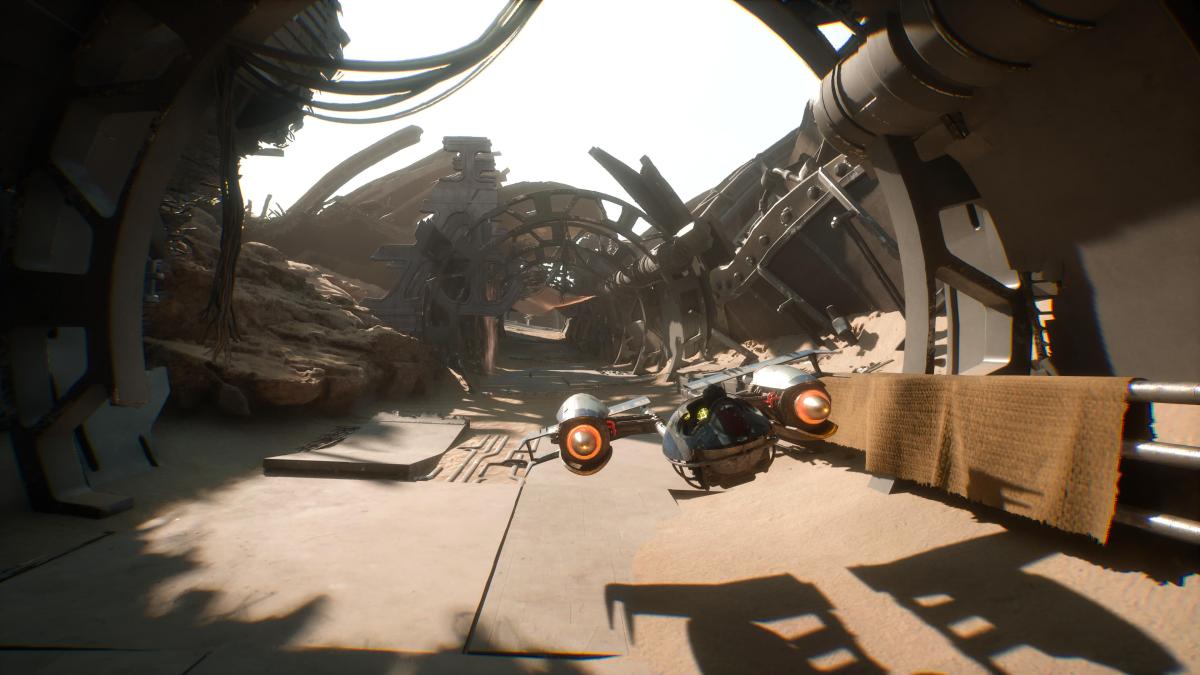
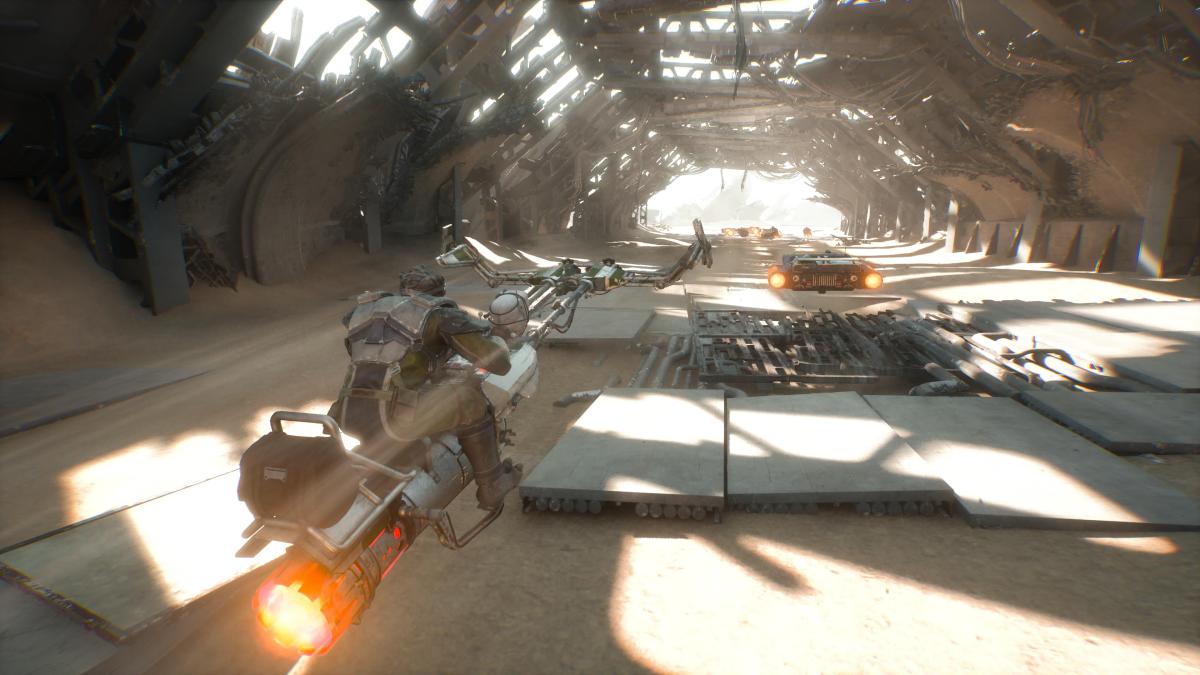
Three types of speeder are available, each with its own advanced cornering technique. The landspeeder is the stable, durable all-rounder, using a heavy-feeling drift that demands you let go a split second before you think you should. The smaller speeder bike accelerates hard and brakes into tight turns before firing that stored energy back out as a Kinetic Burst, making it my favourite for narrow routes. Then there’s the skim speeder, which maintains momentum by rolling 90 degrees onto a Knife Edge. It’s easily my least favourite of the three: even after spending more time with it, Knife Edge never felt as useful or satisfying as the other techniques, while transitioning from one turn into the next could feel strangely sluggish.
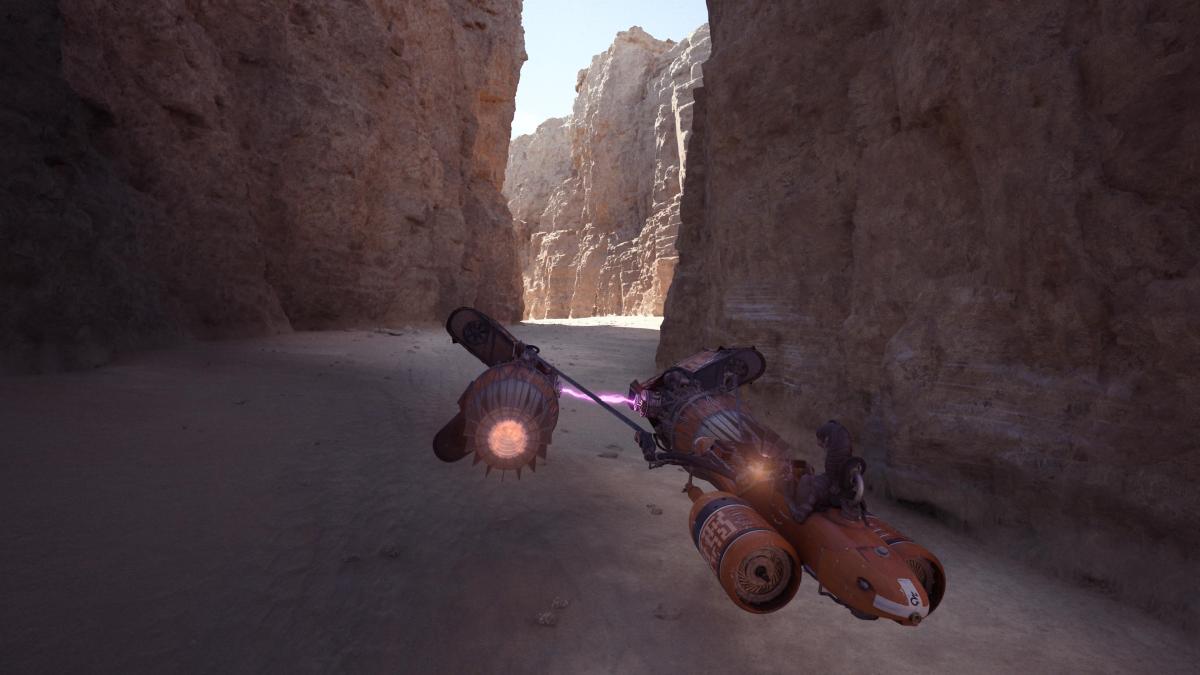
But there’s one more class, and the one Star Wars fans are probably waiting for: podracers. They’re introduced later in the campaign before becoming a bigger part of the action, and feel terrific to tear around the tracks. The camera can get a bit wonky in tight spaces, and squeezing these massive machines through heaters barely wide enough to prevent them freezing can be a pain in the arse. In some ways, though, that feels appropriate. These fuckers are meant to be nearly impossible to drive, and once they get up to speed the sense of barely controlled power is phenomenal.
There are two buttons you’ll have your fingers on almost constantly: the Afterburner, which gradually refills itself, and the much more potent Ramjet that lets you reach maximum speeds and maximum screaming. Entering the Ramjet’s redline means gambling with a random explosion, while completely filling the heat meter normally guarantees one. Plenty of parts and Racer Styles actively reward you for staying there, turning every extra second into a question of whether to back off or keep pushing your luck.
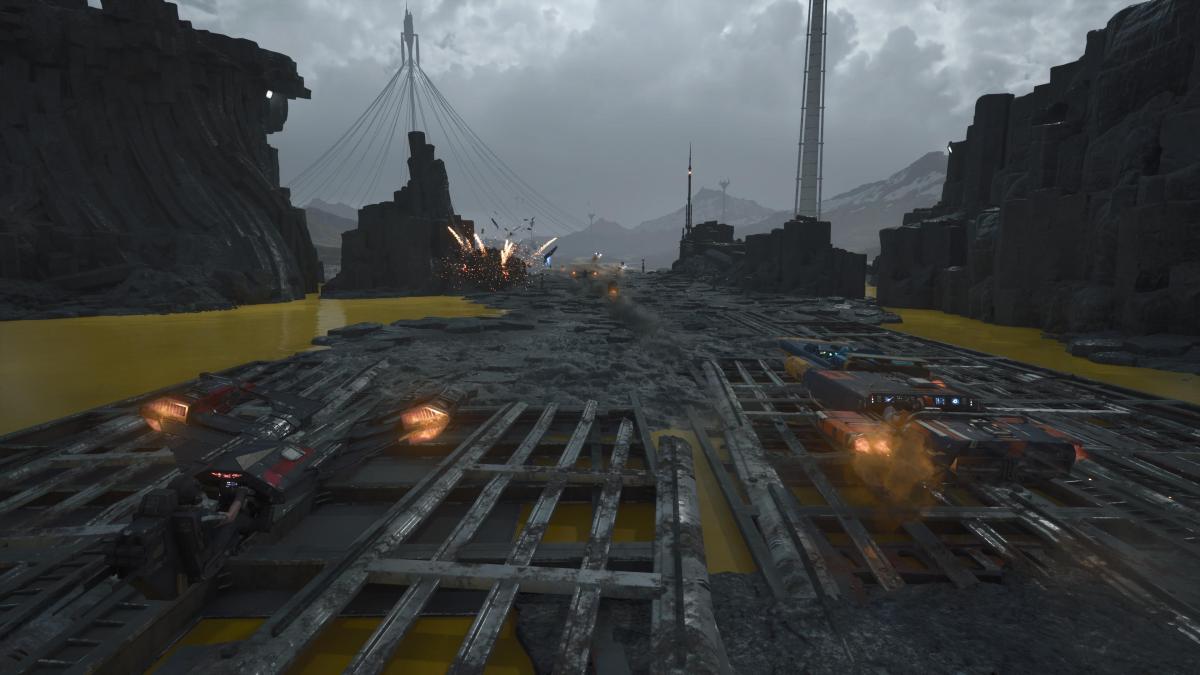
That decision happens while you’re already barreling through tiny tunnels, picking shortcuts, dodging rocks, fighting other racers and barely making bends with a fraction of a second to spare. Technically, there’s a brake, but using it feels like an admission of defeat. A wall isn’t something you casually bounce off before carrying on; hit one hard enough and you’re going up in a fireball while everyone else disappears into the distance. Unlike the squeaky-clean racing of Forza Horizon 6, your mistakes here have teeth.
The sense of speed starts slightly slower than you might expect, but every Upgrade also increases your vehicle’s overall pace. By the end of a tour you’re absolutely blasting along, something that’s especially noticeable during the condensed multiplayer tours, where the progression happens across five preliminary events. The first race can feel almost sedate compared with the ludicrous speeds you’re reaching by the fifth.
The tracks support all of this beautifully, switching between wide areas where everyone can brawl and tight ravines, tunnels and caves where there is barely room to breathe. They’re filled with shortcuts and alternative routes that reward learning, although readability can be an issue on those first attempts when you have almost no time to work out where the game wants you to go. It becomes less of a problem as you learn each track, but those initial races can feel punishing.
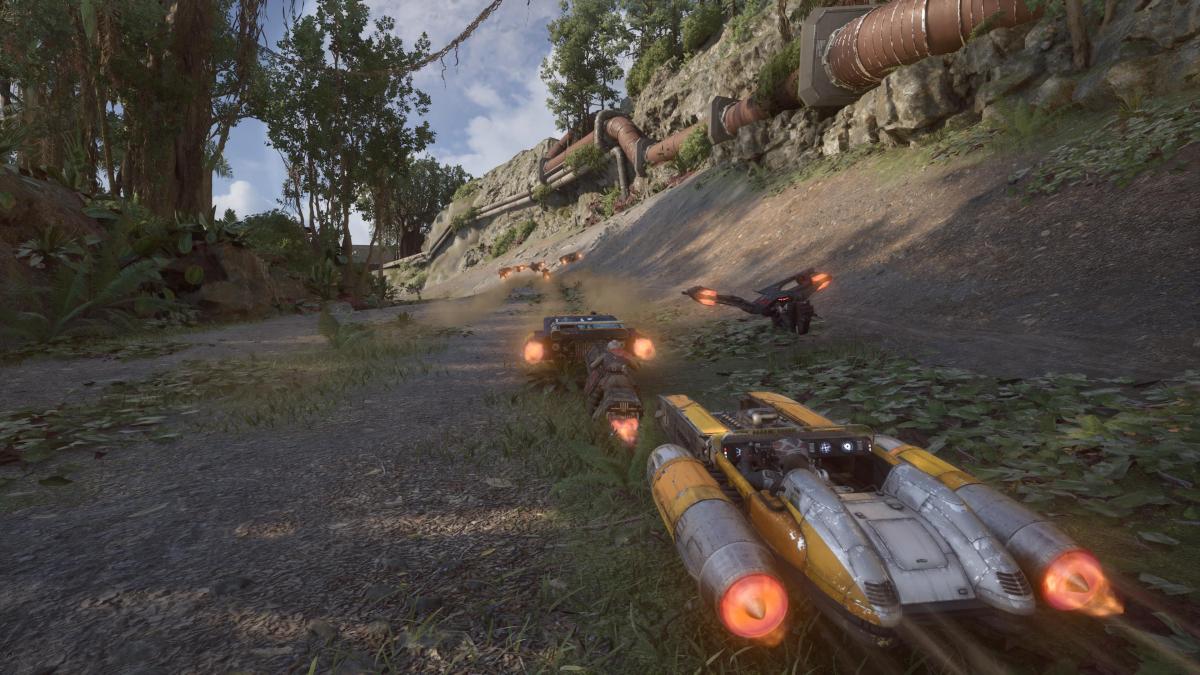
Then you’ve got environmental hazards and the other racers to worry about. Acid corrodes your vehicle, lava heats it up and snowy tundras cool the ramjet while gradually freezing your steering, turning you into a sliding ice block desperately trying to thread the needle through a heater at fuck knows how many kilometres per hour. Meanwhile, everyone around you is trying to slam you into walls or disable your systems with abilities. There’s an intensity to it that makes my brain sing, a feeling of always being on the razor’s edge of control as you learn where you can cut corners, where the hidden routes are and when that extra resilience lets you risk driving straight through the danger.
There’s a lot of Burnout DNA in the team behind Galactic Racer, and it shows whenever a takedown sends another vehicle erupting into a spectacular fireball of debris. The camera immediately snaps over to enjoy the destruction while your speeder goes into autopilot, which is very cool right up until it hands control back just in time for you to hit another wall. That only happened to me twice, and the feature can be turned off, but it neatly captures how quickly triumph can become disaster.
The presentation is genuinely excellent all round. Galactic Racer looks fantastic for something that isn’t a gigantic-budget Star Wars production, with beautiful tracks and a strong sense of place across its planets. Crait is a particular highlight as your vehicle tears across white salt and exposes the red earth underneath. The voice acting is decent, the sense of speed is superb and it evokes Star Wars well—right down to those scene-wipe transitions the series seemingly can’t escape. It also ran at a smooth 60 frames per second throughout on PS5, with no crashes or meaningful performance problems during my time playing.
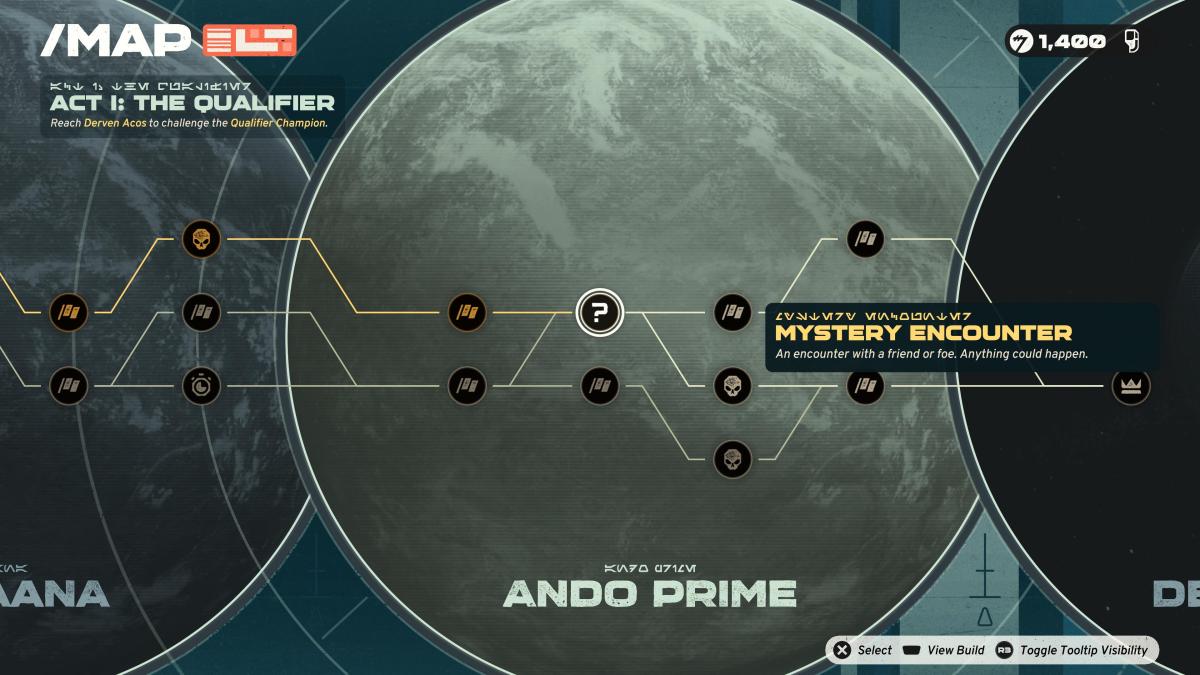
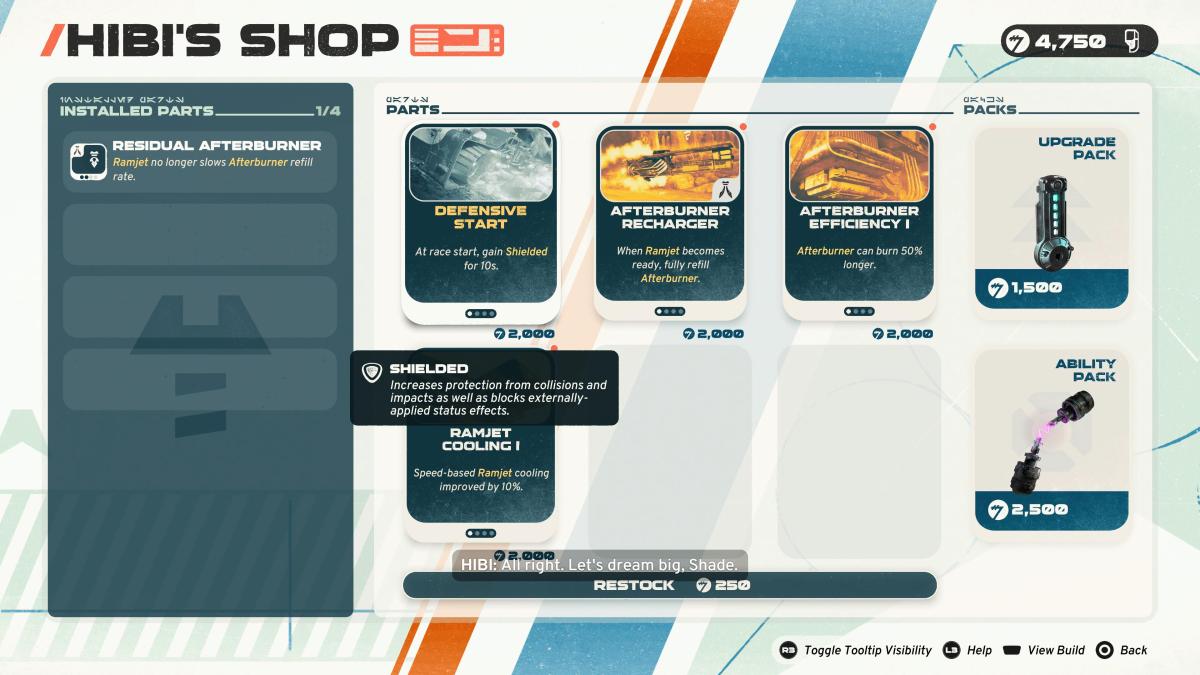
The campaign wraps that racing inside a Galactic Tour split into three acts, carrying you through escalating events across seven planets. After each one, you choose another node on a webbed path leading through standard races, higher-risk eliminators, field tests, mystery encounters and planetary stopovers. Your rewards depend on the event and how well you perform, ranging from stat upgrades and credits to part and ability packs. At each new planet, you can spend those credits with your mechanic, repair faults through the scrap dealer and catch up with the other racers before heading out again.
All those rewards feed into building the perfect vehicle, or whatever bizarre approximation you can cobble together from the parts you’re offered. Maybe that means a self-cooling monster that barely releases the ramjet, something based around surging, or enough battery power to abuse abilities like I abuse cake. There are several hundred parts to discover and plenty of combinations, although the balance currently seems to lean heavily towards ramjet cooling and resets. I only randomly exploded a couple of times while redlining, making the danger feel lower than expected, while the strongest builds I found could keep the Ramjet active for almost an entire race once I knew the track.
One trip to the scrap dealer demonstrated how much stranger these builds can become. It offered me two heavily discounted legendary parts that together increased my afterburner duration by 500%, but both came with faults that couldn’t be repaired until the next planetary stopover. One removed two points from my barely upgraded battery. The other caused slipstreaming to freeze my vehicle, and I was already on an ice planet where the environment gradually freezes you unless you drive through massive heaters. My plan was simple: use that monstrous Afterburner to get ahead of everyone, at which point accidental slipstreaming would no longer be a problem.
It was a problem. It was a big problem.
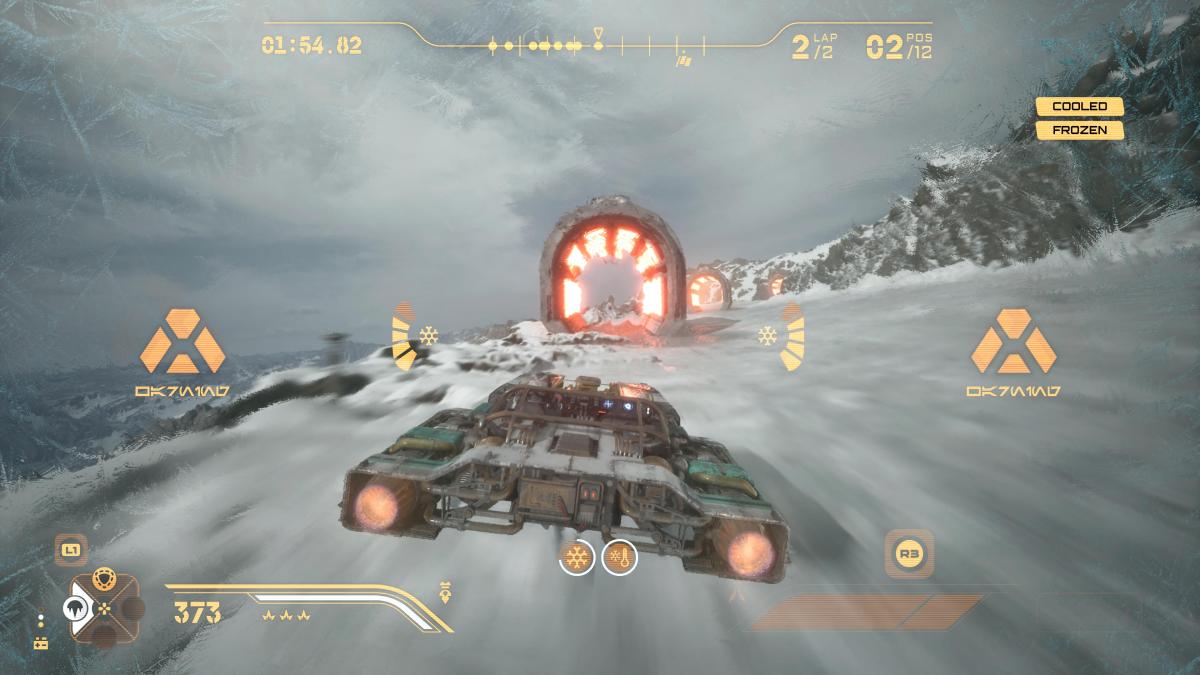
The slipstreaming fault kicked in from much further away than I expected, turning my high-powered afterburner beast into a giant ice block with a jet engine attached to it. With my steering almost entirely gone, all I could do was point myself down a straight and go bloody fast until a corner appeared, at which point I slid helplessly around it while everyone overtook me and put me straight back into their slipstream. I also ploughed into a couple of concussive mines because I had the turning ability of a fucking aircraft carrier. I eventually finished sixth and was grateful I hadn’t picked an eliminator, where the same disaster could have cost me a League Entry Token—or ended my entire tour if it had been my last.
The funny thing is that the same build worked beautifully during a later one-on-one podrace. I still had to contend with the frozen planet, but with only one opponent I could avoid their slipstream, hit the heaters and run my Afterburner and Ramjet almost constantly. The build wasn’t terrible; I’d just used it in completely the wrong bloody circumstances.
That potential tour-ending disaster is where Galactic Racer’s roguelite—or “runs-based,” as the developers prefer—structure comes in. Standard races allow a limited number of crashes before costing you a League Entry Token, while eliminators offer better rewards but take one if you fail to finish in the top three. Exhaust every token and the tour ends, scrapping your current build back into credits and returning you to the beginning of that attempt. The story treats this as a setback rather than a reset, so ongoing relationships and little plot threads can continue into the next one.
Failure isn’t a complete loss, either. Tuning points permanently improve each vehicle class, new Parts are added to the reward pool and your unlocked racer styles and favors carry over, hopefully giving you enough of an edge to reach the championship next time. Extra tokens can also come from mystery encounters, character events and favors. On standard difficulty I only completely wrecked out two or three times, so it isn’t the sort of roguelite where death strikes every five seconds, although my brief test of a higher setting was considerably tougher.
By this point, the pattern should be obvious: almost every system in Galactic Racer asks how much you’re willing to risk for a little more speed, power or profit. Do you enter the redline knowing the ramjet might explode? Attempt the narrow shortcut, buy the powerful part carrying a horrible fault, make an ambitious side bet or choose an eliminator instead of the safer race? These aren’t separate gimmicks sitting beside the racing; they all feed the same gamble, with consequences ranging from losing a few positions to destroying a brilliant build and ending an entire tour. When those risks pay off, the elation is incredible. When everything collapses because of one bad decision—or a few seconds of chaos—it can be properly devastating.
Here’s where my relationship with Galactic Racer gets complicated. Sometimes, losing your final token is plainly your own fault: you pushed the ramjet too hard, used up your crashes or gambled on an eliminator you couldn’t handle. Annoying, sure, but fair. Then the game occasionally performs a tactical dick punch. One one-on-one podrace went from me doing perfectly well to watching my opponent finish eight seconds ahead over a single lap, despite me running the Afterburner and Ramjet almost constantly. Roguelites are expected to put walls in your path, but this felt more like running headfirst into Darth Vader after someone poured sand into his underpants.
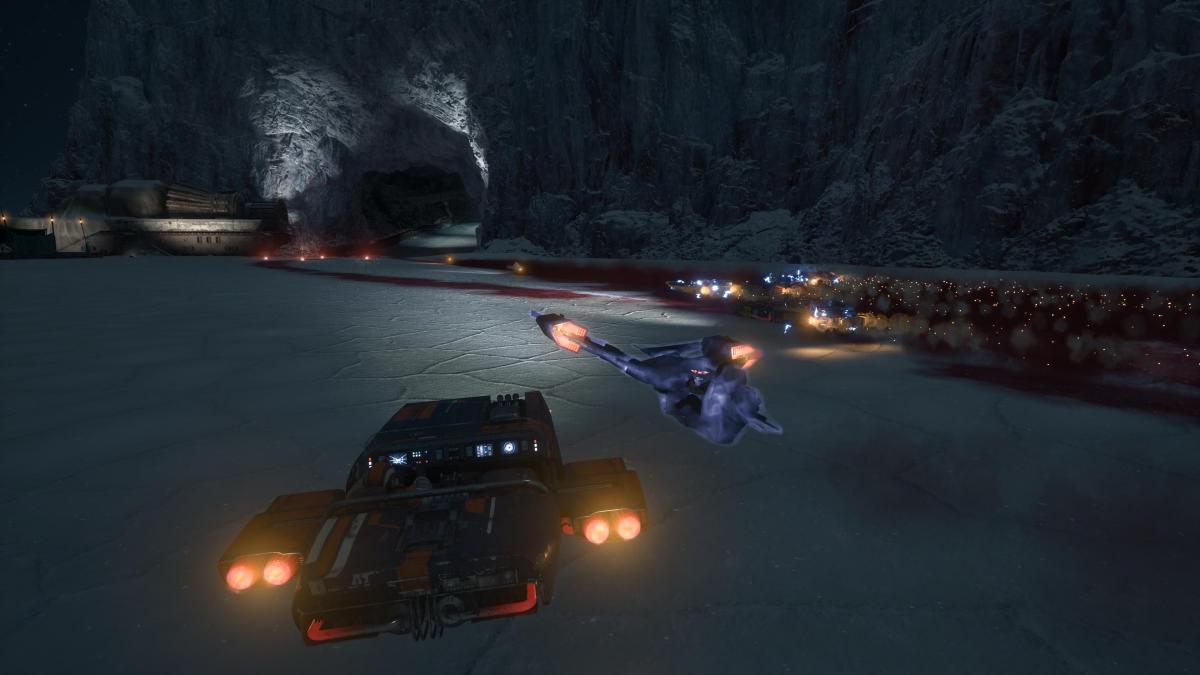
Other frustrations come from how difficult the chaos can be to read. Concussive mines flash red, but become remarkably easy to miss through frost, motion blur and everything else demanding your attention. Rival attacks do provide a brief targeting warning, and weapons such as Ion Bolts generally weaken or disable your systems rather than destroying you outright, but by the time I had parsed the warning, another racer was sometimes already ramming me into a wall. In a conventional racer, that means restarting an event. Here, it can mean losing a brilliant build at the penultimate race or exhausting your final Token, which makes those moments properly infuriating when it feels as though the game conspired to fuck you over.
You can do everything right and still lose, and accepting that is a major part of Galactic Racer. I don’t forgive every example: some warnings need to be clearer, and those sudden difficulty spikes could be smoothed out. But removing all of that unpredictability would also remove something vital. Barely surviving an eliminator on your final token and last available crash only feels so extraordinary because another concussio mine, bad landing or well-timed attack could have ended everything. Galactic Racer’s lows don’t just sit beside its highs; sometimes they are what make those highs possible. That emotional whiplash is going to drive some players mad. Hell, it frequently drove me mad. But it also kept every race from feeling safe.
Multiplayer tours, either in speeders or podracers, take everything fun about the main campaign and compact it into five preliminary events followed by a sixth championship race. At the start of each event, you get to bet on where you’ll place: maybe a top-six finish? Hell, maybe even a podium? The higher the bet, the better the part pack you earn if you succeed. Between races, you also receive upgrade points and credits to spend on parts and abilities.
It’s a super-condensed version of the main campaign that removes a few elements, including part faults and League Entry Tokens, and lets you concentrate on the chaos. Oh, and what chaos it is. Without the risk of losing tokens and being set back, you can focus on enjoying the intense racing, the crashes and the insanity.
However, I did find that the multiplayer could have a snowballing issue. Naturally, good players will be able to bet on themselves more reliably and thus pick up better-quality parts, which let them do even better on the track. There are underdog bonuses given to other players, and RNG has a lot of say in how tours play out as well, because sometimes people luck into unstoppable builds. During testing, several players discovered a legendary part that gave an overheating ramjet a 90% chance of safely resetting itself, and anyone fortunate enough to get one became almost impossible to catch.
In other words, the multiplayer can be just as frustrating as the main single-player campaign if you aren’t able to go in with the right frame of mind.
Away from the campaign, arcade offers individual challenges built around beating par times, while Scenarios string several events together around predetermined characters and themed builds—one, for example, loaded me up with shield-based rewards and encouraged me to barrel through environmental hazards. There’s some enjoyable score-chasing here, although scenarios often feel like slightly more elaborate Arcade events rather than a substantially different mode.
There is a strange omission: there’s no option to just jump into a race with bots. I would normally expect some sort of single-player mode where I can pick a track and vehicle and maybe customise the rules, like turning off abilities or something, but there’s nothing like that. Perhaps the developers want to drive you back to the campaign, but sometimes I just want to fire up a quick race.
Multiplayer does have this: quick race options exist for both regular speeders and podracers, stripping away the tour’s build progression and leaving you with a more even playing field. Well, even playing field until you deliberately slam someone into a wall. There’s no split-screen multiplayer either, which isn’t unusual these days but still feels like a missed opportunity for a game this chaotic.
In Conclusion…
Despite it occasionally making me want to use a very different kind of Force to propel my controller into a wall, Star Wars: Galactic Racer is one of my favourite games of the year so far. Its thrilling combination of roguelite structure—a genre I thought I was tiring of—and proper balls-to-the-wall arcade racing repeatedly had me leaning towards the screen as I barely made it around bends, blasted down straights and got into dogfights with the other racers.
It can sometimes feel unfair, its balance needs work and I don’t agree with every one of its design decisions. That volatility is going to drive some players mad, but I’d rather play a racing game that occasionally makes me furious than one that never makes me feel anything at all. Galactic Racer makes racing feel dangerous again, and I fucking loved it.